Educator, Thinker and Doer
Former Principal - Peel District School Board & Near North District School Board
PhD - Ontario Institute of Studies in Education - University of Toronto
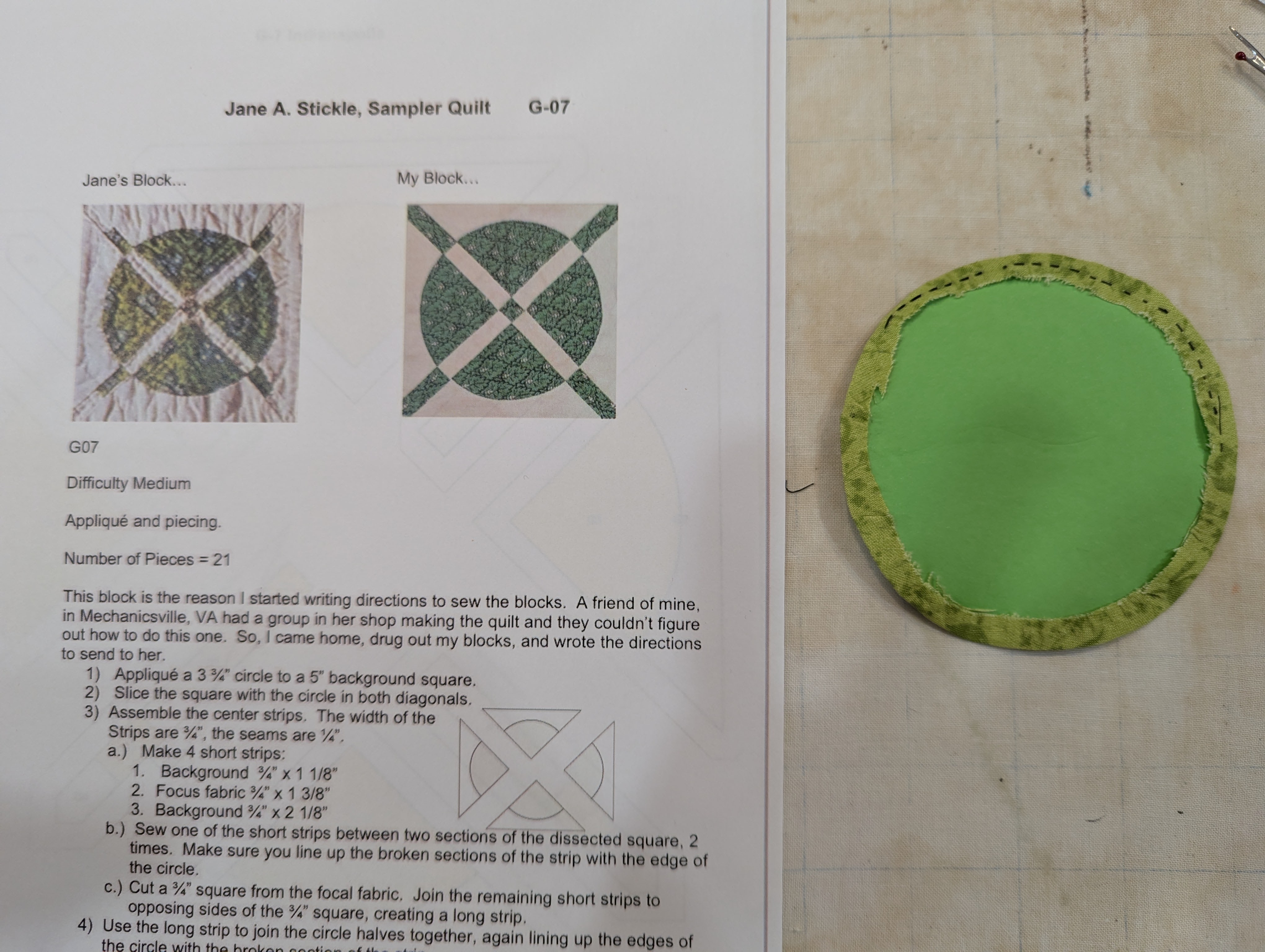
If you have read my previous post, you will know that I am starting a quilting journey. This journey is expected to be measured in years rather than days. Today I took the first step by choosing a simple block, or at least one that appeared to be simple.
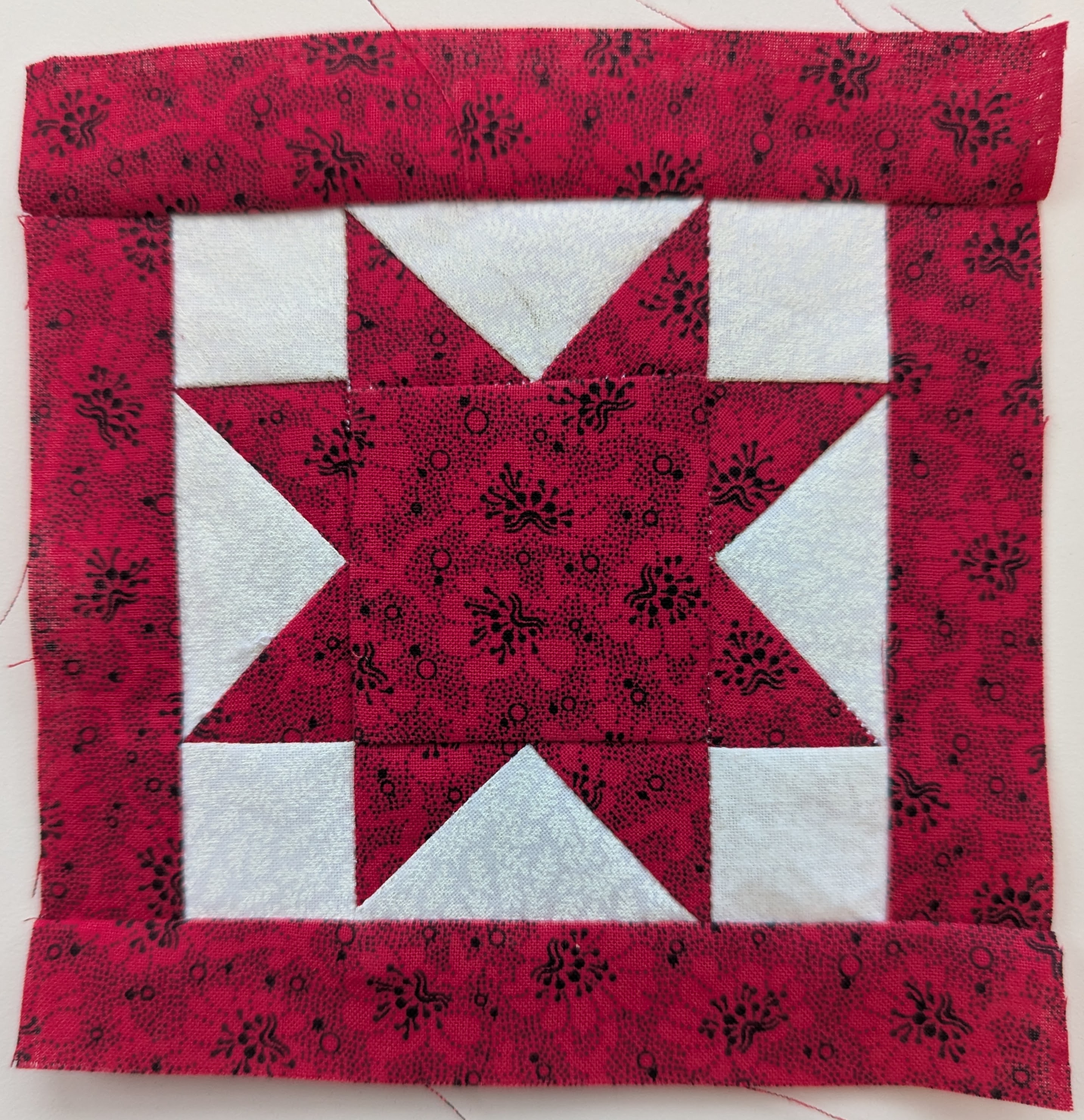
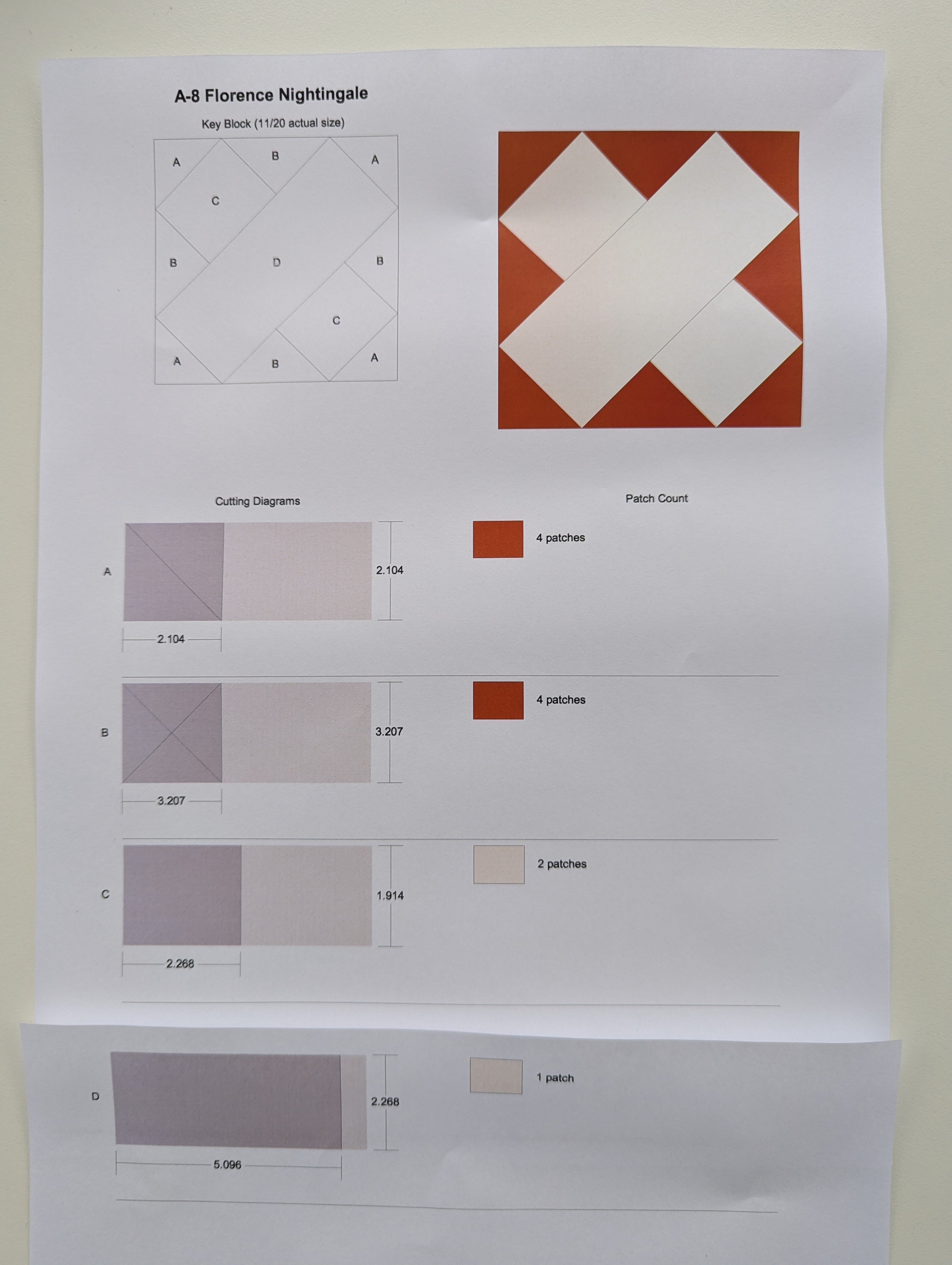
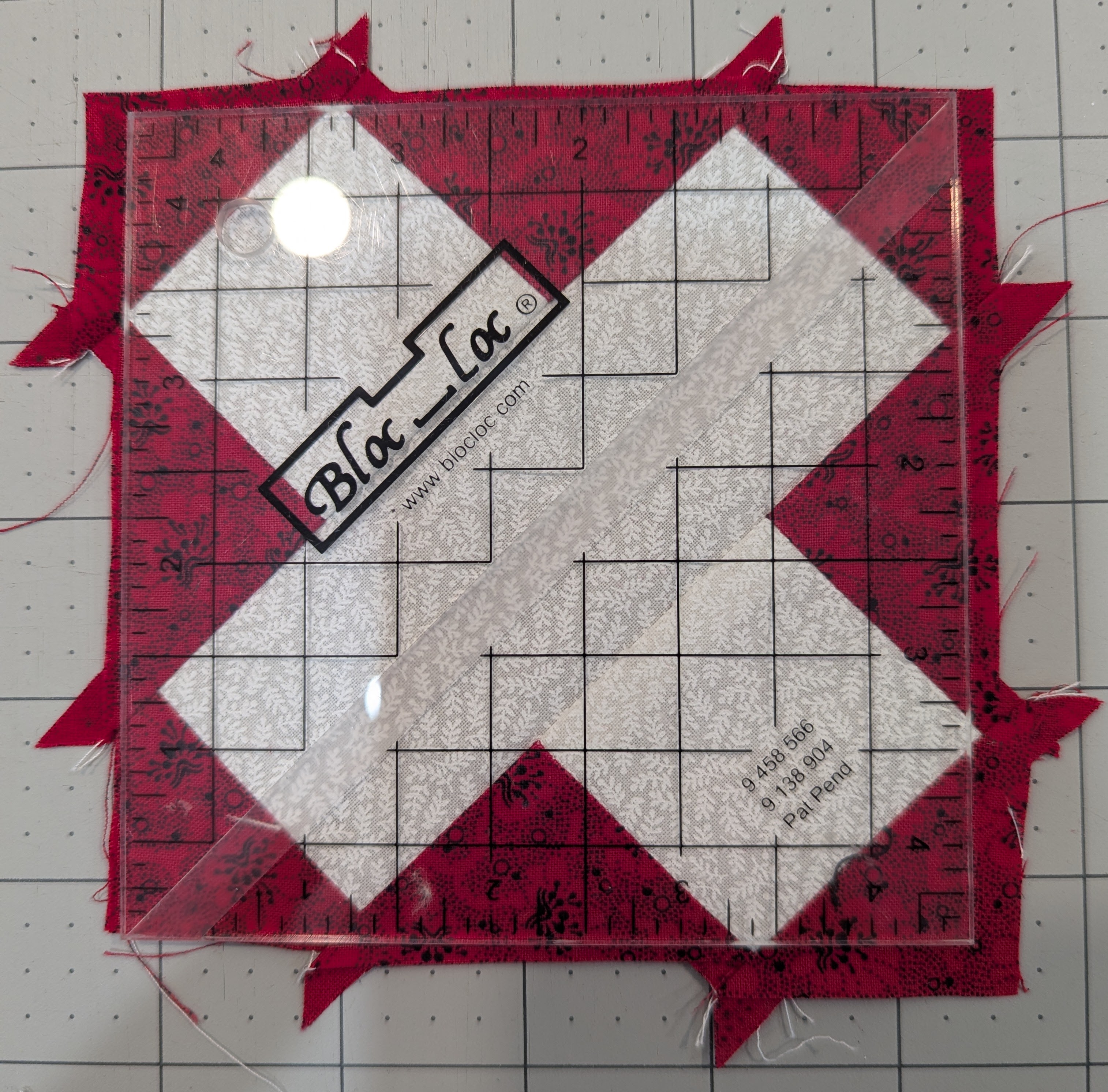
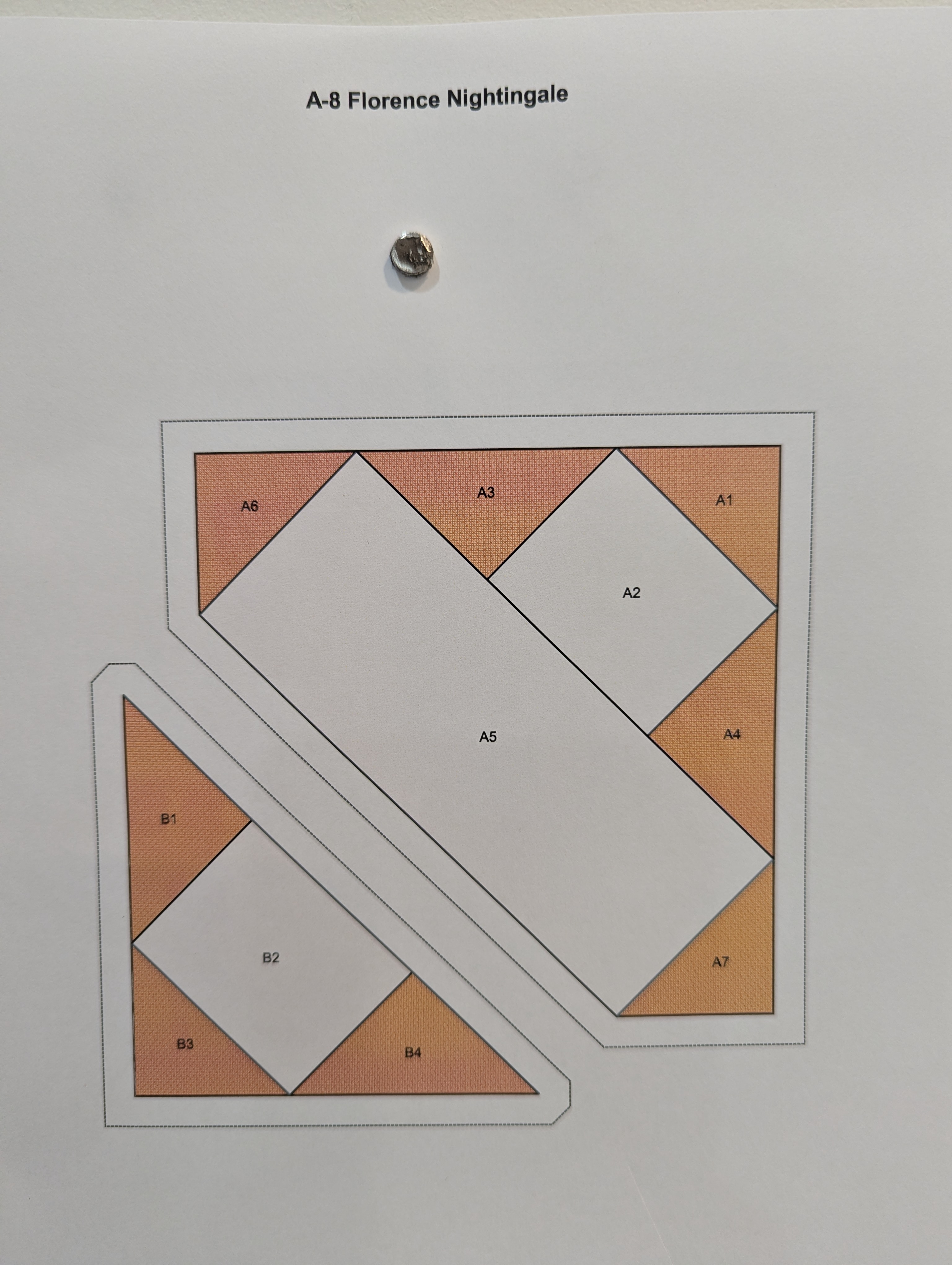
I am used to working with my rotary cutter and ruler to construct blocks. So I chose that option first from EQ8.
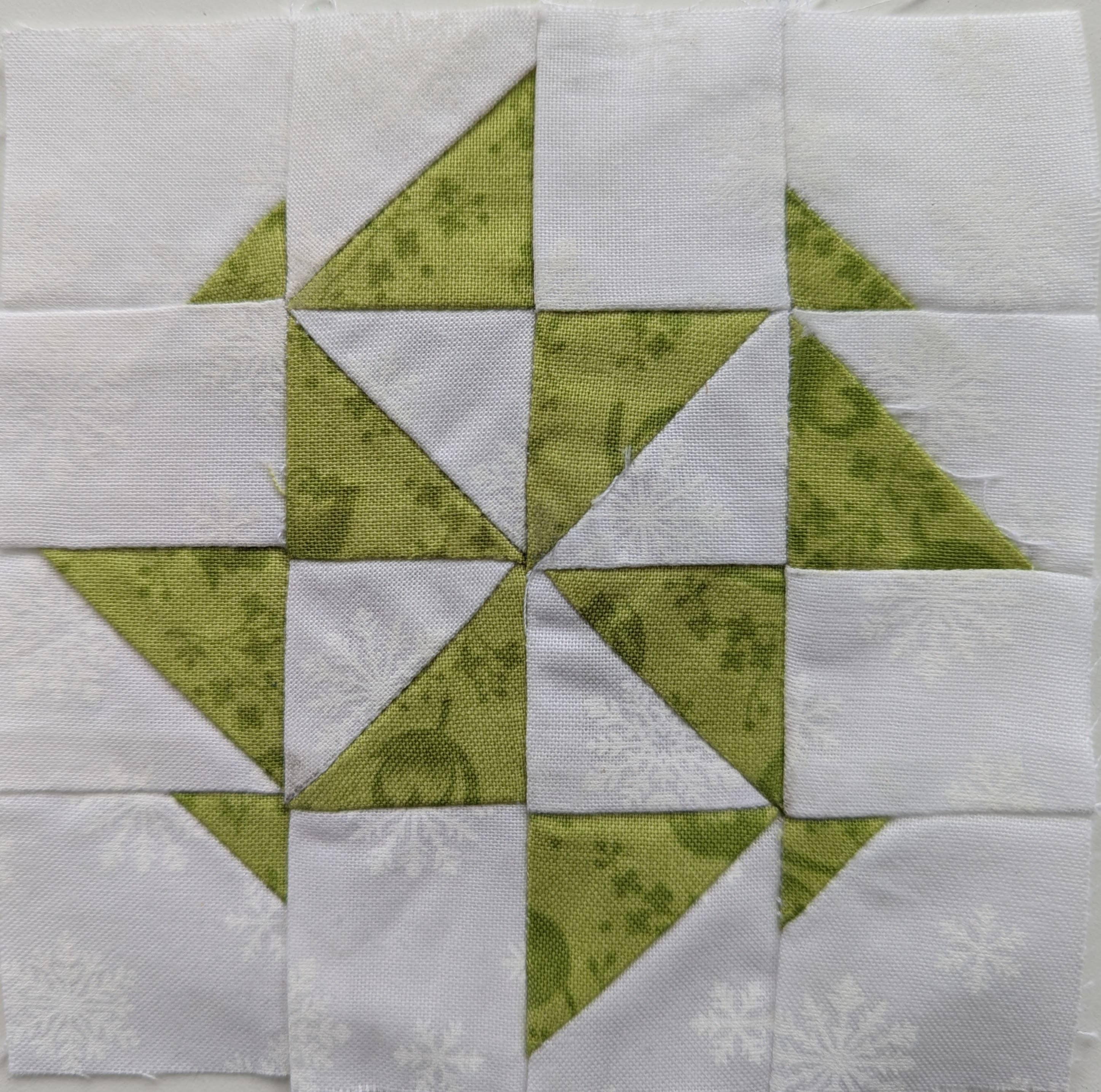
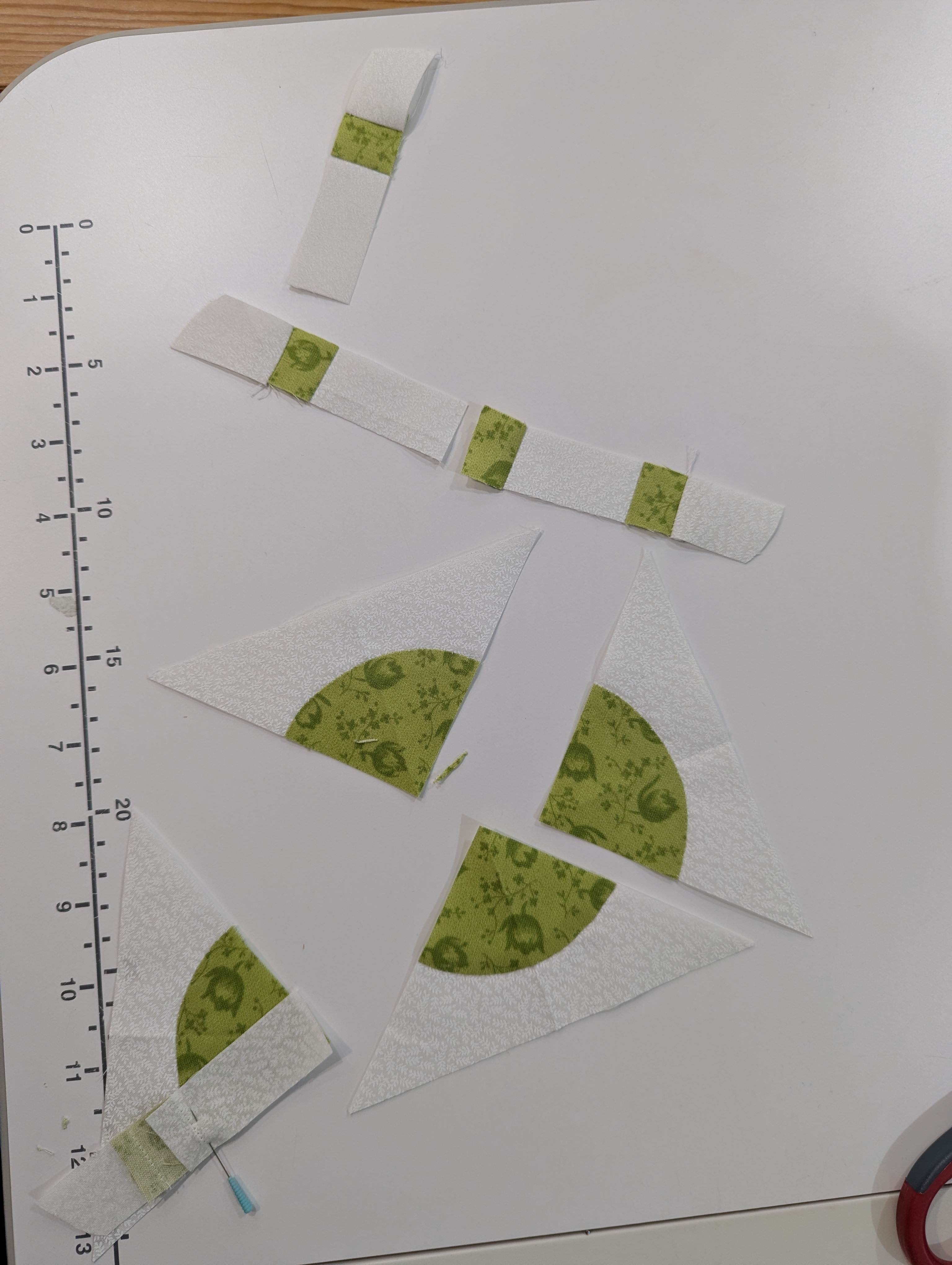
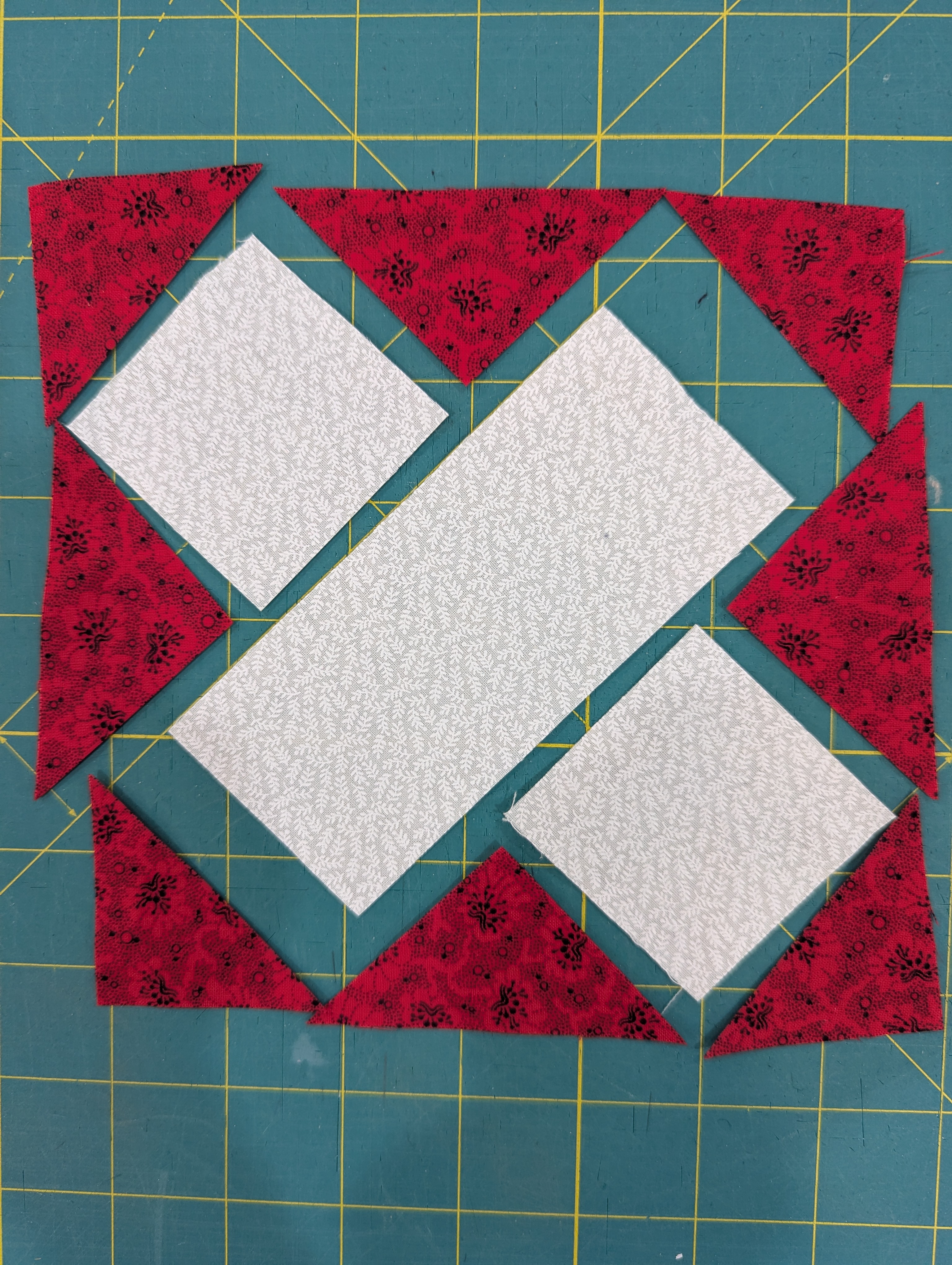
It looked straightforward, so I converted the decimals to fractions, cut my pieces and prepared to sew.
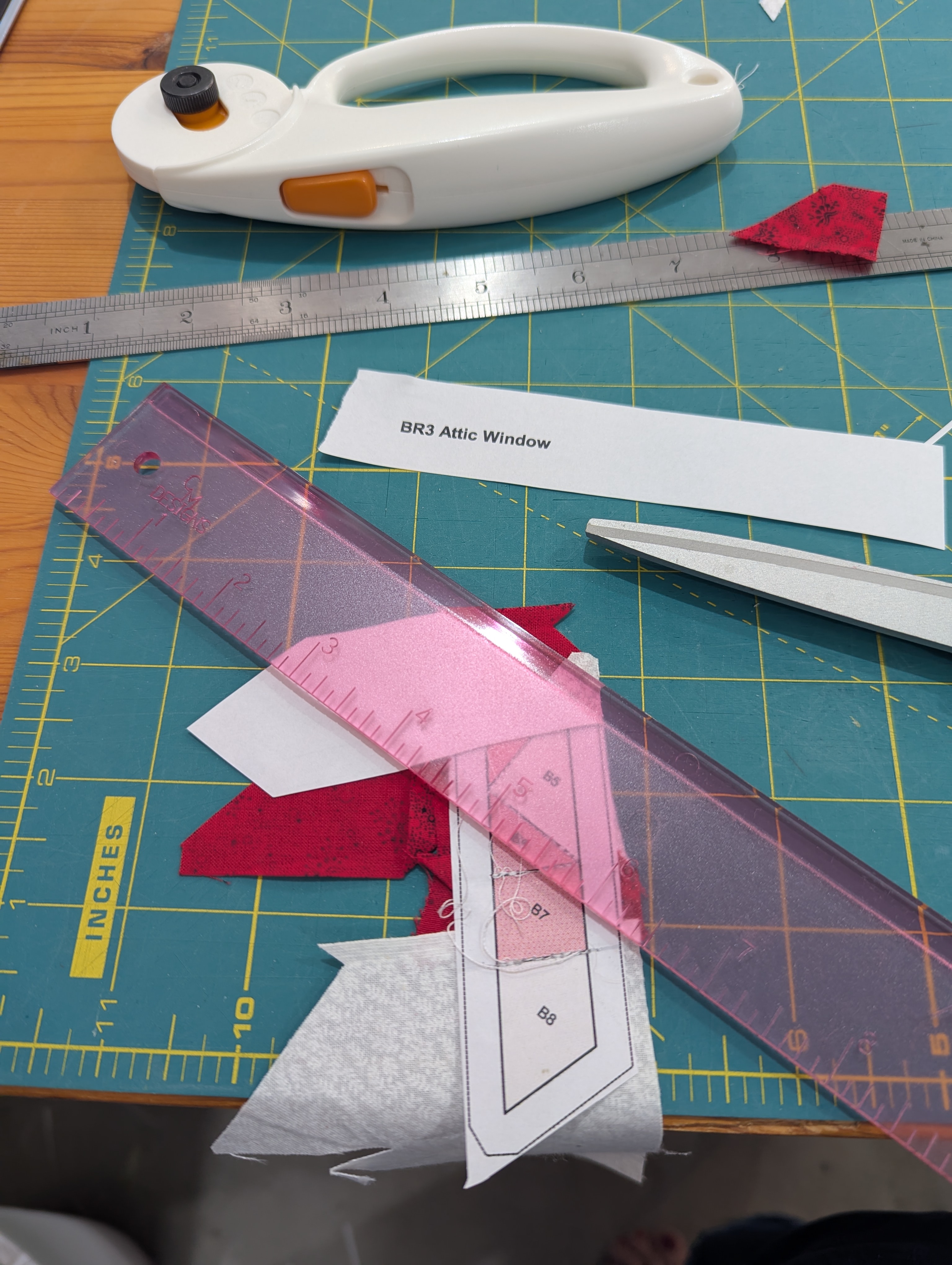
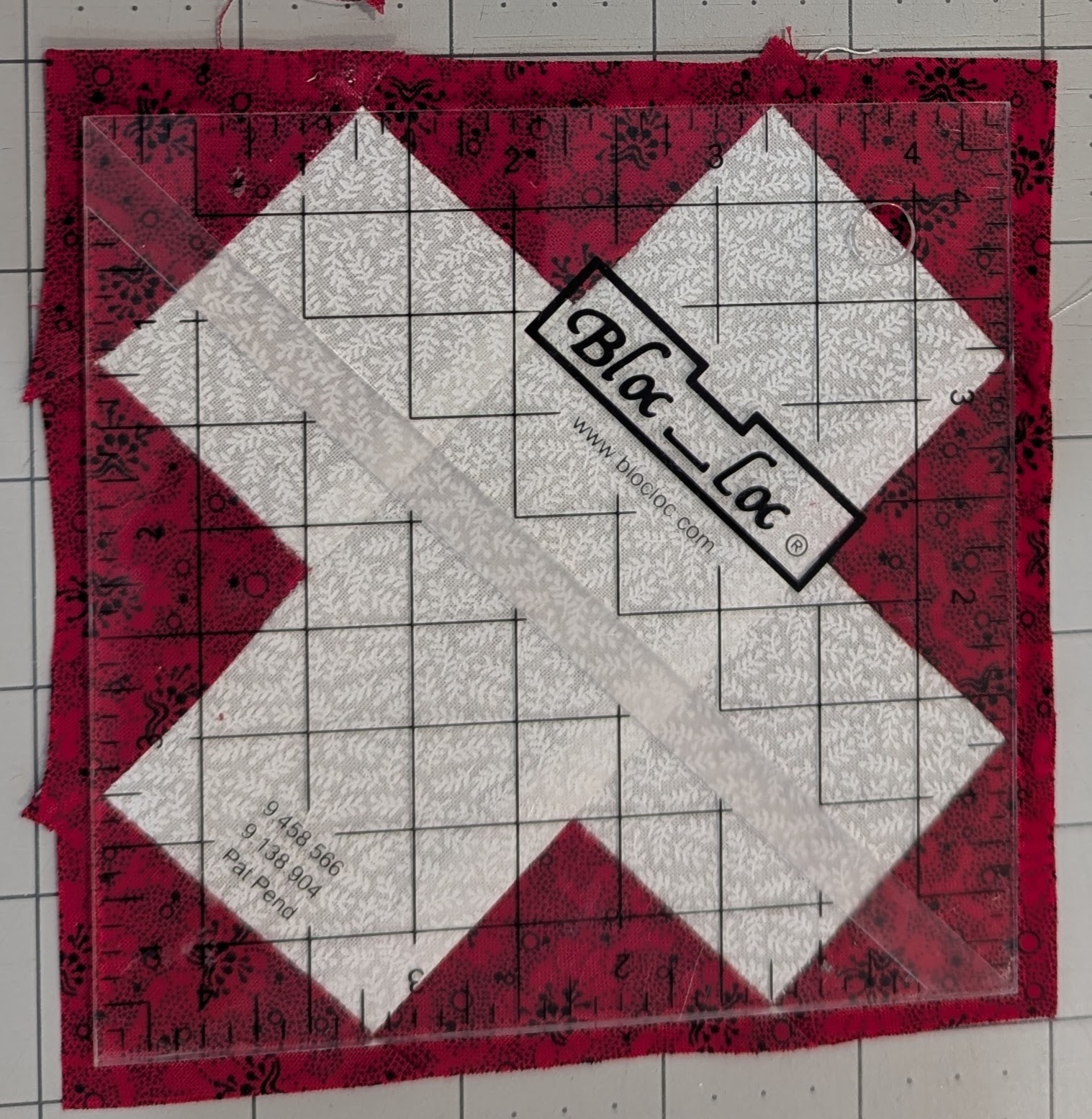
The blocks are to be 4.5″, so I found my only 4.5″ ruler, and checked it out. As you can see, it’s a little wonky. I definitely don’t have a quarter-inch seam allowance to use when I connect blocks with sashing at the end.
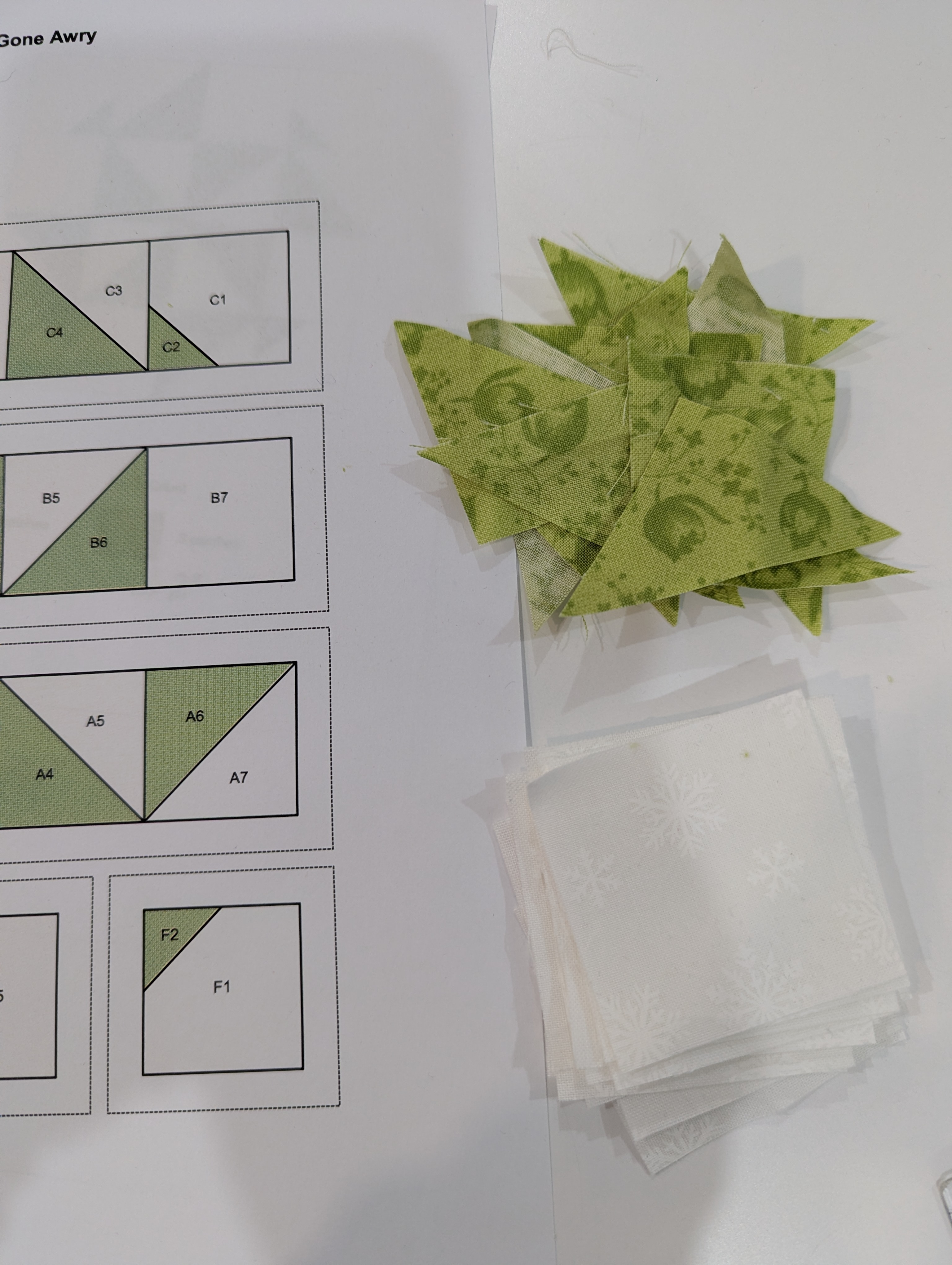
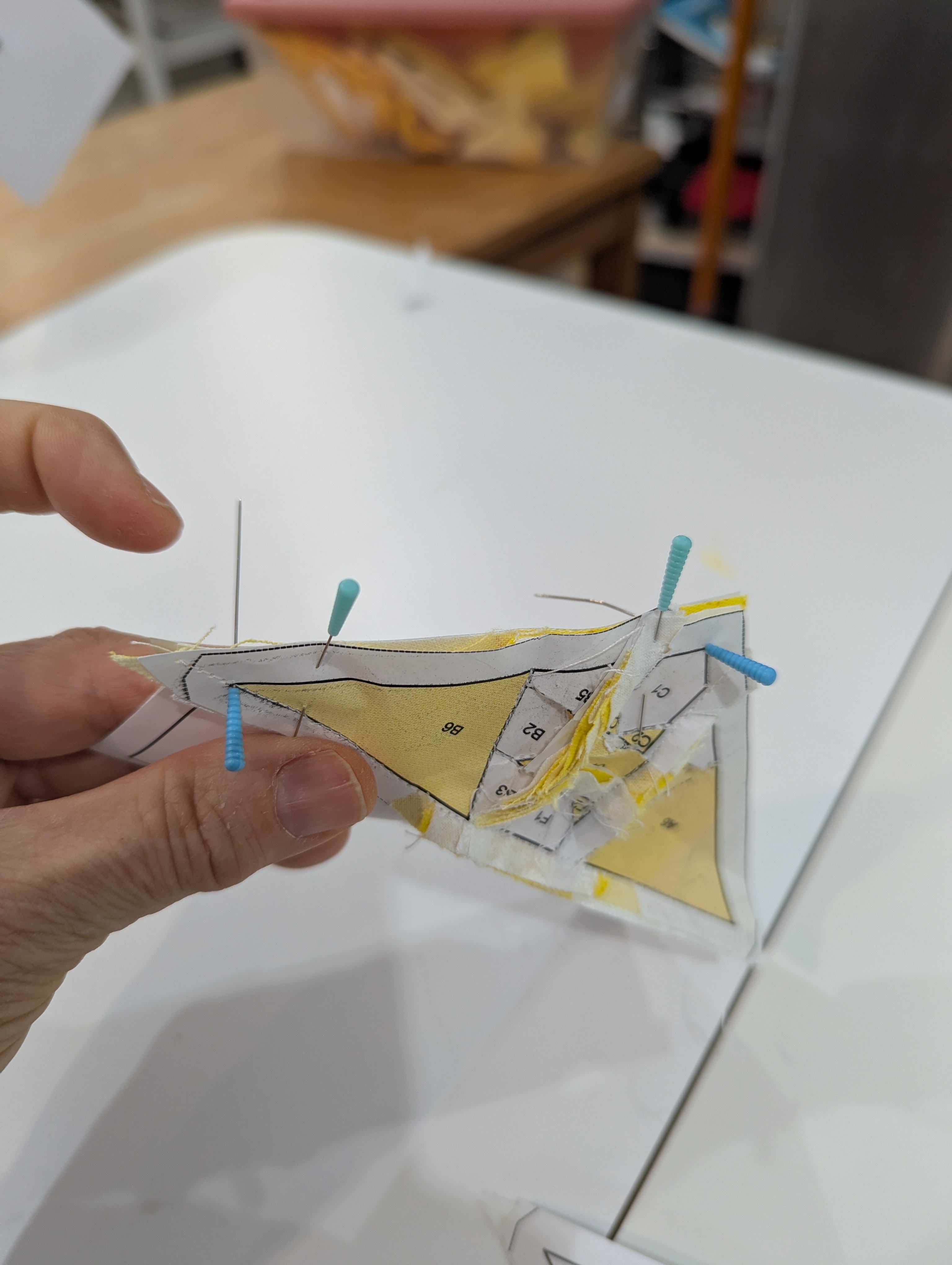
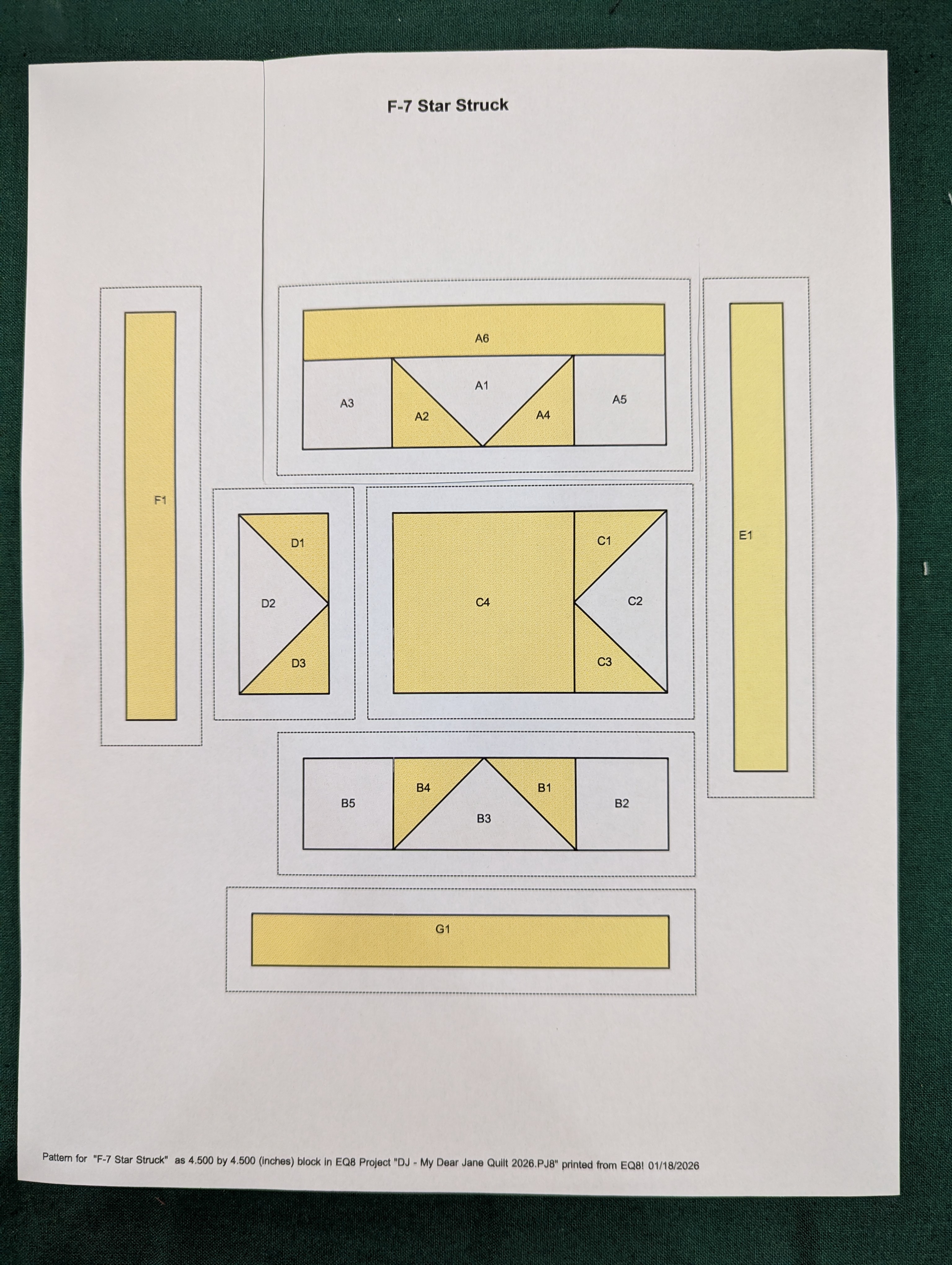
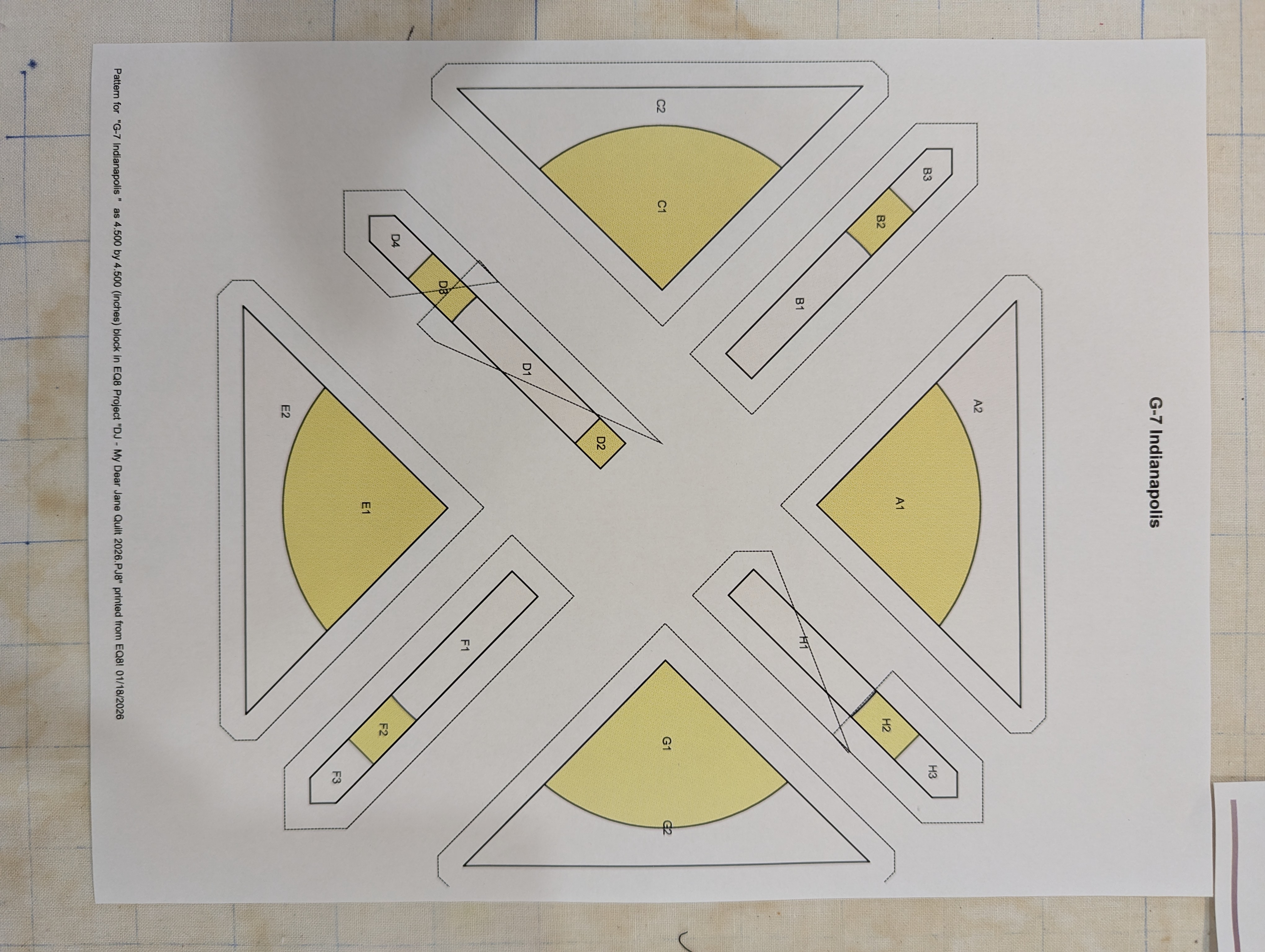
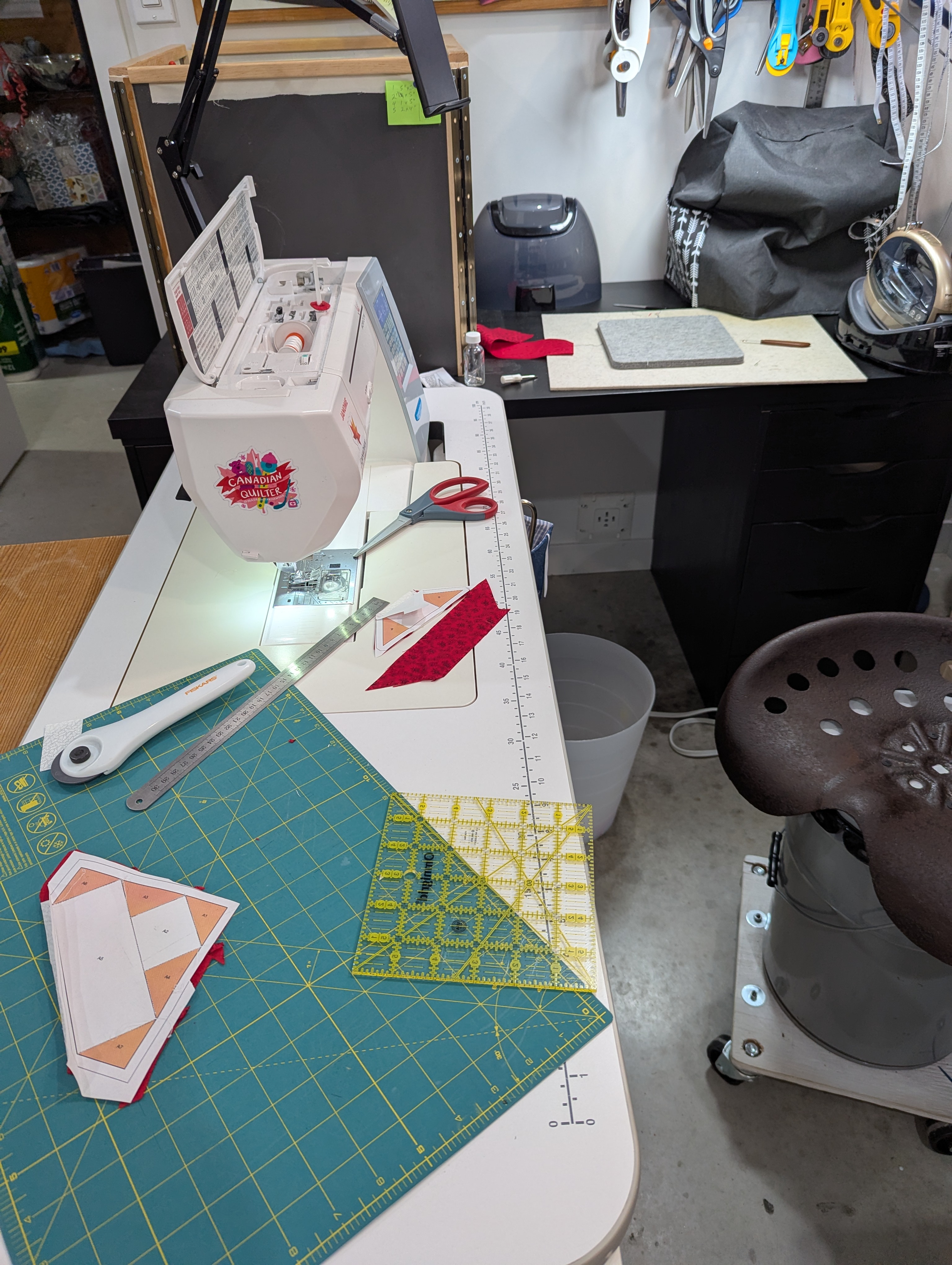
So, I then thought I should try out the foundation paper piecing (FPP) option:
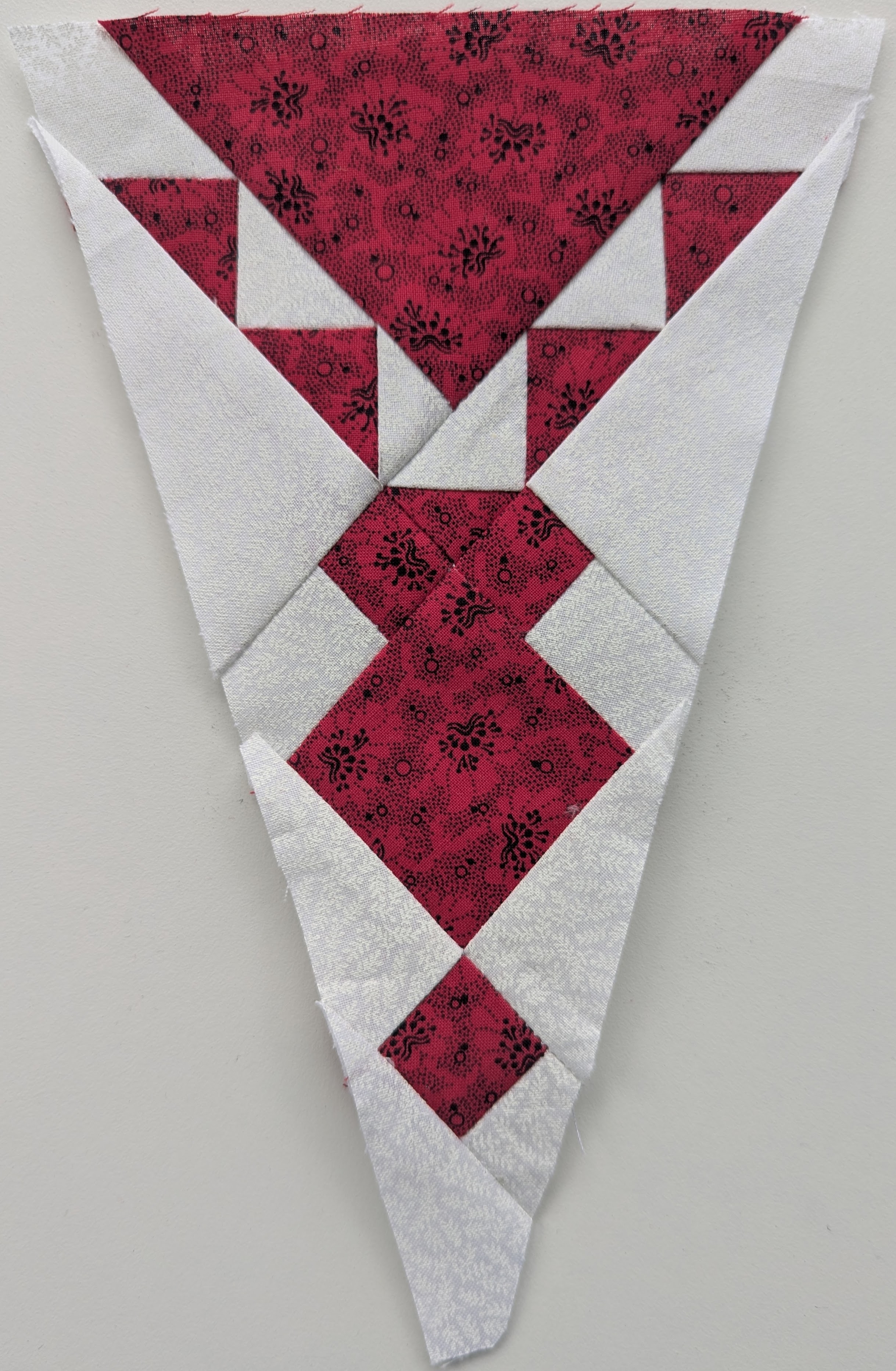
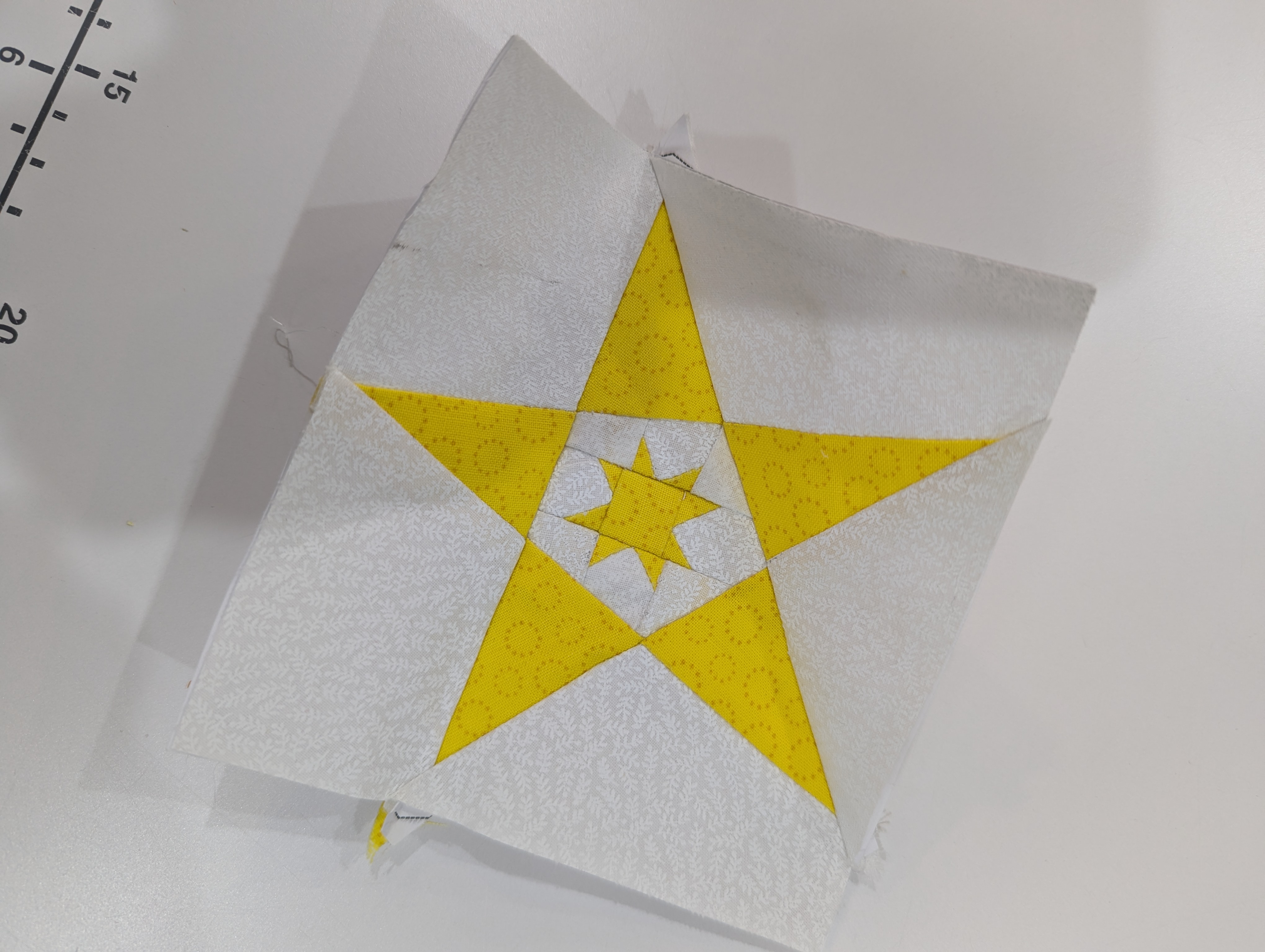
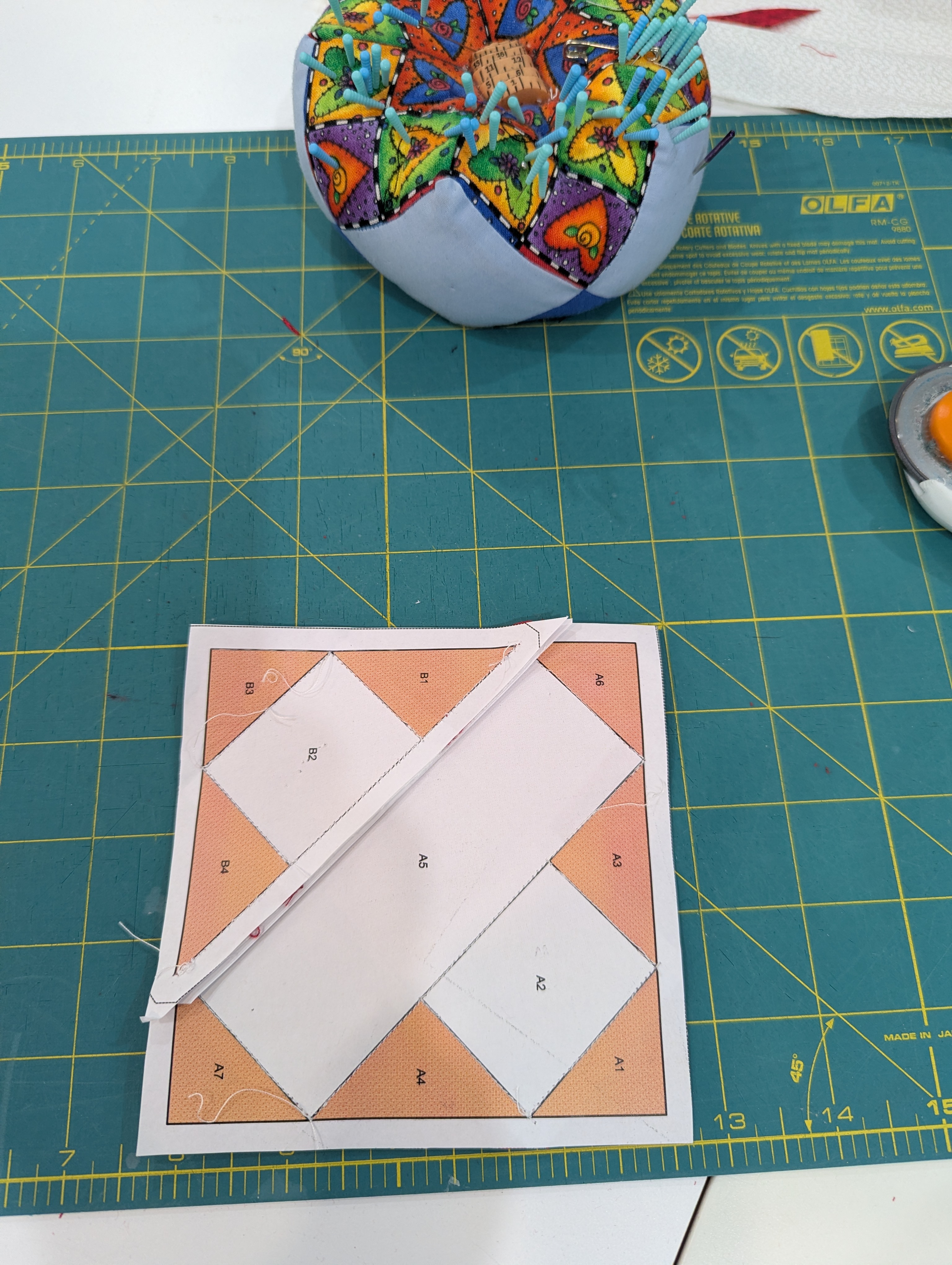
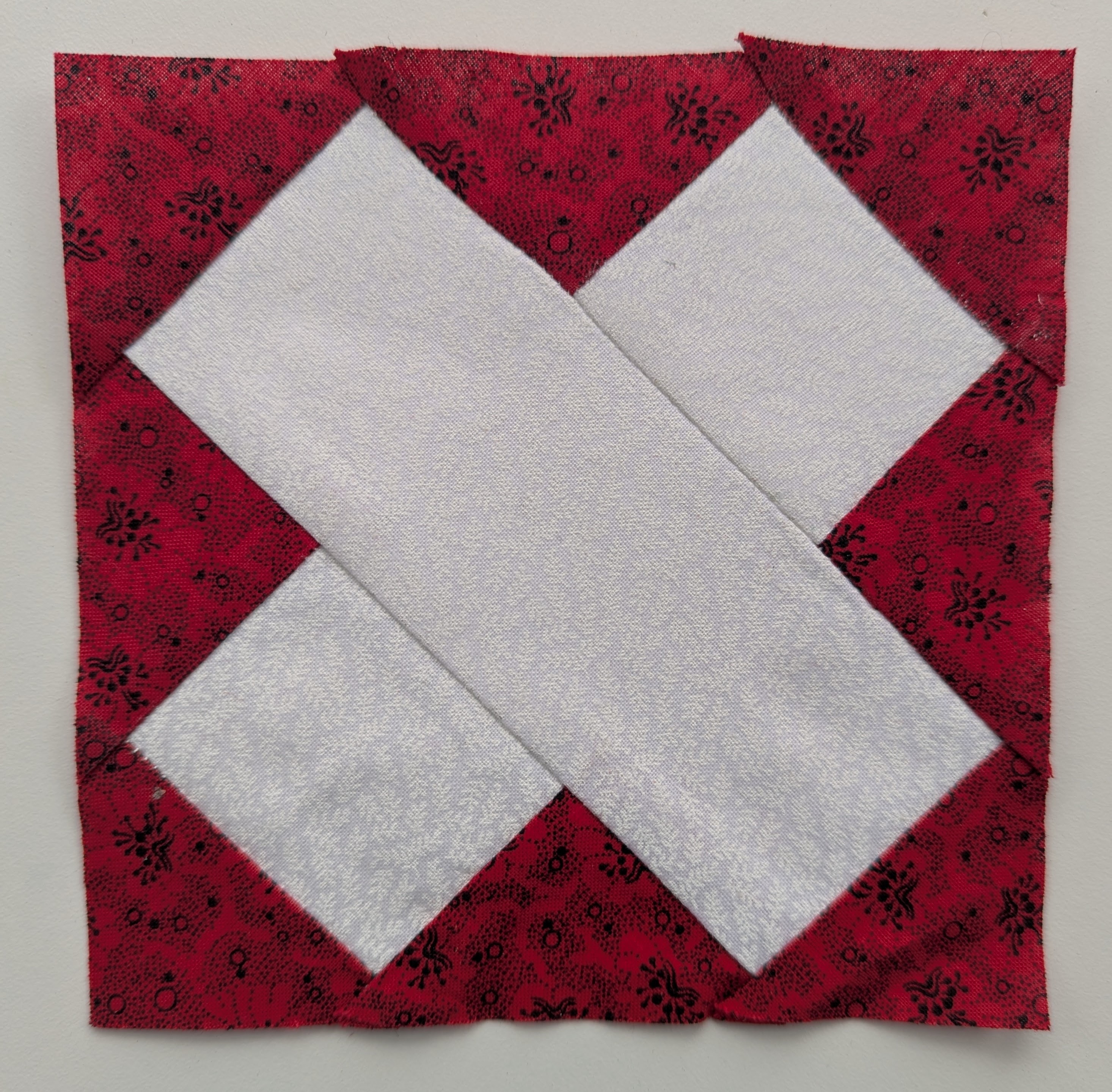
I printed it on regular printer paper, and used the same fabrics:
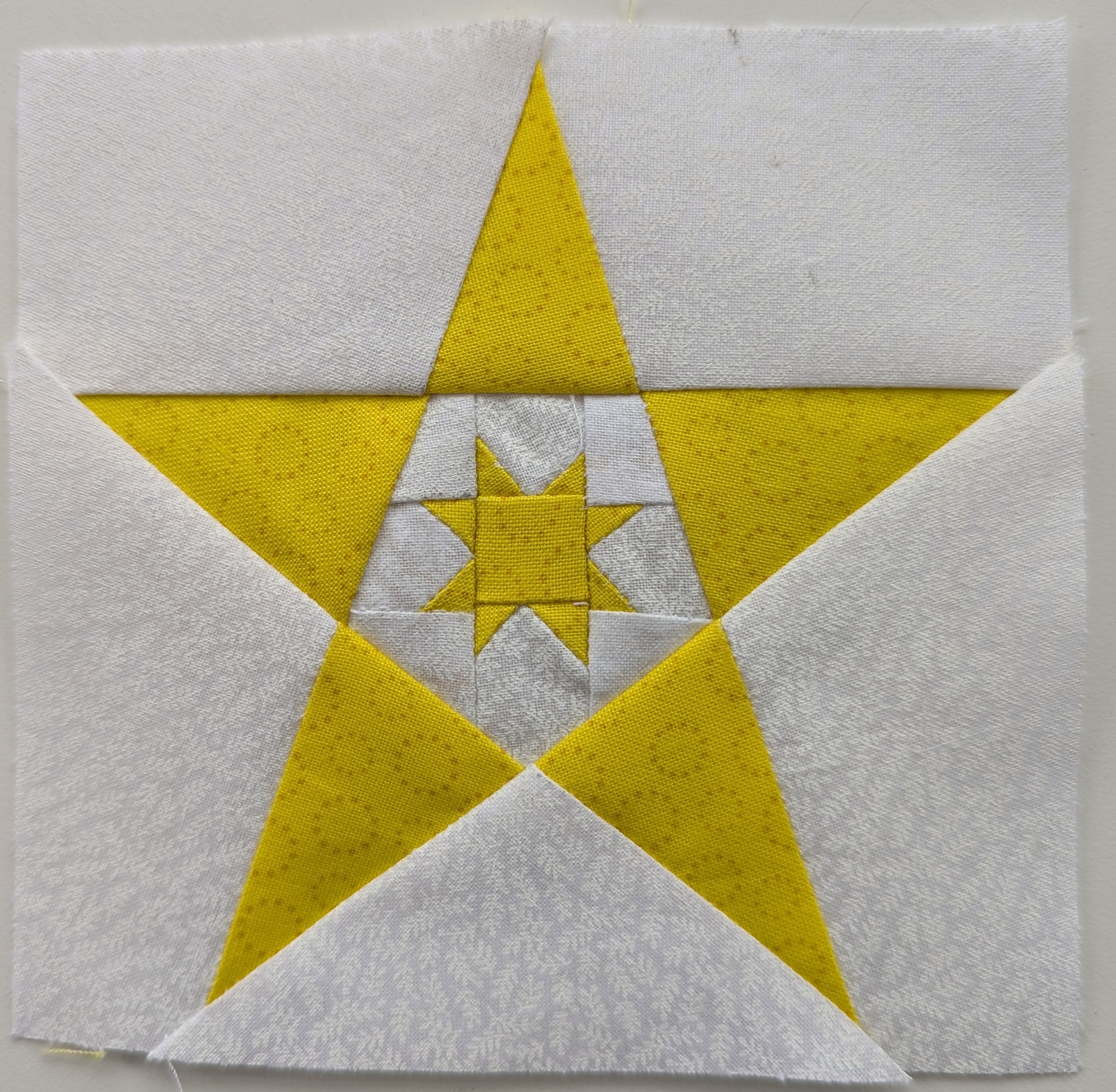
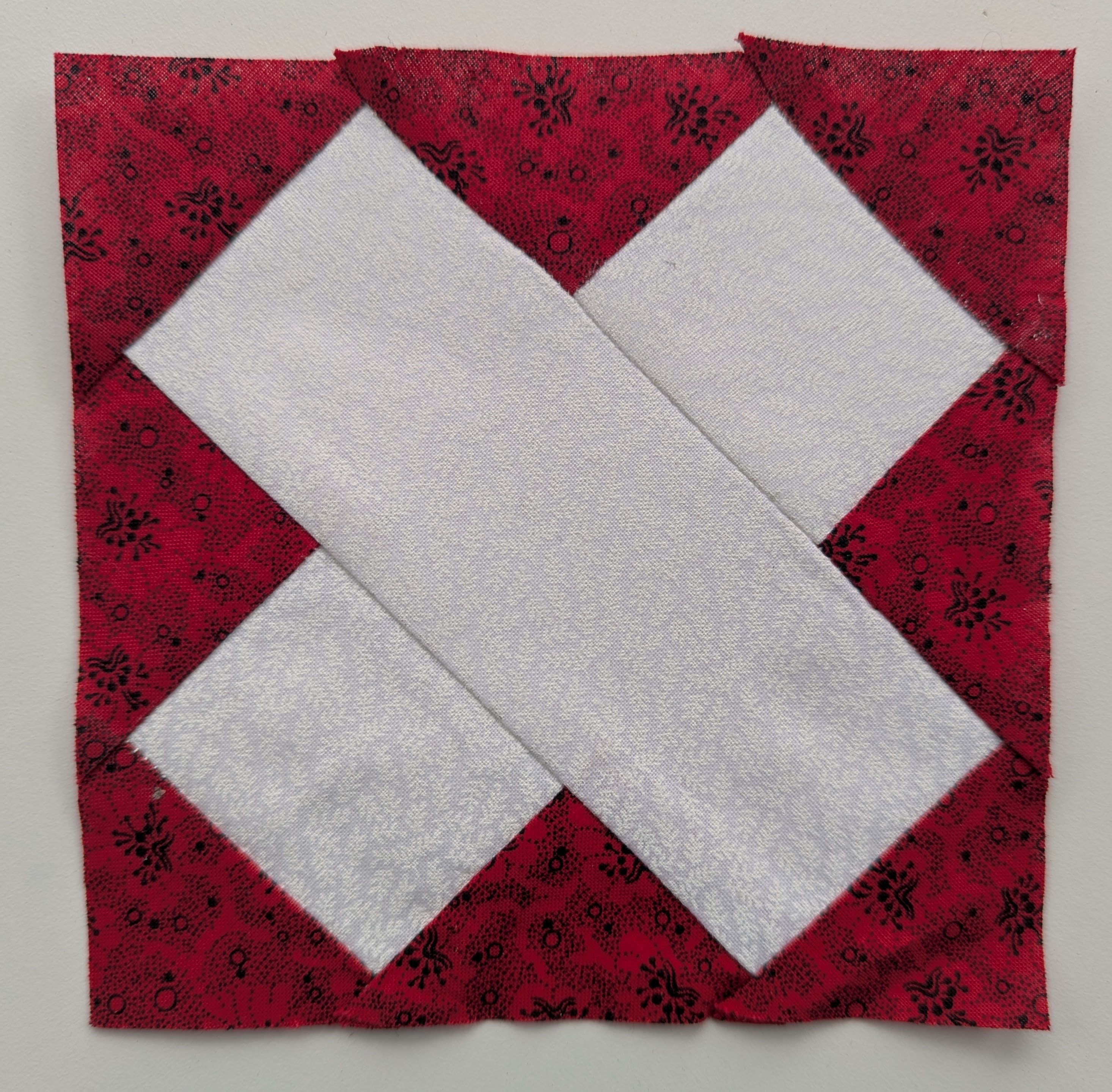
This one is MUCH more accurate. Foundation Paper Piecing (FPP) should give me the ability to retain my points when I piece the quilt top.
Successes:
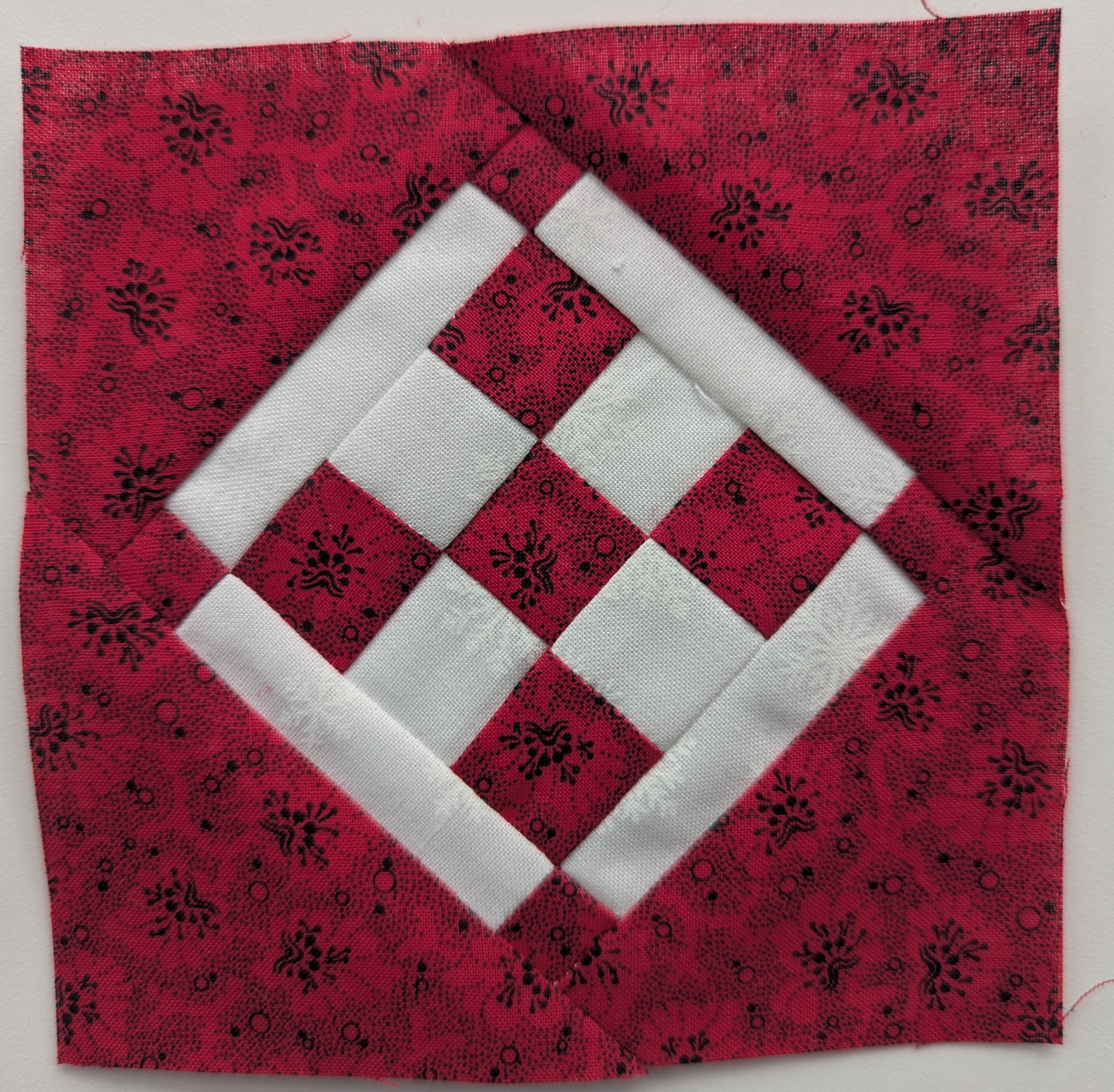
lovely contrast of white and red
final block that is large enough to be trimmed to finished size
Challenges:
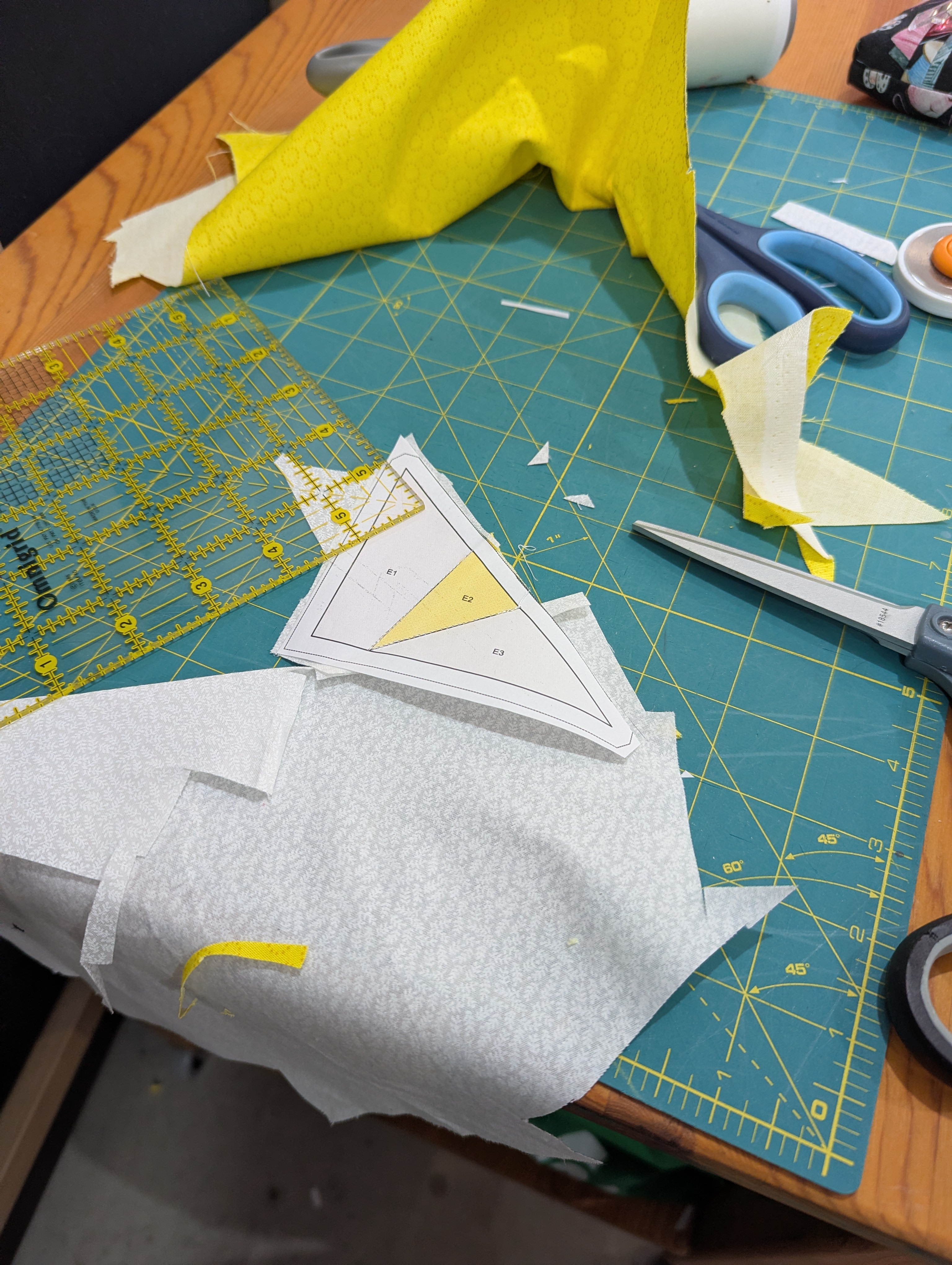
I will have more waste fabric using FPP rather than rotary cutting
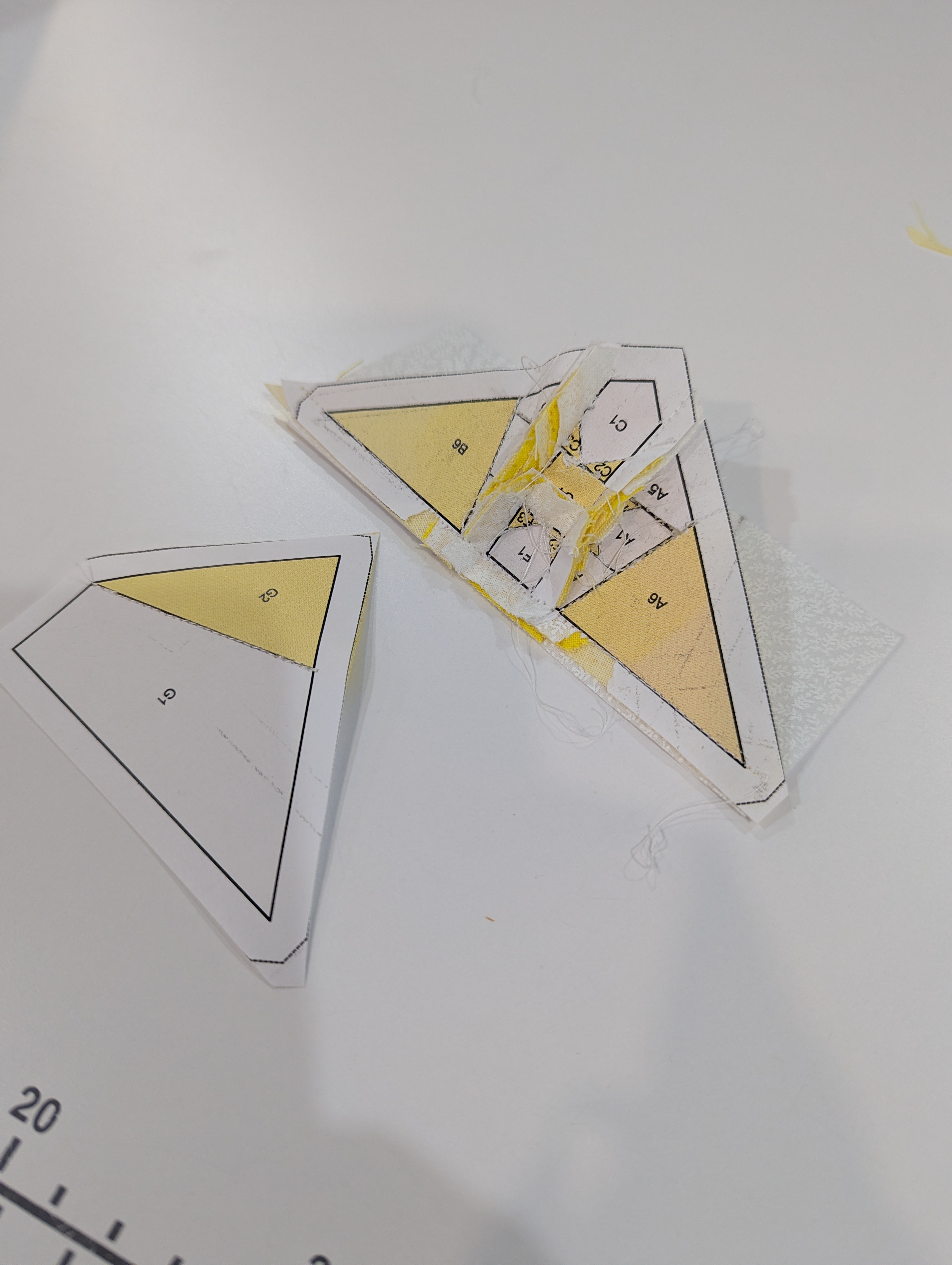
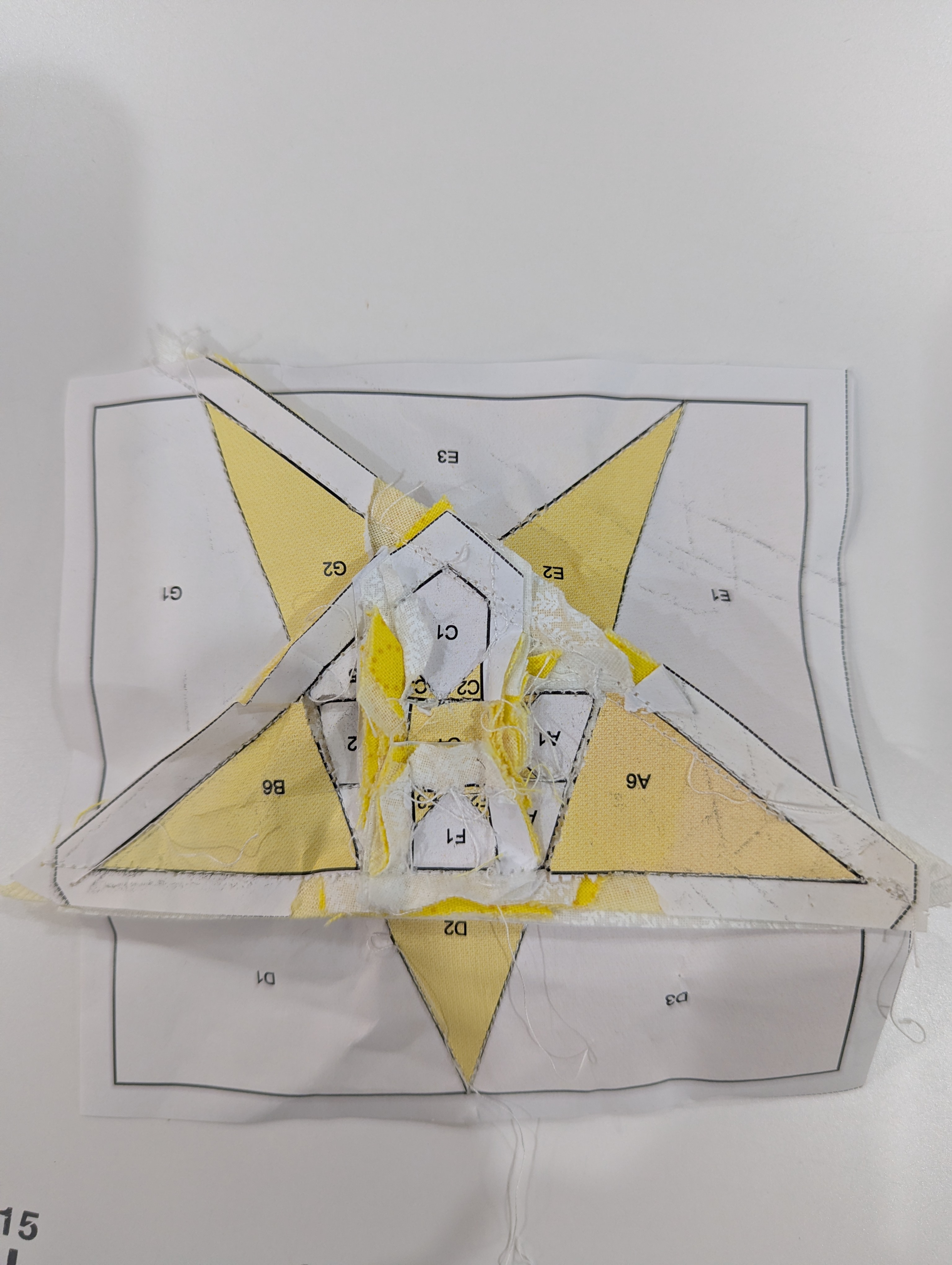
I destroy the pattern when doing FPP, so I have no paper to file and document the block
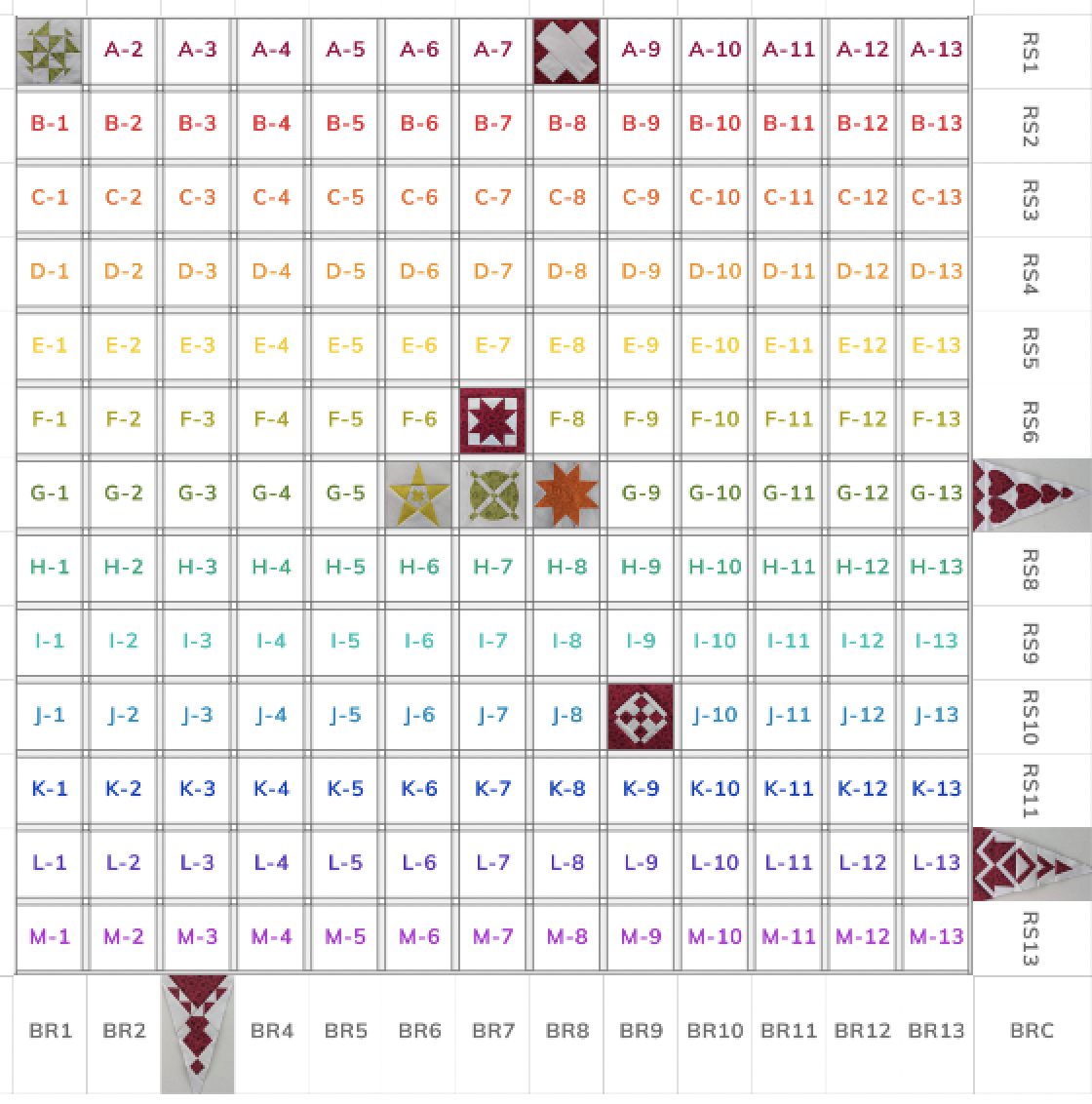
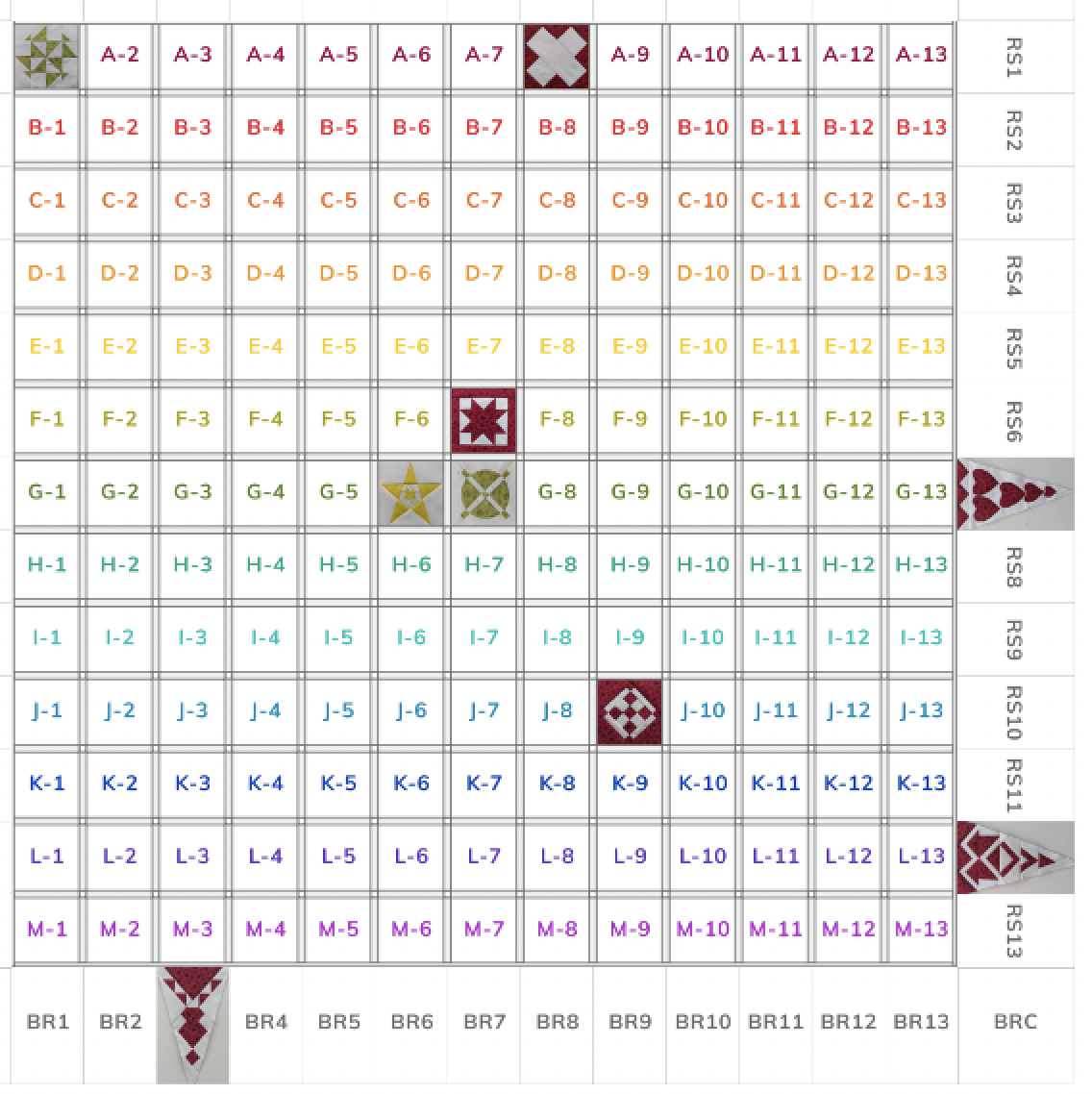
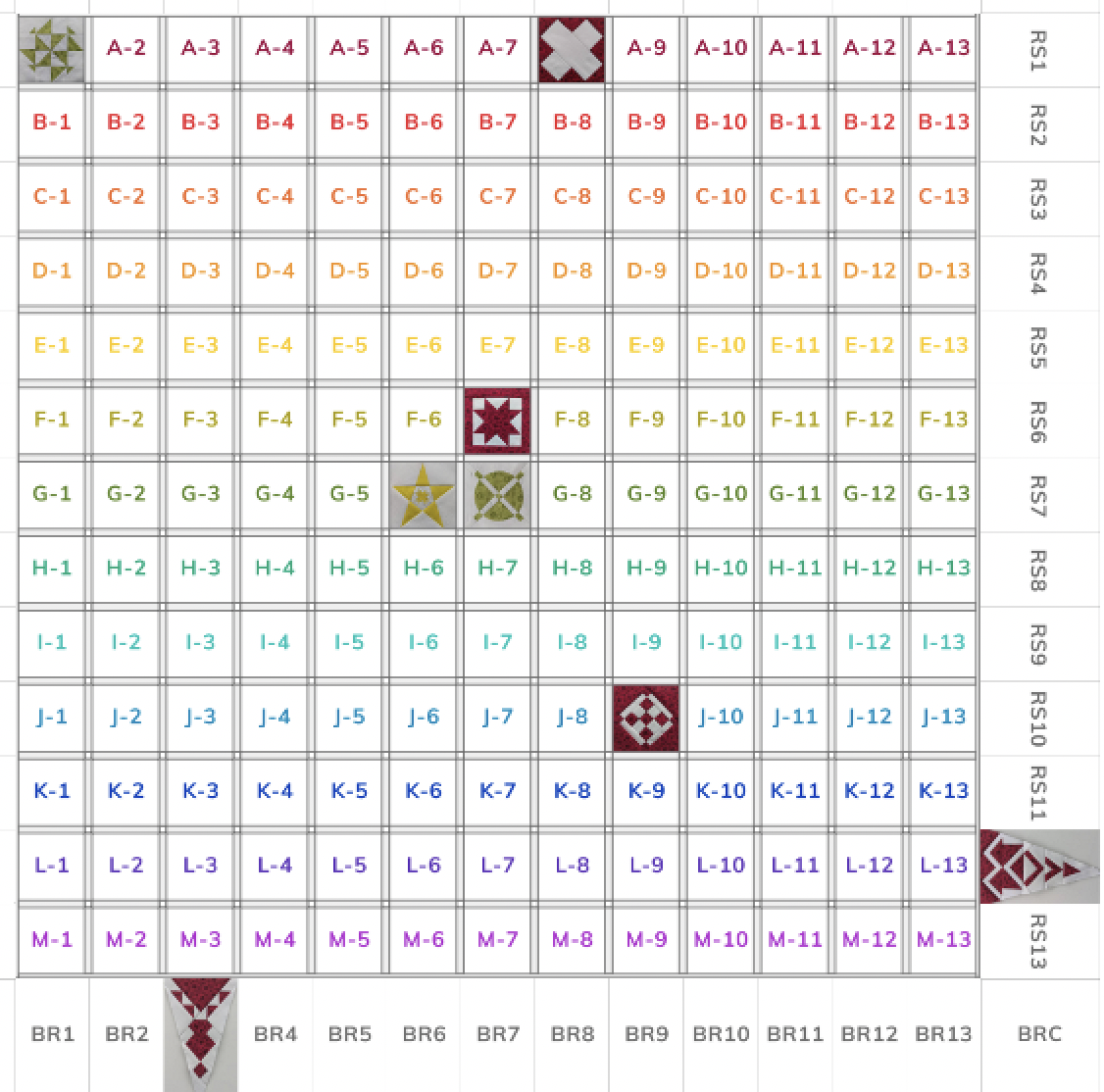
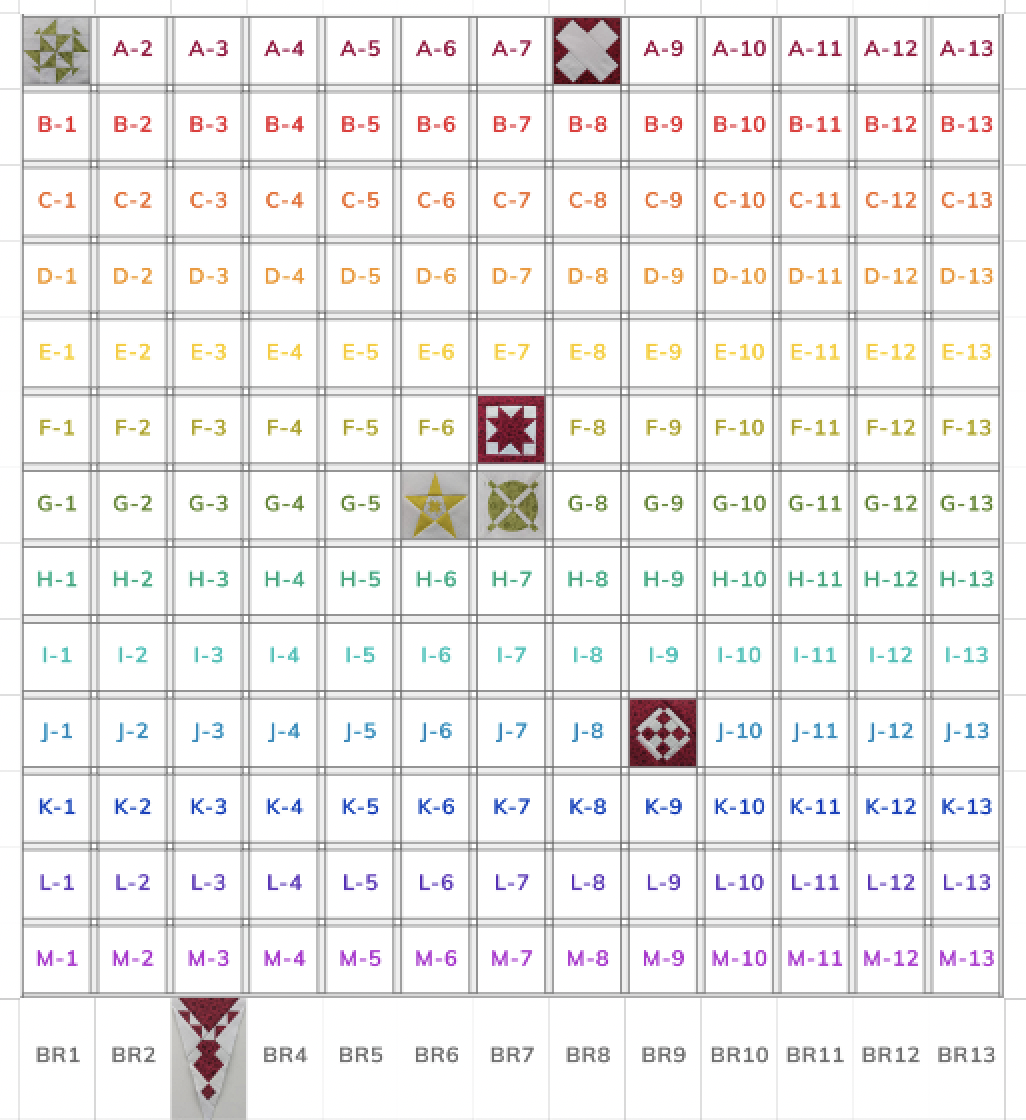
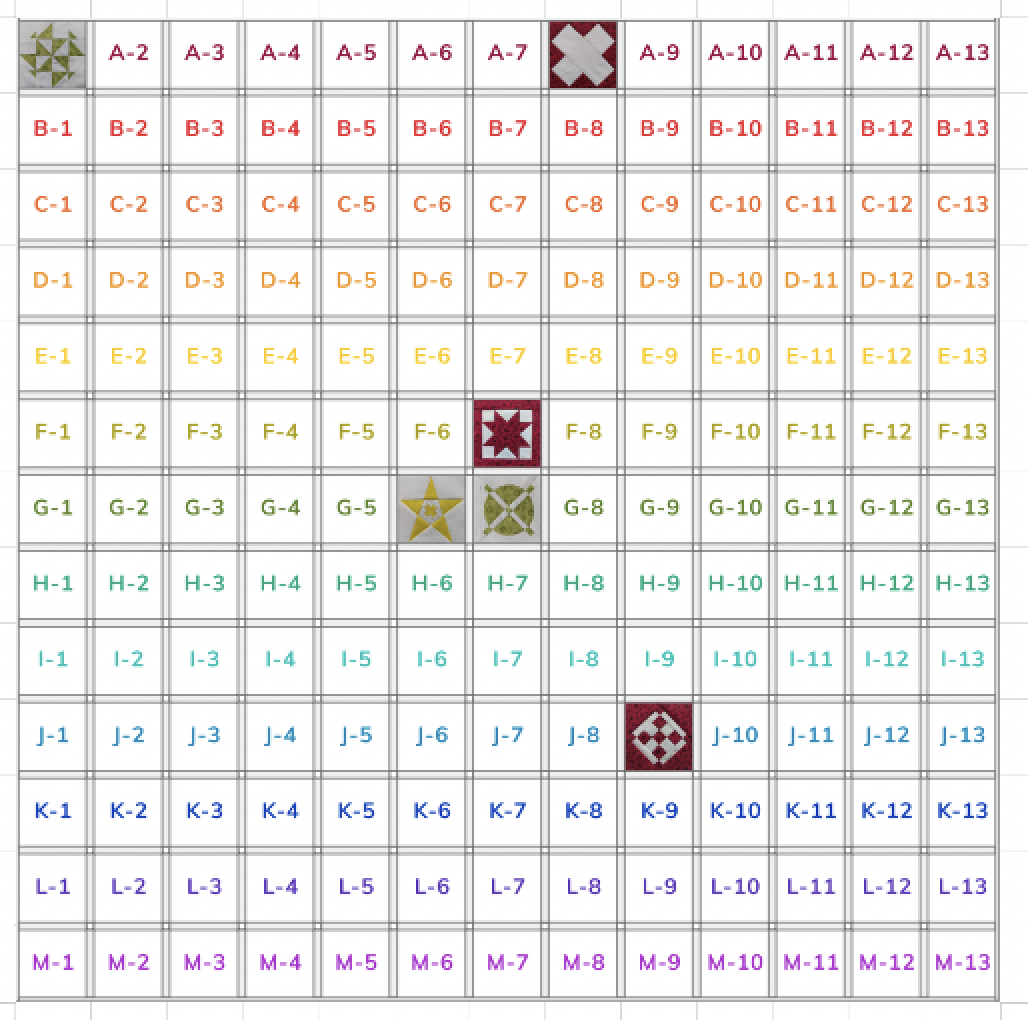
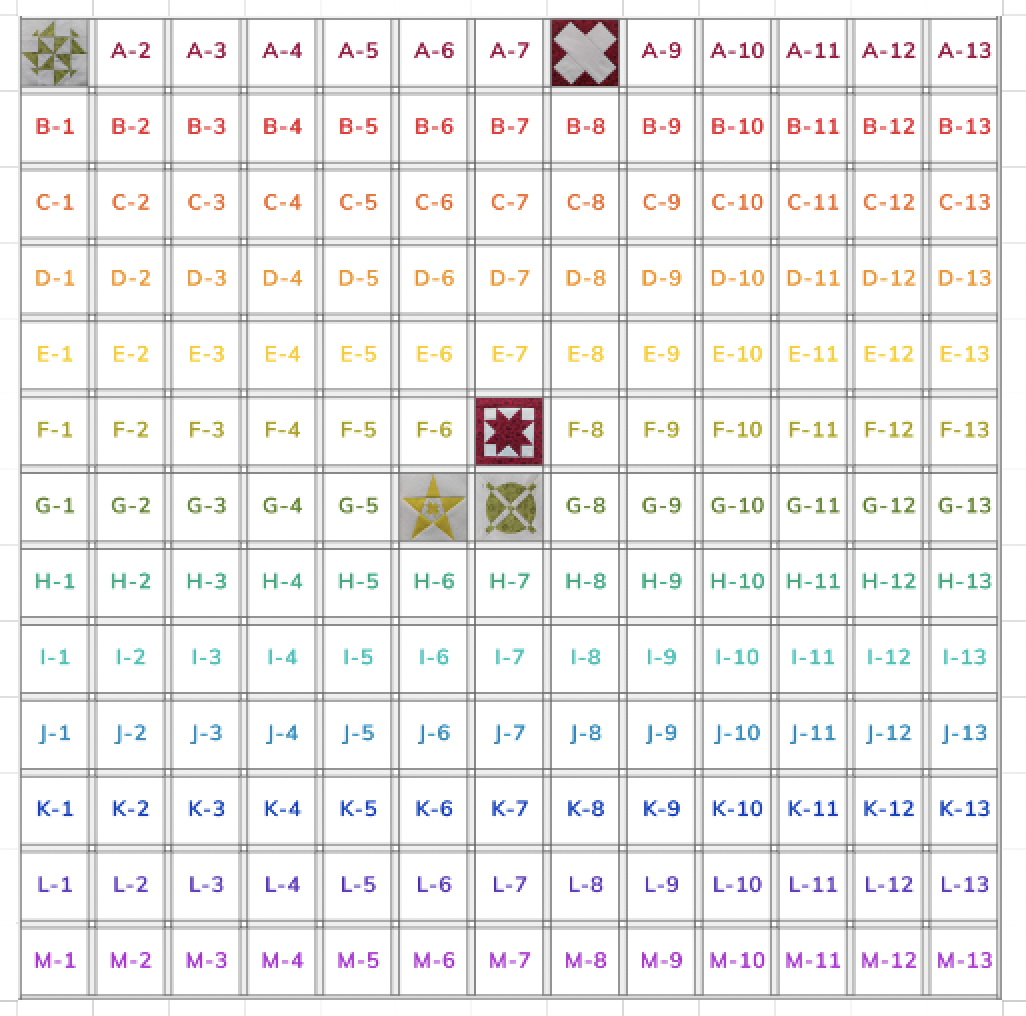
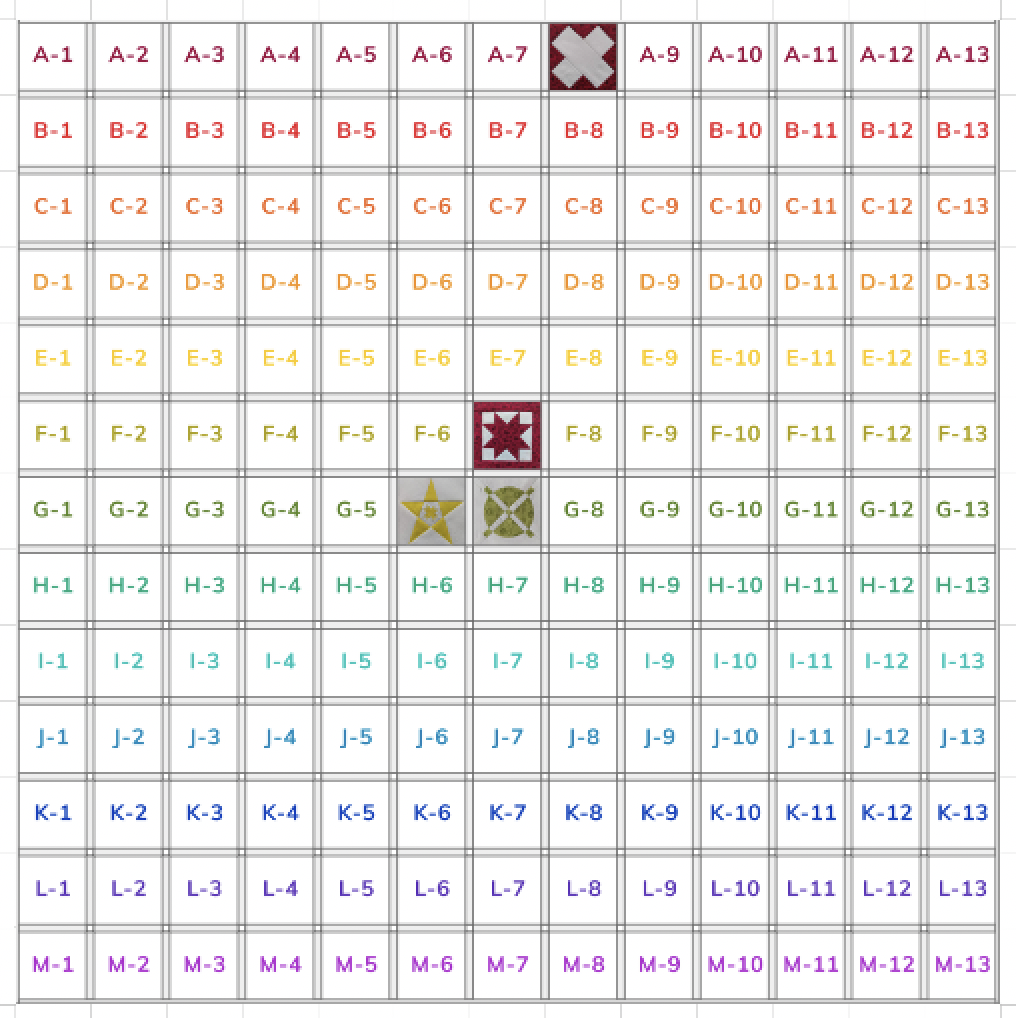
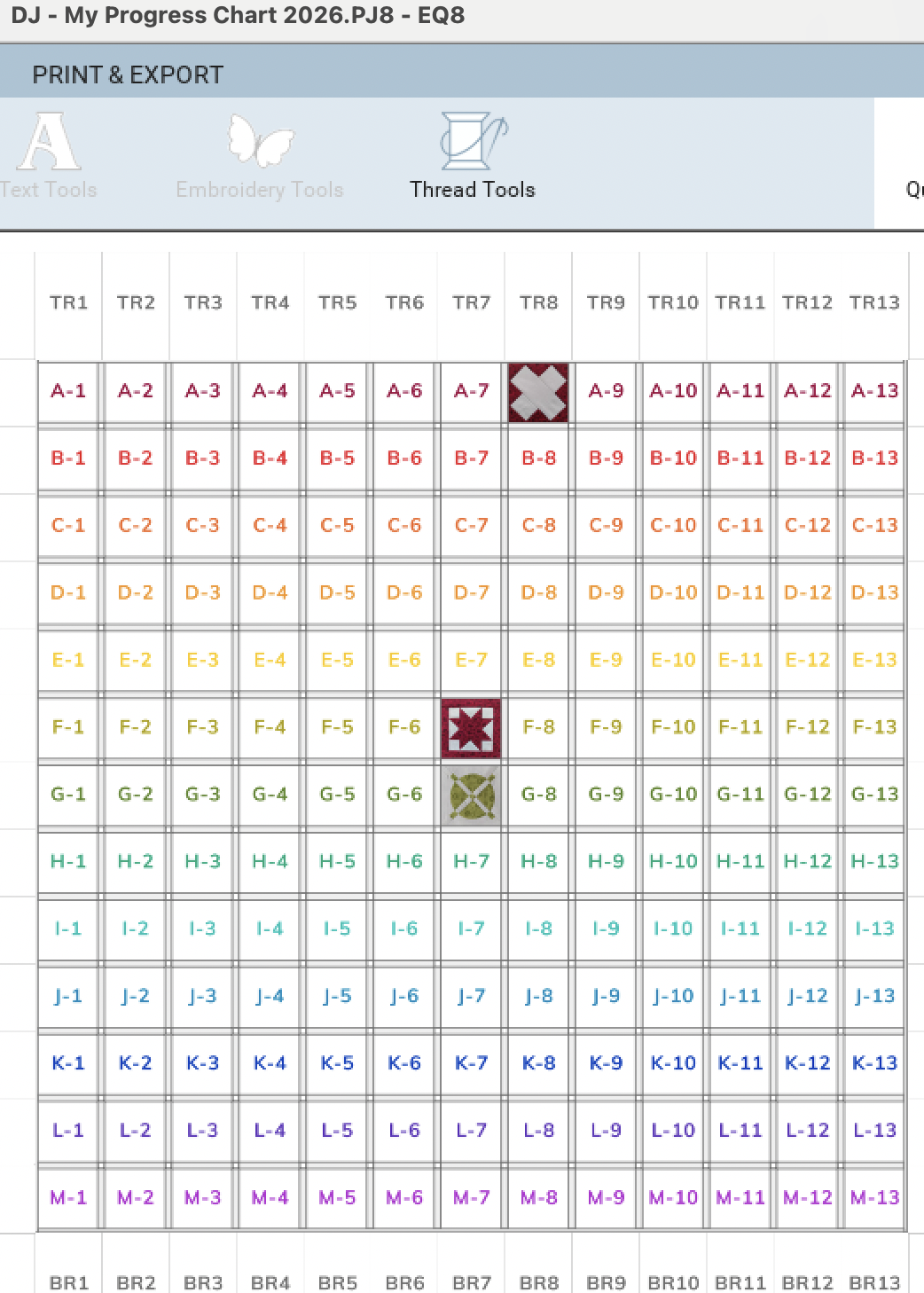
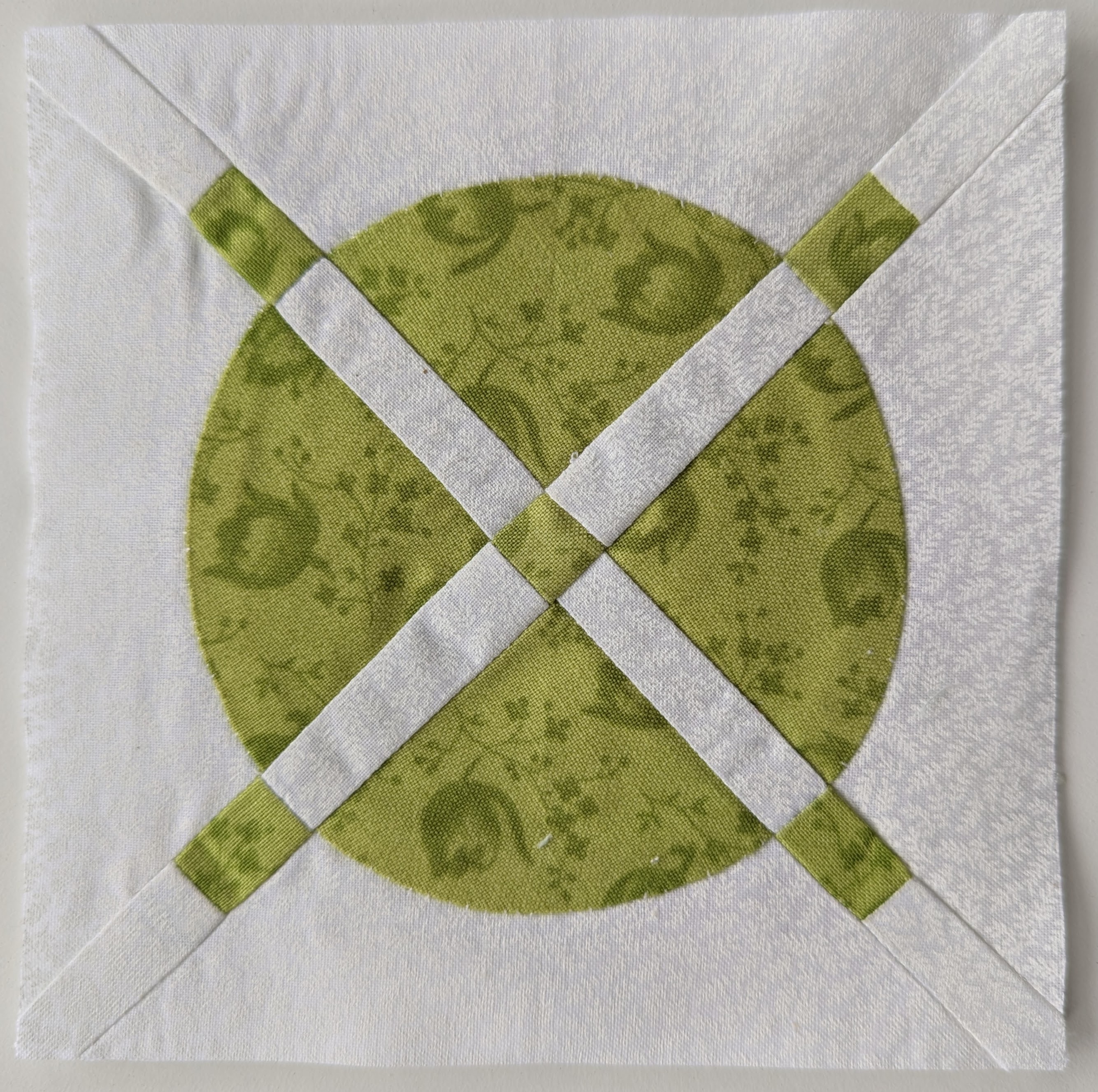
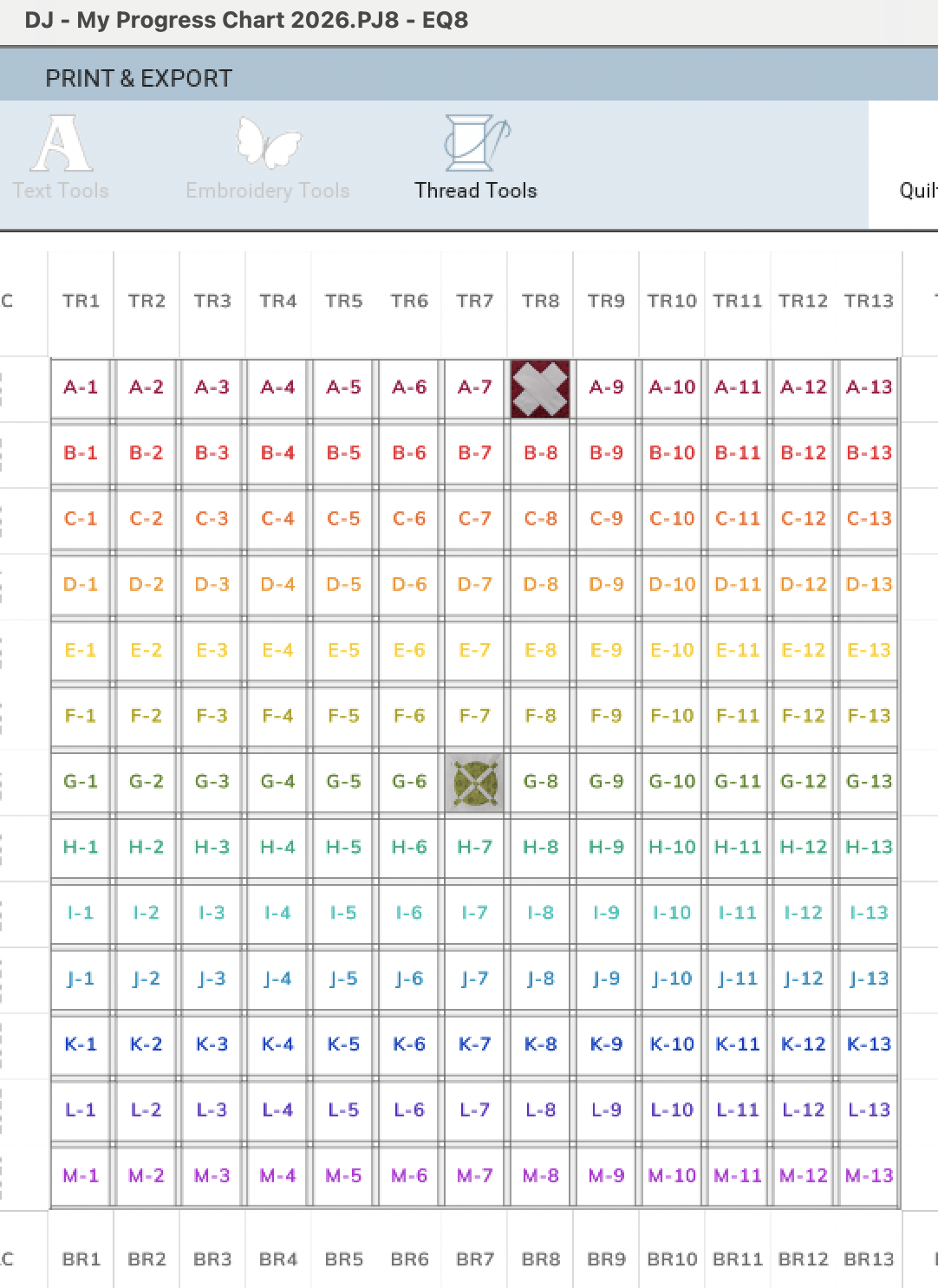
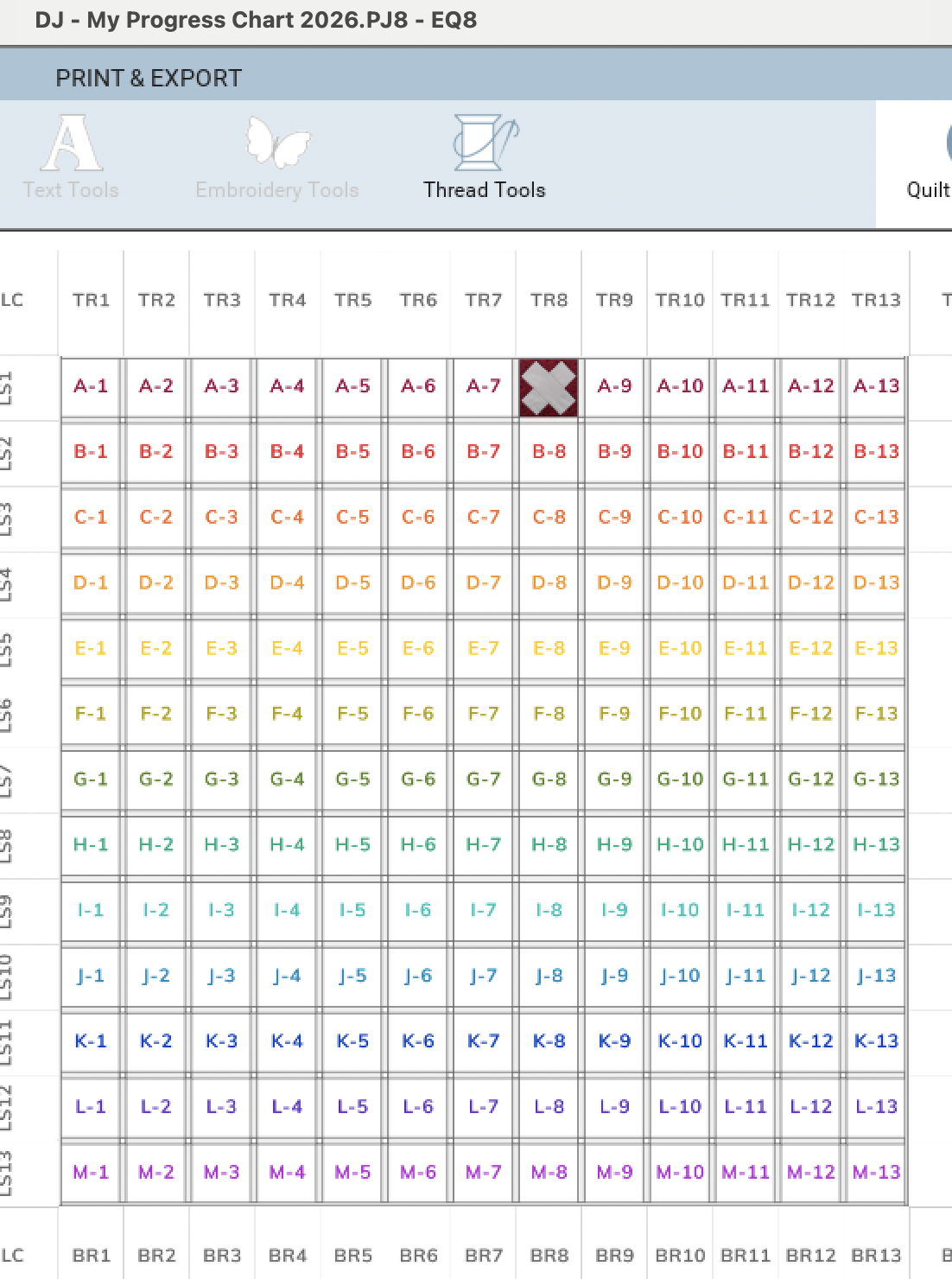
And here’s what my quilt looks like so far:
I’m awaiting delivery of a new “Add-a-quarter plus” ruler, to help with the Foundation Paper Piecing. And I have also ordered liquid starch to use when tackling my needle-turn applique blocks. I have joined three Facebook groups and subscribed to several YouTube channels, in order to research techniques for each block as I encounter them. Hopefully this will speed up the process on some blocks, and ensure that I don’t need to make more than one version each time!
Every New Year I vow to use what I have, and not purchase new, for my studio. This year I am hoping that this purchase will support me in this endeavour.
I have loved doing the HundredDayProject over the past few years, and have successfully reduced my stash of yarn by crocheting 100 granny squares, have learned how to use my Cricut by making 100 boxes, and last year I worked my way through Tula Pink’s 100 Modern Quilt Blocks. However, I found myself having to “work ahead” in order to consistently post one item per day, when I was going to have to be away from my studio for several days.
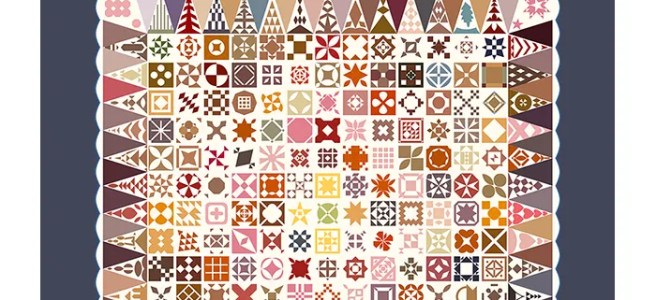
So, for this year, 2026, I propose to follow a similar model, but to not use “day” as my unit. Instead, I propose to complete the 225 blocks of the Dear Jane quilt, posting each as I complete it. To that end, I have purchased the EQ8 add-on, and will be developing greater understanding of this software through this project.
Having been inspired by the Quilt Alliance, I am also going to document this quilt (having never done so over 35 years of quilting), and will reference this blog when I put a label on the completed quilt (which I have only recently begun to do with my quilts!).
Here are the rules I have set for myself:
I will use only fabric from my stash.
I will “tackle” the blocks in the order that inspires me.
I will photograph each block, and add it to the layout, providing me with a virtual “design wall” that I will be able to utilize as the quilt progresses, and to determine the final block layout.
I will document each block in a separate blog post, and for each I will note technical details, as well as the challenges and successes that I experience completing the block.
I will accept that this could be a multi-year project!
Here are some useful links, relating to this project:
It’s been ten days since I lost it in a public place. A good friend was hurt, and had the courage to share this with me in the moment. And I was able to apologize over email, and she generously replied with an acceptance.
But, I have not yet, despite more than a week of restless nights, figured out how to “fix” this with those who observed my bad behaviour.
Despite more than 40 years in education, where I was given the responsibility of helping adolescents manage their emotions and behaviour, I still haven’t figured it out for myself. And due to my success (at least on paper), I am held to a higher standard, both by my community and by myself.
I have looked for role models in public life, but there are few examples I can find of those who have acknowledged and apologized for their behaviour. We have far more examples of those who take a defensive position, gaslight their critics, or completely ignore the feedback they receive.
I know that those I need to apologize to will never read this blog post. But perhaps a step towards forgiving myself is to acknowledge that:
I should never shout in public, unless it is a matter of safety.
I shouldn’t speak unless I can see the eyes of the person to whom I am speaking.
I should maintain eye contact as I speak, and respond to visual cues as quickly as possible.
I should ensure I get enough sleep, in order to maintain self-control at the end of a long stressful task.
I will have many opportunities to practise these over the next year, and I will return here to reflect on my progress in each of these areas.
I am sorry that I shocked, and possibly scared, those around me. I beg forgiveness, and hope that my future actions will serve to build trust and regain respect.
I was browsing YouTube this morning, and overheard a statement made by the narrator of a series of profiles of YouTubers called Rogue Reality, this one relating to Kate Jackson of the Last Homely House (https://youtu.be/XlZ8aXjzURM?si=5tvgfDof6kORN22y).
LEARNING ENOUGH TO BE DELIGHTED
I think that should be our goal in all learning. Aiming for perfection will inevitably result in frustration, but learning enough about something to reach that point of “delight” seems the best goal.
What if we took this approach with all our learning? We’d be more likely to encounter moments of delight in our life, and to discover those areas that we hadn’t considered “delightful”.
I will be hosting a workshop at the end of August, with a goal of having an item at the end of two hours that can be entered in our local fair. It is a wonderfully poorly-defined category within our fair list: “Quilt Block”. It doesn’t prescribe any size or method, so should permit each exhibitor to explore and submit a creation that “delights”.
We’ll touch on colour and fabric choices, methods of joining, and (briefly) on what the judge will be looking for.
But…. We don’t do our creative work for the judge, but for ourselves. So, I will encourage our participants to be as innovative as they wish, and hopefully we’ll end up with a wonderful display of needlework. Return to this blog after August 27, 2025, and I’ll share some of our creations!
It’s been over a year since I contributed to my blog. And this morning I wondered why.
(And two years later, it’s now been three years! Updated July 24, 2025)
It’s not that I’m not teaching. I am. I am a sessional instructor at Ontario Tech University.
It’s not that I’m not interested in issues. I am. My friends and family will attest to my tendency to belabour topics, many of which they have no interest in.
I think it’s that my focus is now on adult education, and I don’t feel nearly as comfortable reflecting in public about the world I inhabit with my BA and BEd students.
However, I am teaching a BEd course in Reflective Practice…. And I’m NOT practising this practice!
So, here I am back, and hopefully will be able to return to the habit of writing on a regular basis. I’ll focus on my adult classes, but with a strong filter that considers their presence in my audience.
It will be a challenge, but let’s see if reflection with a filter works.
Oh, and another challenge to my time is the latest addition to the “antiques” in my home: a Hammond T415 organ. Here’s what it looked like when we moved it in last Saturday. It will be drawing me away from my work, and challenging my brain as I learn to coordinate hands and feet.
This weekend I responded to a call from colleagues to sign an online petition, about an issue that had been on my mind for a long time. I felt confident sharing my position on the issue, but wasn’t happy with the outcome of my action.
My “signature” generated emails to a number of people, many of whom hold positions of influence, but who are not directly able to take action on the issue. I didn’t know how broadly my “spam” emails had travelled until I began receiving responses from several people I greatly respect.
I am so embarrassed that I filled their inboxes on a weekend, and expressed my position to them via email.
Despite the fall-out from this campaign, I still respect the organization that requested my “signature”, and the colleagues whose tweets had inspired me to sign.
However, I would have preferred the option of composing individual emails to each person. And I would not have timed them to interrupt the necessary rest time on the weekend.
What have I learned? I am certainly going to be much more hesitant about signing any online petitions. And I am going to have to think more seriously about those issues that mean the most to me.
I am also going to much more sympathetic to my colleagues, who may find themselves with a much more public profile than they anticipated, due to this campaign.
Having taken a stand, I now feel compelled to become part of the solution. I cannot speak out, and then not follow through. I own my words.
So, I now must give thought to possible solutions. Stay tuned for my next blog post!
It’s back to school for me yet again. This year I’m working as a Vice Principal in an Alternative School, providing secondary school courses to students from grade 9 to 12. It’s an amazing place, and here’s why:
Safe Alternate Timetable
We have a consistent Monday to Friday timetable, rather than the hybrid model, with its two 2.5 hour classes each that run for a week and then switch with the other two for the following week. Our students attend either for two hours in person in the morning or two hours online in the afternoon, once a week for each credit. They are working independently for the balance of the week, with the goal being to complete two credits each quadmester.
This means that we have very few people in the building, with very small classes in person, so students and staff feel much less at risk of COVID exposure. And students always have the option to shift to online, should the degree of risk change.
No Deadlines
While the goal is to complete two credits each quadmester, our students have the option to “roll over” their students into the next. Our schedule will be the same from September to June, so students can anticipate support until they complete their credits. They can even roll their courses into the following school year, if needed. Our teachers have structured their course content to provide both direct instruction during their two-hour classes, and rich supportive materials in their Virtual Learning Environment (either D2L/Brightspace or Google Classroom). So control is truly in the hands of our students.
There is really no reason why this couldn’t be the case in our traditional secondary schools, but we have strong cultural norms that function to deny flexibility to our students.
Personalization
Because we have intake at multiple points in the year, and students are progressing at different paces, our teachers provide individual programs and support to each student. Our class sizes are very small, and our teachers are able to customize the program for each student.
Our students thrive in this environment, with very few returning to a traditional secondary school, but remaining with us until graduation.
First Names
All of our staff are addressed by their first names. This serves to “flatten” the organization, and puts everyone on the same level. I may be the Vice Principal, but I’m “Terry”, not Dr. Whitmell. Our Principal oversees seven alternative program sites, so she is here only a few times a week, but she is known by her first name, as is our custodian, the office staff, and our educational assistants.
This is a strong cultural indication to our new students that they are not in a traditional school, and with that realization comes hope and optimism that the rest of the school will be different as well.
Optimism
In all that we do, the focus is on success. Missing are detentions, penalties, suspensions, and many of the control mechanisms of a traditional secondary school. Instead our teachers can, as our school vision says, “Inspire Success, Confidence, and Hope”. Our students may remain with us until age twenty-one, and with a small teaching staff of two dozen they are able to forge strong relationships.
Support
We provide a range of programs, from grades 7 to 12, serving students whose needs can be academic, social, emotional or just a need for a safe place. Despite what we read in the media, students who are suspended or expelled are not abandoned by the education system. Instead they are enrolled in one of our programs, and are able to access Child and Youth Workers, Social Workers, and a range of community agencies as well.
A Safe Harbour
With all the uncertainty and fear we have been experiencing in the past eighteen months, I am thankful that I am working and contributing in such an amazing place!
My last post, Quilting and Math, was discussed this week by Doug Peterson in This Week in Ontario Edublogs, and with Chey, Pav and Stephen on VoicEd Radio. They made connections to other types of needlework, and they inspired me to look at my own projects for more connections to mathematics.
I’ve been crocheting (aka “hooking”) since I was about twelve. It appealed to me in the same way that Bach and ballet appealed to me: structured, beautiful, and satisfying.
Squares
My first crocheting projects were “granny squares”, which were very popular in the 1970’s. They begin with a central ring, into which you stitch clusters of three double crochet stitches, separated by single chain stitches. Here’s an afghan that I made in university for a boyfriend, who broke up with me as I was working on it. I decided to use it as my bedspread in residence, and it has travelled with me since.
Granny Square Afghan
You can see, in this detailed image, how there are four clusters in the first round, eight in the second, twelve in the third, and so on. The corners can be one to three chains, depending on how tight you crochet, and how flat you need your fabric to lay.
Granny Square Detail
Here’s a baby afghan, made from one very large granny square:
Baby Granny Square
By combining more than three double crochets in a cluster it is possible to create variations on the granny square, as seen in this city block pattern:
Circles
You don’t have to make squares when you work from a central ring. You can add chains, and other stitches, and create shapes borrowed from botany:
Doily Detail
Rows
Some crochet projects begin with a foundation chain, and then proceed in rows. These rows can then be made to “zigzag”, through the addition of clusters of stitches at the “zig”, and then skipping stitches on the “zag”.
These afghans were stitched in continuous rows. The pink variegated afghan is sets of single crochets, and was made by my grandmother in the early 1970’s. The green stripes are half-double crochets, done in the back loop of the stitch to create a ribbed effect. The look of the “zigzag” is determined by the stitch height, with single crochet being the shortest, and double crochet the tallest. If you look closely you can see small triangular voids that are formed as the rows pivot.
You can also crochet in rows where you always begin at the same side, and cut the yarn at each end to create a fringe. In this case the pattern is based upon single crochet stitches, with double crochet stitches that extend down to previous rows to create the hearts. This technique layers stitches on top of those behind, creating a texture that is very unforgiving if you mis-count your stitches!
It’s also possible to create a mobius strip, by joining the foundation row of chains with a twist, and then crocheting a single spiraling row:
Mobius Strip Cowl
3D
Working in the round is fun, and it even allows you to create three-dimensional works:
It’s fun to play with crochet in the round to create hats. Check out my son’s TikTok videos, where he explains how to create a wizard’s hat. Here’s Part 1:
I also like crocheting in layers, so that you get a different look on either side of the afghan:
The Math
Your building blocks are chains, single crochet, half-double crochet, and double crochet. The chains are wider than they are high, and create thin strands, or are the foundation into which you work your next stitches. Single crochet stitches are the closest to square, so you could imagine that you are adding small cubes. Half-double stitches are almost twice as high as they are wide. And double crochet stitches can stretch to three times higher than they are wide. These last two stitches are also “thicker” at the top, so several of them can be stitches into the same foundation stitch, and then curve around a corner, or create a cluster that begins to look like a trapezoid.
If you put chains between stitches you begin to get a lacy effect, and can create patterns of stitches and gaps. I have given away all of my filet crochet projects, so I don’t have any pictures to share. However, they can be designed in a similar way to the pixel images we create on computers, or on paper using grids. If you want to learn how to do this, check out the Spruce Crafts.
An example of Filet Crochet
Since crochet work involves only a single tool (hook) and a yarn, it’s a great technique for beginners. Preschoolers can learn to chain, and love making long strings. Older kids can easily learn row-based patterns, or simple granny squares. There are lots of tutorials on YouTube, and free patterns on Ravelry.
Data Representation
Because of its stitch structure, and the ability for several stitches to be made into a single foundation stitch, it’s a great way to illustrate concepts, and here are just a few examples from YouTube:
“In this strand, students analyse the properties of shapes – the elements that define a shape and make it unique – and use these properties to define, compare, and construct shapes and objects, as well as to explore relationships among properties. Students begin with an intuition about their surroundings and the objects in them, and learn to visualize objects from different perspectives. Over time, students develop an increasingly sophisticated understanding of size, shape, location, movement, and change, in both two and three dimensions. They understand and choose appropriate units to estimate, measure, and compare attributes, and they use appropriate tools to make measurements. They apply their understanding of the relationships between shapes and measurement to develop formulas to calculate length, area, volume, and more.”
In addition to the obvious spatial skills, students can also estimate yardage required for a project, calculate yardage in a ball of yarn based upon weight, and scale patterns to fit. I’m sure that you will find many other applications, if you embark on crochet in your classroom.
Fidget Toys
And if all else fails, a crochet hook and yarn is the perfect fidget toy in a classroom. It is quiet, you can crochet out of sight under the desk, and it can result in beautiful works of art.
I believe I could continue to write for days on this topic…. so I’ll pause now. If you think mathematically while you “hook”, please share in the comments below.
We’ve all heard about the connection between mathematics and music, and much of my life has been proof of this. I never thought of myself as much of a visual artist, but mathematics has been the basis of much of my enjoyment of cross-stitch, needlepoint, crochet, knitting and quilting.
During COVID, this interest blossomed. I began working with numerical sequences as well as exploration of the golden ratio. That resulted last spring in a quilt that features a logarithmic wave on one side, and sets of golden ratio “rectangles” on the reverse:
Golden Ratio QuiltLogarithm Quilt
I designed the golden ratio side, and my son helped me with a table of logarithmic values in Excel, to make the best use of one “jelly roll” of print fabric to fit a Queen-size quilt. I tried out both “walking foot” machine quilting for the stripes and long curves on the logarithmic side, and “free motion quilting” for the spirals through the golden ratios. I love having a reversible quilt, and it’s kept me warm all winter with its wool batting.
My next challenge was to combine my daughter’s love of Fibonacci sequences with her social justice advocacy. I had two “jelly rolls” to work with, with 22 rainbow colours. And here’s the result:
Fibonacci Rainbow Quilt
This quilt was machine pieced and then hand-quilted. I could have chosen to machine quilt, since the quilting is very simple “stitch in the ditch”, but I needed the meditative process this spring as to balance out my long days online as Principal. As the weather became warmer it was more difficult to sit under the quilt, so it was July before I was able to bind and complete.
Yesterday I went looking for more challenges, but was hoping for something that wouldn’t take months to complete. I have enjoyed playing with “disappearing” patterns, but had not actually constructed any yet. This is a technique of piecing a simple square, and then cutting it into quarters or ninths, and sewing it together with the pieces rotated. So I tried out the “disappearing hourglass” pattern. You create it by sewing all the way around a pair of squares, cutting them on the diagonal, resewing them into an hourglass shape, and then cutting again into nine-patches.
What do you think?
These were both machine pieced and quilted, so they worked up quickly, and make a bright pillow for my sunroom. They each began with a 10″ square from a “layer cake”, so I have 40 more possible “disappearing” squares to construct. If I can find enough background fabric for the contrast to these wonderful Kaffe Fassett prints I might just make this my next “mathematical” quilt.
It’s the first week of July, and perhaps a little early for our teachers to begin planning for September.
But, before the planning for September begins, I am hoping that I can plant a few seeds to help teachers move away from grades and marks, and towards a model of feedback-based assessment. Here are a few suggestions to prepare for this process:
Design “Backwards”
Begin with the curriculum documents, and list all of the main standards, or overall expectations.
Rewrite in Student-Friendly Language
This is a task that will be most valuable if done with your students, so begin be re-writing a few as models to use in September. You may choose to re-write all of the standards or expectations, but your students will buy in more fully if they have a voice in the process. These could be printed, and then cut into sections. Or you might put them on “post-its”: either physical, or within Jamboard.
Group
Re-arrange your standards or expectations, grouping them in to related clusters. You may be able to label your groupings, and perhaps even write an over-arching expectation or goal. Prepare to facilitate this same process with your students; don’t assume that their groupings will be the same as yours. Remember, your goal is to have them invested in their learning, so try this process out for yourself, but leave the real work for your class in September.
Determine Evidence of Learning
For each group, decide what might be used as evidence of successful achievement of the expectation, standard, or goal. And then list both the task criteria (what will need to be done) and the achievement criteria (what knowledge, understanding and skills will be demonstrated). These criteria can then be used as the basis for feedback, single-point rubrics, or four-point rubrics.
Plan the Flow
Order your groupings in such a way that one leads to the next, and supports the skills and knowledge necessary for progress. Consider reporting periods, and ensure that you have paced your groupings and built in conferencing time so that you will have a mark to put on report cards, if required in your jurisdiction.
Bonus: Connect it all with a Theme
When I was in grade 11, our English teacher structured our course around the theme of “Love”. She was able to connect our study of “that Scottish play” to a poetry unit on ballads, and tease out references to “Love” in almost all of our readings. I still remember how eager we were to talk about “Love” (and then, of course, “Sex”) and make connections between our readings and our current, teenaged lives.
As I designed our first semester of “Introduction to Information and Communications Technology”, which was offered within the Ontario Business Studies curriculum I looked for a unifying theme that would inspire our grade 9 students to continue within the business program. So, we took a course that was heavy on technical skills, and united all the units through the creation of a “Business Plan”. Our students did Internet research to decide on a business. They built an Access database of computer equipment to equip their new business. They designed a style sheet, and then implemented their style in both Word and Publisher. A company logo was developed in a graphics application, and then converted to work both in print and on the web. Their financial projections were developed in Excel. They developed business websites, to promote their new business. And they created PowerPoint presentations to convince their class VCs to invest in their new business.
You may have a theme in mind, or your students may be able to see new themes as they work through the process of rewriting the expectations and standards in the first few days of class. Be prepared to (happily) throw all of your planning and hard work out the window if your students come up with something better. You never know what they might create, and how it might make your semester much more fun for all of you.