School Online – Journal – Day 26

Today we began week three of our online school, and the nature of my email inbox is shifting.

Student Attendance

Our teachers are now pursuing students who haven’t yet arrived.  We ask them to reach out to parents first, then guidance counsellors, and finally to connect with the VP responsible for then student (as determined by their surname). To accomplish the first, the teacher must have access to our student information system, and know how to query it to locate each student’s record. So I spent time today sharing the documentation on our system, and then troubleshooting access to the documentation and/or steps within our information system. Then I shared again how teachers could find the name of the guidance counsellor, and the list of alpha VPs. With some teachers only now gaining access to our information systems, it’s a jagged front, and each query requires an individualized response.

We now have office staff who can assist with corrections to student attendance, and with verification of students who could not be verified by their teachers.  I am not sharing the names of our staff broadly, as I do not know the impact on them of what is essentially a school that is an order of magnitude larger than any other school in our board. I will play “gatekeeper” until we figure out how they will be able to handle the deluge.

Teacher Absences

The past week has been spent letting teachers know how to apply for approval of absences such as holy days or family responsibility.  Although they are still attached to their home schools, we must do the approvals.  And we need to ensure that they enter the absence into another system, and that they do NOT request a supply teacher for the first few days of absence.

Communication

Although we have divided our students into groups by surname, and our teachers into groups by subject area, there are still hundreds of questions each day for each of our teams.  And the master list of “who does what” has traveled down in everyone’s inbox, and needs to be sent again to most who need it.

Professional Learning

Having shared the student information system documentation, I then received a beautiful email from a teacher, offering to provide a workshop for our new teachers.  I know that if I offered a workshop many teachers would see it as a “demand”. And I don’t want to pressure any of them, as they plan assessments in order to have data for next week’s report cards. So this teacher has offered to communicate directly with her colleagues, and I am hopeful that some will accept her offer, and learn the skills they need to work efficiently and effectively with our system.

Technology

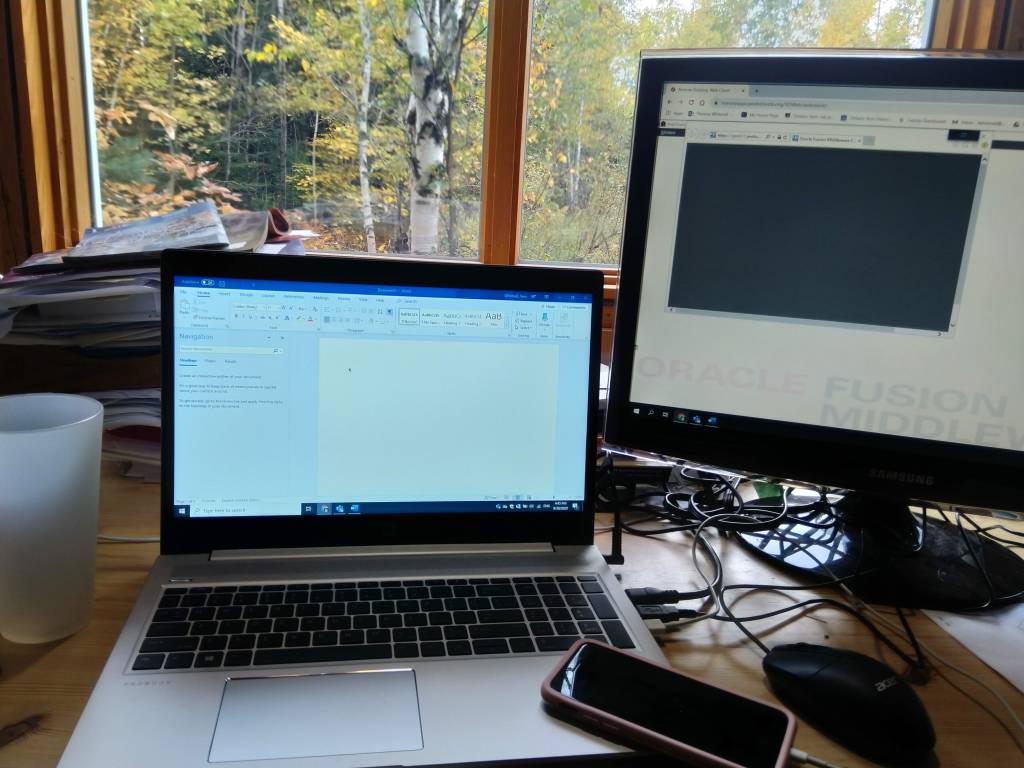
While I pride myself on my facility with computer technology, I really don’t have much experience with the tools our teachers need to use.  And as an administrator, I can’t even try some of them out! I really am going to have to practice with both Google Meet and MS Teams, as this seems to be the area of least experience for our teachers as well.  Wish me luck!

Teacher Education

I accepted this role as a half-time Principal, but haven’t yet had a half day.  I teach a couple of classes in the Faculty of Education at Ontario Tech University, and this morning I managed to listen to our guest speaker (an elder, visiting and explaining the Seven Grandfather Teachings: Love, Respect, Bravery, Truth, Honesty, Humility, and Wisdom) while screening board emails. 

When my class met, following this amazing presentation, I had opened the wrong virtual classroom, and only nine made it there.  We figured out my error, emailed the rest, and they finally all arrived.  Then they informed me via chat that I had not enabled their microphones, and a little later that their cameras were also not enabled.  Thank goodness I have been working with them for a full year, and they are giving me the benefit of the doubt as things do not go smoothly. I comfort myself that I am modelling flexibility and a positive response to failure!

They are very anxious about completing the necessary practicum hours to graduate in December.  I have offered to connect them with teachers in our school who might appreciate their support in planning, creation of course materials, and in developing new skills within their asynchronous and synchronous tools. They can log hours as volunteers, without having to complete the paperwork necessary for a full placement.

Time Management

I am priding myself on getting my inbox to zero by the end of the school day.  I scan for emergency emails to ensure I don’t leave anyone hanging for too long, and it’s a positive sign that I managed to avoid working throughout most of the weekend. I know that our teachers will likely find time to reach out to me in the evenings, not during the school day, so I return to email a couple of times each evening, to respond to issues that will impact teachers and students the next day.

I wonder if our families realize how close to 24/7 the job of a teacher has become?

School Online – Journal – Day 25

Day 25 was Friday, and Monday is World Teachers’ Day, so I have waited until Sunday to post this blog.  I have been recognizing World Teachers’ Day in many ways over the past couple of decades, but this year has me stymied.

How do we recognize how challenging this past year has been for our teachers? How their relationships with their classes were challenged when they pivoted to Emergency Distance Learning in March? How they rose to the challenge, keeping their students connected and learning? How they worked with their schools to bring computer hardware, connectivity, and support to families? How they had to learn an entirely new skillset, in order to continue as teachers?

In one of my previous roles I was responsible for supporting the use of Instructional Technology in our school district. When we considered the possible use of LCD projectors in classrooms we planned a 5-year process of pilots, assessments, and then staged implementation.  But this past March we compressed that entire process into a couple of weeks, and implemented across the entire system an entirely new means of instruction.  It wasn’t just the hardware that changed, but everything we know about F2F instruction had to be modified and augmented to meet the needs of our new reality.

Taking attendance? How to you record that a student was late because their Internet connection dropped? What if a student doesn’t actually own a webcam, and you’re only able to hear their voice? What if they have to share a computer, and so they might have to log in, find out what to work on, and then hand back the computer to let Mom or Dad attend a crucial meeting at their work?

Access to resources, while richer due to the Internet, is limited by copyright.  All those textbooks are still sitting on the shelves in classrooms, inaccessible by students.  Copyright laws permit reproduction of up to 10% of a text, or a single chapter, so teachers are having to choose carefully which resources they may use with their classes. Teachers are doing their best to share, but all resources require editing and clear presentation, in order to match the reading level needs of their students.

Interaction is limited by the platform.  While Zoom has been most prominent in the news, it is not permitted for use in our classes.  Instead teachers are having to learn how to function with MS Teams and Google Meet, both of which are structured for large group meetings, not group or independent work. Cooperative and collaborative learning is a challenge within a tool that is structured more for a single meet chair or instructor, with the rest of the participants limited to the use of “chat” to interact.

Organization of class materials requires significant writing and uploading on the part of our teachers.  In the past one might write on the blackboard or overhead projector, or prepare a PowerPoint presentation.. Now there must be a file uploaded, and in most cases it needs to be in a PDF format, requiring additional steps. While video has become a key component in our F2F classrooms, teachers are now limited by bandwidth, knowing that many of their students won’t be able to stream without lagging.

And building community has been a challenge.  Much of the time our students have their webcams and microphones off, so when we speak it is into a “void” of silence.  No nodding heads. No excited chatter.  And creating opportunities for students to interact with each other is a complex and time-consuming activity. 

And added to this is the anxiety related to the safety of our students.  We can no longer listen for signs of bullying.  We can’t see if our students appear tired or stressed. We can’t whisper in their ear, and ask if they are “OK”.

Despite all of this, our teachers are doing an amazing job.  They are juggling the demands of curriculum against the need to support the mental health of their students. They are working in isolation, and then reaching out to support each other through subject- and course-based networks. Social media is connecting teachers, and shared drives are allowing them to divide up the work, and reduce their load.

I am excited to hear what our teachers have learned through this process.  Will they adopt a hybrid approach, integrating more media and technology tools into their teaching? Will they choose to work online, having developed strong skills that support learning by students who need to work remotely? Will our models of “school” finally shift from desks in rows?

Tomorrow, please take a moment to recognize the extraordinary efforts of our teachers over the past seven months. And please continue to support them as we face the challenges of the months ahead.

Happy World Teachers’ Day!

School Online – Journal – Day 24

It’s Day 24 for me, but Day 20 if you are counting instructional days.  And that means that we must notify all of our teachers if they are scheduled to  participate in either the Teacher Performance Appraisal process, or the New Teacher Induction Program.

The TPA occurs every five years for our experienced teachers.  The NTIP process requires two appraisals in the first year as a contract teacher, and  uses a shorter list of “look for”.

When we generated the list for our school of more than 500 teachers, 238 made the list.  The math may seem off, but this is mostly due to delays in processing existing appraisals.  In some cases it can be attributed to the lockdown in March. In others it’s a delay at some stage after the appraisal is written and signed by the appraising Vice Principal or Principal, and by the teacher.

Once everyone has signed, the Principal has to check off “complete” in the program used to write the TPA.  The Office Manager has to send an original, signed copy to the Superintendent’s office.  The Superintendent has to sign it. The Superintendent’s Office Assistant has to send it on to HR. And then someone in HR has to enter it into our corporate system.

With so many steps, its not surprising that our records today indicate that TPAs and NTIP appraisals are “incomplete”. And since they signed my name to every one of the notifications that went out today, much of my day was spent responding to concerned teachers, and facilitating communication with the school teams who conducted their appraisals.

This was not a welcome interruption to the busy job of teaching on only the eighth day of classes for our online school. But legally we had to send them today.  The good news is that all observations are “on hold” until we return to some version of normal.  There is no way that appraisals could be helpful, when all our teachers, both in “bricks and mortar” and “online” schools are having to take on so many new ways of teaching.

I am hoping that this doesn’t completely remove feedback and support  from this school year.  I have always found the appraisal process to be a positive experience: validating great practices, mentoring teachers, and encouraging innovation and leadership. I hope that once we settle into more of a routine our teachers will invite me to visit their classrooms, to share how they are creating new learning processes, and developing a supportive learning environment.

If you are one of those who received a notice, and are concerned, please reach out to me.  It’s more likely a glitch in the process, so let’s get it fixed!

Tomorrow is Friday. It’s been the first full week.  Please plan some time for yourself this weekend. We know that you have worked harder this fall than you ever have in your teaching career!

School Online – Journal – Day 23

“Terry sends a lot of emails, so I am including her on this too.” This was my chuckle this morning, as I was copied on an email to one of our admin teams. 

Emails, MS Teams meetings, and SIS (Student Information System) queries are my life. And again I am thanking my grade 9 typing teacher (and grade 10 math teacher) Dale Watson, from Kincardine DHS, for helping me develop such strong skills. I just counted (as of 5:00 today), and today I composed and sent 110 emails; some in response to those I received, and a few that I sent proactively. So, it’s been a lighter day than many in the past two weeks.

We discovered that we hadn’t included Computer Science in our organizational plans.  Some schools group it with Tech, some with Business, and some with Math.  The course code begins with “I”, and there are only a few codes, so it’s easy to miss.  I think it’ll end up with us, in MST, but I am awaiting word from our Coordinating Principal before I reach out to include these teachers as well.

Our biggest roadblock now is the processing of paperwork in HR, and then the subsequent provision of rights through our various information systems. Managing our online school is new to everyone, and we are hiring so many people, it’s not surprising that it is taking time.

However our teachers are being very creative, and making it work despite delayed access to all the tools they need. We have a couple of people who are struggling and may not stick with it. But 99% are learning and growing.

I really need a break from the keyboard, as I have an online event tonight that I am excited to join. LearningForwardOntario is hosting a series of conversations with five amazing educators. It’s a sold-out event, presented online after the April event was cancelled.

So, I’m going to pull together a meal, and then sit down (again) at my computer to learn!


School Online – Journal -Day 22

Teaching Synchronously:

On August 13 of his year, the Ontario Ministry of Education released Policy/Program Memorandum No. 164, referred to by the short form: PPM 164. It defines “remote”, “synchronous” and “asynchronous” learning.  And it addresses seven areas:

  1. minimum requirements for engaging students during remote learning
  2. minimum requirements for synchronous learning
  3. process for exemption from synchronous learning
  4. protocols for delivering remote learning
  5. access to remote learning devices – such as laptops or tablets – and the Internet
  6. standardized suite of synchronous learning platforms
  7. cyber security, privacy, and online safety

It requires synchronous learning any time a student is at home more than three days in a week, and specifies the length of time that teachers should be providing synchronous instruction:

Secondary Grades 9 to 12 The higher of 60 minutes for each 75-minute class period** or 225 minutes per day for a full course schedule

And it specifies that “synchronous learning platforms should include live video, audio, and chat features and be fully accessible”.

While many of our teachers who were teaching in the spring have developed facility with our synchronous learning platforms, Brightspace or Google Classroom with MS Teams or Google Meet, many of our long-term occasional and short-term occasional teachers have not. Most found themselves unemployed during the shutdown. So they are beginning this school year with workplace demands that they have had neither training for, nor experience with.

Having accepted a position they are now working from home, without the support of “the teacher in the next classroom”, and are struggling. There is an option to have them work from a local school, but there are few spaces available as we spread out our students in our “bricks and mortar” schools.

Our challenge now is to ensure that they are supported, and that they don’t become overwhelmed. I have begun this by connecting each teacher with others who teach the same course. I have shared our Empowering Modern Learning resources, created by our central staff. And I am now brainstorming ways in which will be able to provide professional learning opportunities that will work for our teachers, within the intense, draining workday they are experiencing.

If you are one of our online teachers, and have any suggestions for how we might provide this professional learning, please connect with us and share your ideas. You are working differently, and so must we.

School Online – Journal – Days 19, 20 and 21

This should have been only Day 19, but both Saturday and Sunday were filled with work, attempting to connect new teachers to class lists so that classes could begin today.  We were partially successful – but there are still many classes without a teacher, despite efforts by our team over the past two weeks, without break.

On Friday we met to define admin duties, and it was decided that I would take on half of the Principal role, in support of MST. So I spent Saturday pulling data from our files, and grouping teachers by the subjects they are teaching in these first two Quadmesters. I then emailed groups, introducing them to each other, so that they could connect to plan and share the work.

On Sunday it became apparent that many teachers were still to be assigned classes, and another team was busy throughout the day doing so.  My groups are now inaccurate, but at least most of the teachers are able to access the expertise of one or more others.

In the evening I was contacted by one of our Vice Principals, who was concerned that she was hearing from teachers who did not have access to our Student Information System, and did not have class lists with which to contact their students.  So, because I was in transit from my mother’s to home, she agreed to email each of the teachers, asking them if they were ready for Monday.  The negative replies were addressed throughout the evening by the two us, with my taking A-L, and her taking M-Z.

My evening even included a couple of phone calls, walking teachers through several of our processes so that they could email their students. Some of these teachers are bravely stepping into an entirely new way of teaching, and with little support.

Today I began with my university class, learning about how we support Deaf and Hard of Hearing Students from staff in our Provincial Demonstration Schools. It was new learning for me, and a wonderful experience for our about-to-be-teachers. We had an hour-long class together afterward, and we shared concerns for student with hearing impairments in this new online reality. My students have chosen to have me teach with my camera on, but with their cameras and microphones turned off.  It’s eerie talking into the void, with no feedback either through facial expressions or chatter.  I make sure I ask questions that can be responded to with emojis, and I invite them to speak when they have a question that isn’t easily written into chat. It’s awkward, but we are managing, mostly due to the fact that I have known them for a year, and so it’s akin to talking on the telephone with old friends.

When I returned to my computer at noon my inbox was at 163, and it took me until dinner to work my way through. The requests now seem to be focused on students, rather than on getting classes together. And so I was finally able to begin to delegate some of our concerns to our VP team.

Our teachers have been informed of the alpha groupings for VP issues, and subject groupings lead by Principals. So I believe our communication will now be more efficient and accurate, with faster responses.

So, what have we missed? Well, no one knows how to do attendance twice in a day. We have yet to determine duties during the asynchronous support periods, for those who are teaching only one course this Quad. I am gathering counsellor information so that our teachers can consult with their students’ community school guidance counsellors, and that will be communicated shortly. We have yet to plan for professional learning; and there is a great need among many of our teachers to develop their synchronous instruction skills. Parents don’t yet have a system to let us know when their students have been absent with permission. And, with Markbook no longer available, all of our teachers are having to figure out how they will gather, record, and track assessment data.

As I write, I am hearing that Brightspace is down. I can’t imagine how frustrating that is for teachers who have to squeeze lesson prep between dinner and bedtime. And our students who are catching up on the day’s work will be equally frustrated.  I hope it’s just a short “outage”, and that everyone will be back on soon.

I am also still hearing that teachers are confused by our timetable.  On Day 1 our teachers see their period 1 class synchronously, and then provide work for their students to continue working on asynchronously in period 3. Their period 2 class is synchronous, and then they return in period 4 to continue synchronous work.  This is to be in compliance with the Ontario Ministry of Education requirement for 225 minutes of synchronous instruction each day, while still meeting the OSSTF contract requirement for a full preparation period.  On Day 2 this switches, so the period 2 class is seen in period 1, and then asynchronously in period 3, and the period 1 class is now synchronous in periods 2 and 4.  Confused?  Well, hopefully not for long.  I have had teachers who think they can just do asynchronous all the time, and those who want to spend their prep assisting individual students.  While the latter is a personal choice, the former will get some of our teachers in trouble, so I hope they revise their practices.

Tomorrow we meet as a full admin team, and afterward with our MST team.  We will work out priorities for each of us, and processes whereby we will collaborate, and play to each of our strengths.  We are fortunate that we   have qualifications in all of the three areas, and so should be able to be a help to most of our teachers. I’m still not sure when I will actually have a .5 day, or even a .5 week.  But for now our priorities remain our teachers and students, and so shutting down email at noon, or ignoring it for a day, cannot happen.

What do I think we’ll see this week? I imagine that as classes settle, teachers’ focus will shift to some of the larger issues that remain unaddressed. Our students will begin to test their boundaries, and we will be hearing of those who are less compliant, and pushing the boundaries. At the same time I hope that teachers will begin to find time to experiment, and to stretch their skills by trying new things in this new teaching environment.  I am looking forward to hearing their stories; both their successes and dismal failures.  We will have both, but it’s the only way we will learn.

School Online – Journal – Day 19

It’s Friday, and our fourth day of Online School.  There are still classes without teachers, and teachers without timetables, and students and families who are awaiting emails. With more than 11,000 students and more than 500 teachers, there are few processes that successfully make the transition from traditional secondary schools to our mega online school.

When a communication is sent out to everyone, there is always a potential that it will be misunderstood.  This past week we sent teacher timetables out via email, and did not anticipate the confusion that resulted.  Where teachers did not yet have courses there were placeholders printed, which made little sense to them.  And at the bottom of the timetable was an explanation about our Careers and Civics courses, which are half-credits, explaining that Careers classes would begin with the even numbered sections, and Civics with the odd.  This was needed because the printing of timetables in Quadmesters left no room to indicate first or second half for these two courses.  So, many of the teachers with no courses appearing made the assumption that this message was for them, and that they were teaching Careers and Civics. Not the confusion we needed!

A secondary school of 1200 students would have a Principal and two Vice Principals, one office manager, and three other office staff.  Ours of 10 times the size has the equivalent of five Principals, seven VPs, and as of yet only a handful of office support, most of whom have yet to gain access to our information systems.

Today marks the beginning of three schools within schools, plus a special education team. So we will have groupings of P and VP, organized by groups of subject areas. I, as .5 P, will work with another .5 P, one full VP, and a .5 VP.  Our team is the largest, responsible for MST, or Math, Science and Technology.

Almost all of us are retired administrators, so once we complete our 50 days allowed by our pension board, we will need to be replaced.  My .5 agreement has in practice been 1.0 for almost all the days since we began on September 1.  So it won’t be long until I, and my retired colleagues, will need to transition to a new team.

The days aren’t like the ones I experienced in the past as a Principal.  I can’t see teachers F2F, so I’m using email and phone (and calls through MS Teams), and everything takes twice as long. I didn’t participate in the hiring of our staff, and haven’t had the pleasure of meeting very many of our teachers.  So each interchange requires much more time, to ensure that communication is clear and that my “need for speed” doesn’t offend.

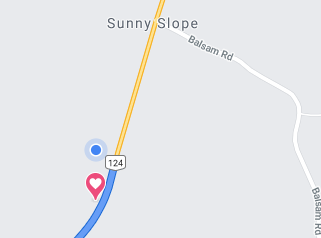
As I write there remain more than 100 emails in my inbox, arriving this afternoon as I was on the road heading back to Sunny Slope. I responded to the 20 or so that arrived after noon, but will only return to the remaining emails in the morning. I know this will frustrate the senders, but there is little action that they will be able to take on a Friday evening, so I’m hoping that tomorrow morning will suffice.


I am looking forward to having our smaller team.  I think that teachers will appreciate it too, having a fewer number of possible contacts.  We should be more responsive, and be able to play to each of our strengths as we smooth out the path for teachers and students.

Tonight relaxing. Tomorrow email. Sunday planning for the week.

I hope all of you manage the first… and leave the other two for next week.

School Online – Journal – Day 18

Our classrooms have changed…..

It’s day 3 for our online classes, and there remain several classes who don’t yet have teachers assigned. We have no system to communicate to students and their families, so as their anxiety grows, so does my inbox.

My morning was spent teaching online: two classes of 38 students each, with a 10 minute break between the two-hour classes. Near the end my webcam failed, and so I was a disembodied voice to bring the class to conclusion.

There was a theme of similar “technology fails” throughout my afternoon correspondence. And this has me thinking about how this new “classroom” is so different from what most people think of when they think “school”.

Rather than hallways, where students wait to enter the class at the bell, we have “waiting rooms” for our MS Teams or Google Meet class. A login gets a student in easily, but there are students who have forgotten their passwords, and so they request to enter as a “guest”. Most are supposed to be there, and gaining entry allows them to join their classmates. But occasionally a student has shared the class link with a friend, and he or she enters anonymously and creates chaos. When the teacher shuts down the class, and reopens a new session without the intruder, that might be the end of it.  But, if the friend sends the new link, the “guest” arrives again.  A wise teacher refuses to allow them to enter. So the “guest” changes his name repeatedly to profane or racist words, which pop up as messages like “F…Y… is requesting to join”, or worse. Were this a student in a physical hallway we could address the behaviour, but on the Internet they act with impunity.

In the digital classroom we have tiny images of faces, or nothing at all if the cameras are off. We speak without seeing reactions, and can only trust that they are listening.  The students, by contrast, have no choice but to see our faces, up close. Or maybe they’re not watching or listening? But how would we know?

Rather than a show of hands, we ask them to “react” with a “thumbs up”, or “applause”. Not quite as revealing as a facial expression, but immediate and clear. If they aren’t paying attention we get no reaction at all.

The chat tool is a step above having everyone shout out an answer.  And they can carry on side conversations with each other in chat without disturbing anyone else.

Rather than working on chart paper on a table, they’re working in Google Docs or Slides. And if they each have a slide, we can see what they’re working on in real time.  Their “bubble” appears in the slide sorter, so it’s easy to see if a student is on the wrong page, or missing. At the end of the session everyone can move from slide to slide, together. The entire slide stack remains as a record, with 24/7 access by everyone in the class. (Unlike all the chart paper I would roll up and stack at the back of my classroom.)

While they’re working, they’re in breakout rooms.  They can speak as loudly as they wish, and with much more privacy than in a regular classroom. The teacher can pop in and out, sometimes without them noticing, but most times with camera and microphone on.

Bringing the entire group back together results in a cacophony, that ebbs quickly. Rather than a shouted “5 more minutes”, they will have seen a message pop up on their screen with that message. As a teacher, it is a relief not to have shout to get their attention.

What is missing from an online classroom is the chatter as they leave class at the conclusion.  It’s a rather abrupt ending, with almost no time needed to get to the next class. The casual conversation that provides a mental break between intensive work is not easy to recreate online. There is no “app” that can connect people without deliberate action, so it’s unlikely that new friendships will develop outside of class.

While teachers in physical classrooms might place independent work high on their priority lists, that now needs to change. Online we need to create deliberate opportunities for social connection; our classes are the only place they will meet new people and develop new relationships.

If we want to nurture our students’ mental wellness, we need to ensure that social-emotional learning is a priority. And we will need to learn and develop new classroom routines for our new digital classrooms.

Please share here what’s working for you. How are you making your classroom a place of connection as well as learning?

School Online – Journal – Day 17

The calm of the morning in Sunny Slope

Finally, a day when I managed to get to the end of my inbox, and step away for a moment or two! I am hoping that this means that our teachers are settling in as well.

There is still confusion about our timetable, from both teachers and students. And our system doesn’t allow for two attendance entries on the same day, so the period 2 classes who meet again in period 4 are not tracked accurately.  The period 1 classes are working asynchronously in period 3, so we don’t record attendance then.

We are slowly matching up teachers on leave with their long-term occasional replacements, although the transfer of online LMS components is much slower.  And there are still a number of teachers to be hired, so interviews will be conducted tomorrow.

Our community school guidance counsellors don’t have the ability to manage our waitlists, so that’s a challenge that will have to addressed soon, in order to get students into the last available seats in our very full classes.

But I am hearing as many successes as failures today.  Hurrah!

Let’s see if I am as successful tomorrow when I will be teaching two classes back to back for two hours each, with only a 10-minute break.  My classes are large: 37 in one, 38 in the other.  And so I’m giving them lots of time to work in smaller groups, sharing information in a Google Slides stack.  The first group I met last week, and the second are a new group to me as their instructor was asked to take on another class. So they will have missed our icebreaker, community-building activity.  I wonder how this will make a difference in how we work together.

One of my university students went to the other section of our course on Monday, and stayed. And now she wants to be excused from our class tomorrow.  While it makes some sense, with only nine classes and lots of group work, she really needs to be with our group.  It was tough to say “no” to her.

Tomorrow is a Day 2 for our secondary school, and we’ll see how many teachers and students end up together in the correct space when our periods 1 and 2 flip.  I really hope that everyone is re-reading their Staff Handbook, and reminding their students of the schedule.  It’s not quite the same as standing in the hallway, waiting for your class to arrive.  If you’re in Google Meet, or MS Teams, and no one shows up……..

I think it’s going to take teachers some time to get used to the sequence of classes: Synchronous, Synchronous, Synchronous, Asynchronous in a repeating pattern over two days.  Once they get in the rhythm, I think it’s going to work well.  Having a “work period” is a common practice in F2F classrooms, and this builds it into the cycle.

I’ll be interested to hear how our teachers are feeling in a week or two!  Let me know how you are doing, in a reply to this post.

School Online – Journal – Day 16

Today was the first day of school for our students. As they were online, we really don’t have a good idea of how many showed up.  Since our student information system hasn’t yet been modified for our schedule, we have only paper records with each teacher. So I think they showed up, but I have no data.

I do know a significant number of our teachers began the day without timetables, and will only now have the information available to connect with their students. And their students will have been waiting at home for their teachers to reach out. I hope that has happened.

Our teachers have the choice of Brightspace or Google Classroom, and MS Teams or Google Meet. Many will have had little experience with either, so I would imagine today has been very stressful for them.  Their Brightspace shells are generated each night from our student information system, so they would not have been available today as we matched teachers to classes. Some will have accessed class lists, contacted students by email, and met them online. Others will have found themselves without the necessary information to do so.

Tomorrow will go smoother, as will each day from now on.

Our work will then shift to our families, and addressing timetables that don’t match choices.  We are also going to learn a great deal about “fit” between students, teachers, and technology.

Behind the scenes our team is calling occasional teachers, offering them positions, and then completing the paperwork to have them signed on.  All this has to happen before they can be added to the student information system and be assigned classes.

So what did I do as a Principal? Lots of emails. From 5:00 a.m. this morning, until I signed off at 6:30, with a two-hour break in the middle to teach. The teaching was fun; helping a new friend learn how to sew with a sewing machine.  And the return to a chair, not so much fun.

One challenge for us, responding to questions, is that our class records are under the name of the original teacher, while classes may be instructed by a long-term occasional teacher. We must match the teacher on leave with the LTO teacher, in order to provide our LTO teachers with course and student records.

Our teachers are all working from home, so we are limited to phone and email communication. It’s never as easy problem-solving when we can’t meet face-to-face. And I can only imagine their frustration waiting a response that could have been almost four hours in some cases today.

I never did get to and “empty inbox” between 5:00 a.m. and 6:00 p.m., but in the final half hour I did it! I then put an “out of office” message on, promising to respond in the morning, and enjoyed a meal, an episode of “Maigret”, and hopefully a soak in our hot-tub after I finish writing this.

I know that we have wonderful teachers, and they are doing their very best.   I hope they find joy in their classes, knowing that they are creating a brand-new world for their students. And I hope that I can ease their way on this journey.

Tomorrow I will be up bright and early, hoping to allay concerns and support our teachers.  I could not have imagined the school we have, when I began teaching in 1983. Had we a pandemic then our students would be alone at home, with only mailed packages and a phone as our tools.  Now we have the Internet, multimedia tools, and the ability to bring a class of 31 together online to interact.  What a world!