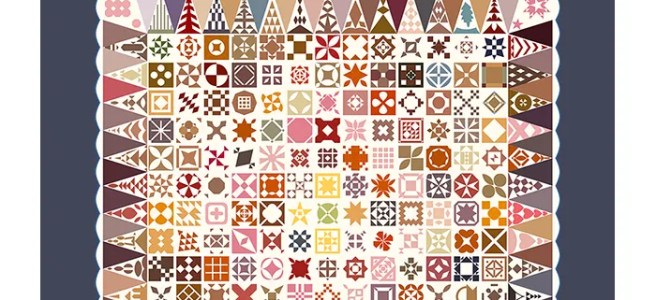
Dear Jane: BR3 – Attic Window

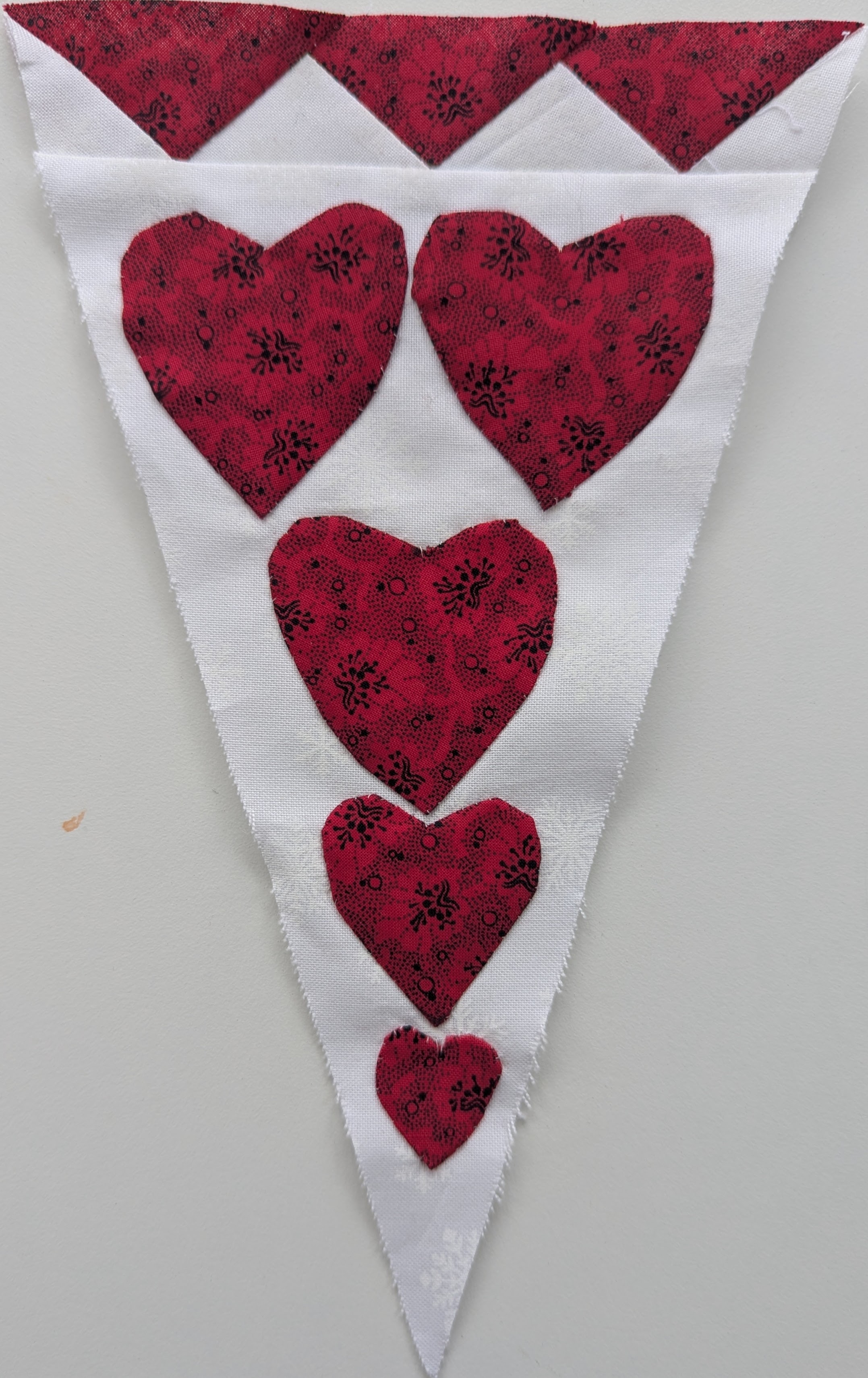
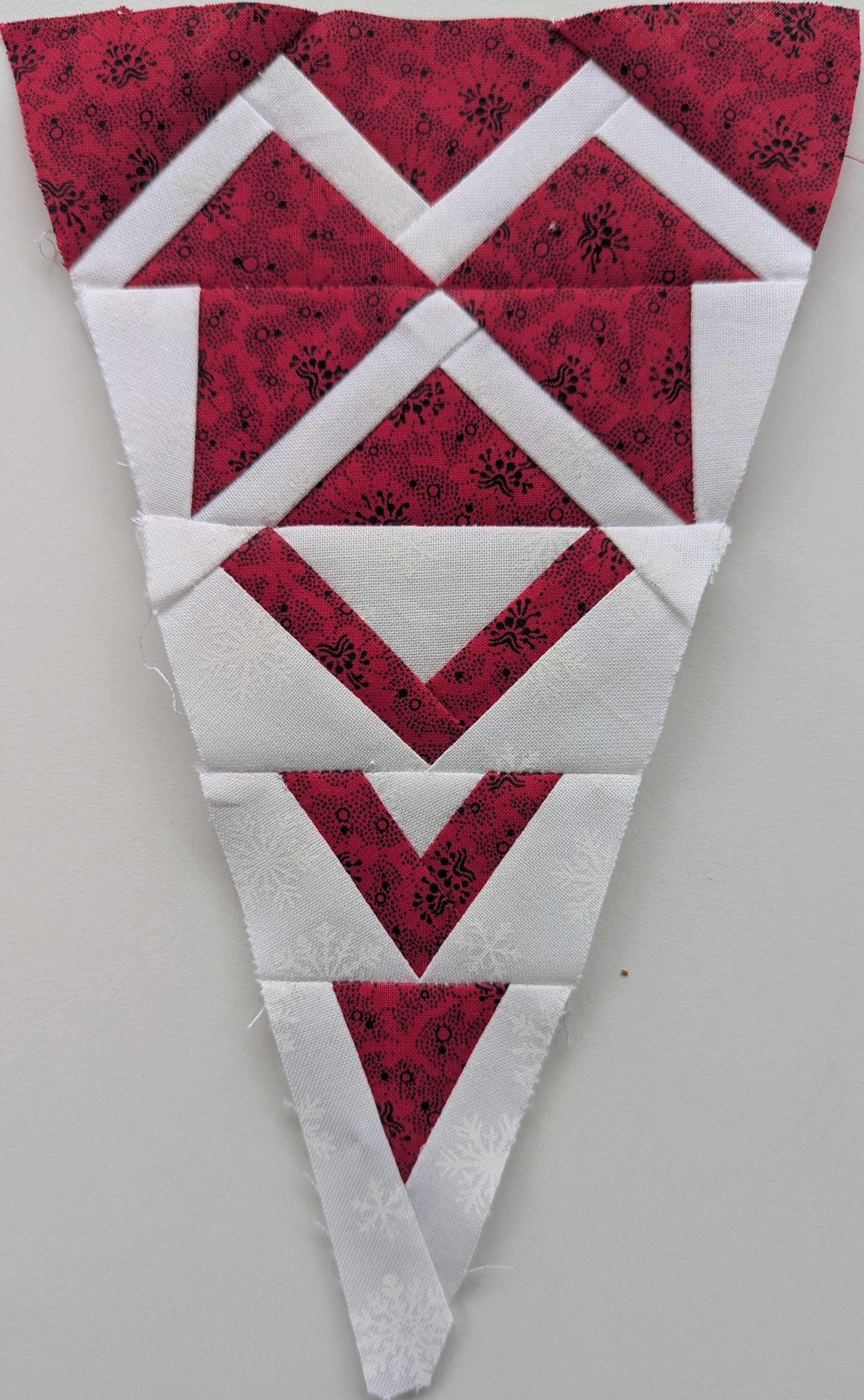
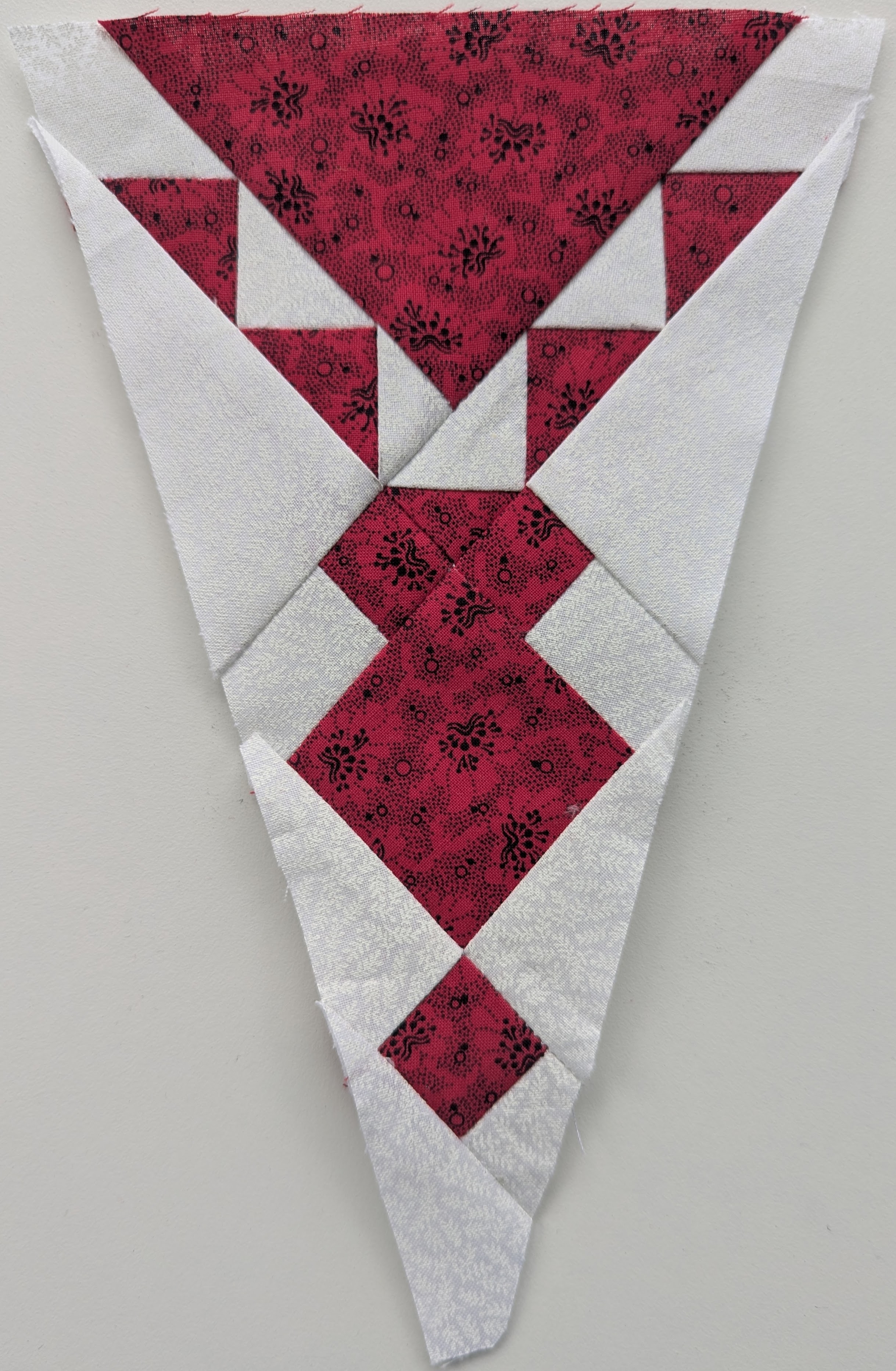
Just to shake things up, I was inspired to begin one of the border blocks. These triangle blocks will alternate with solid blocks, to create a border around the entire quilt. The solid triangle blocks will have a shallow semi-circle on the outer edge, creating the signature “ice cream cone” look. 

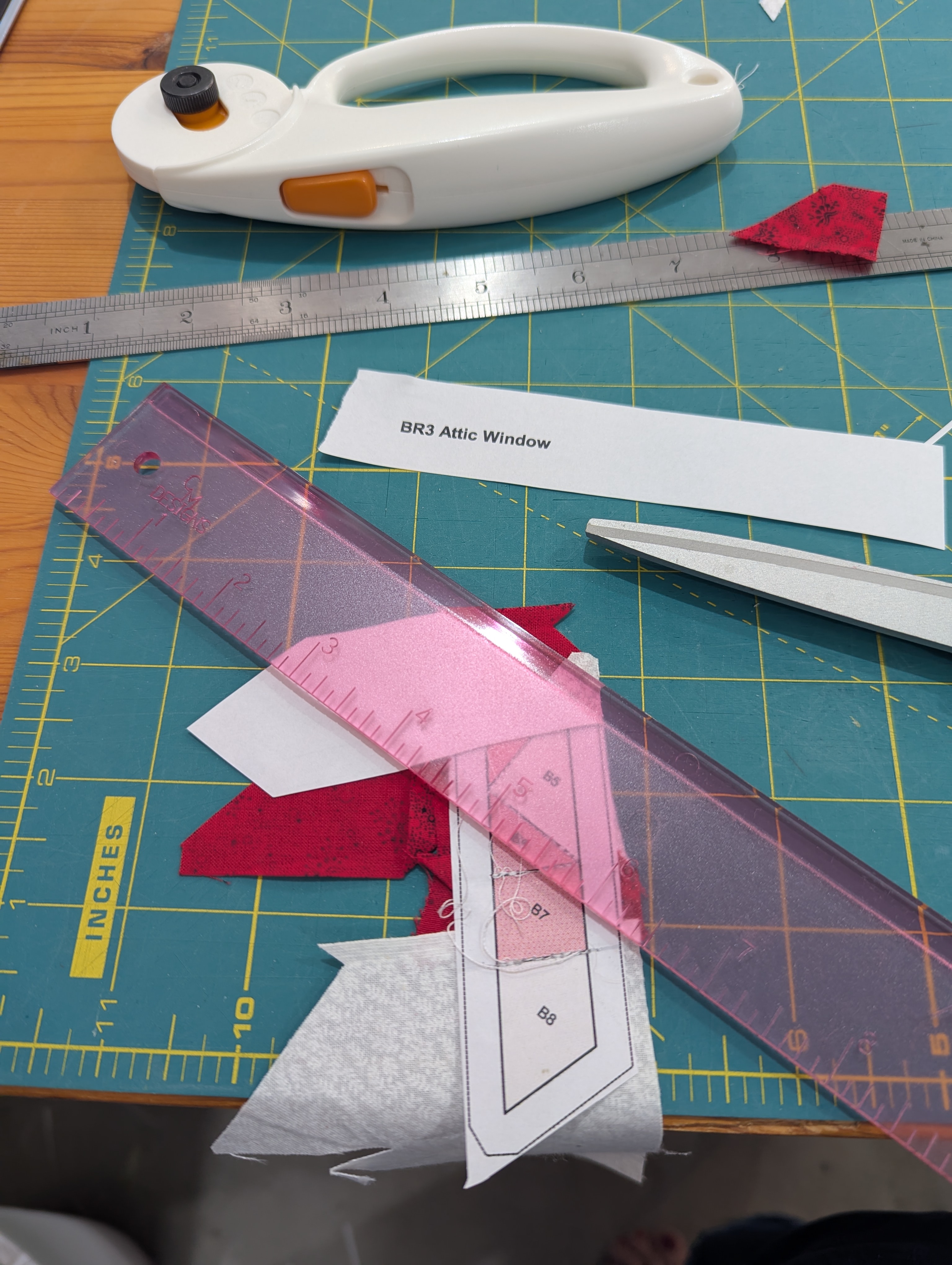
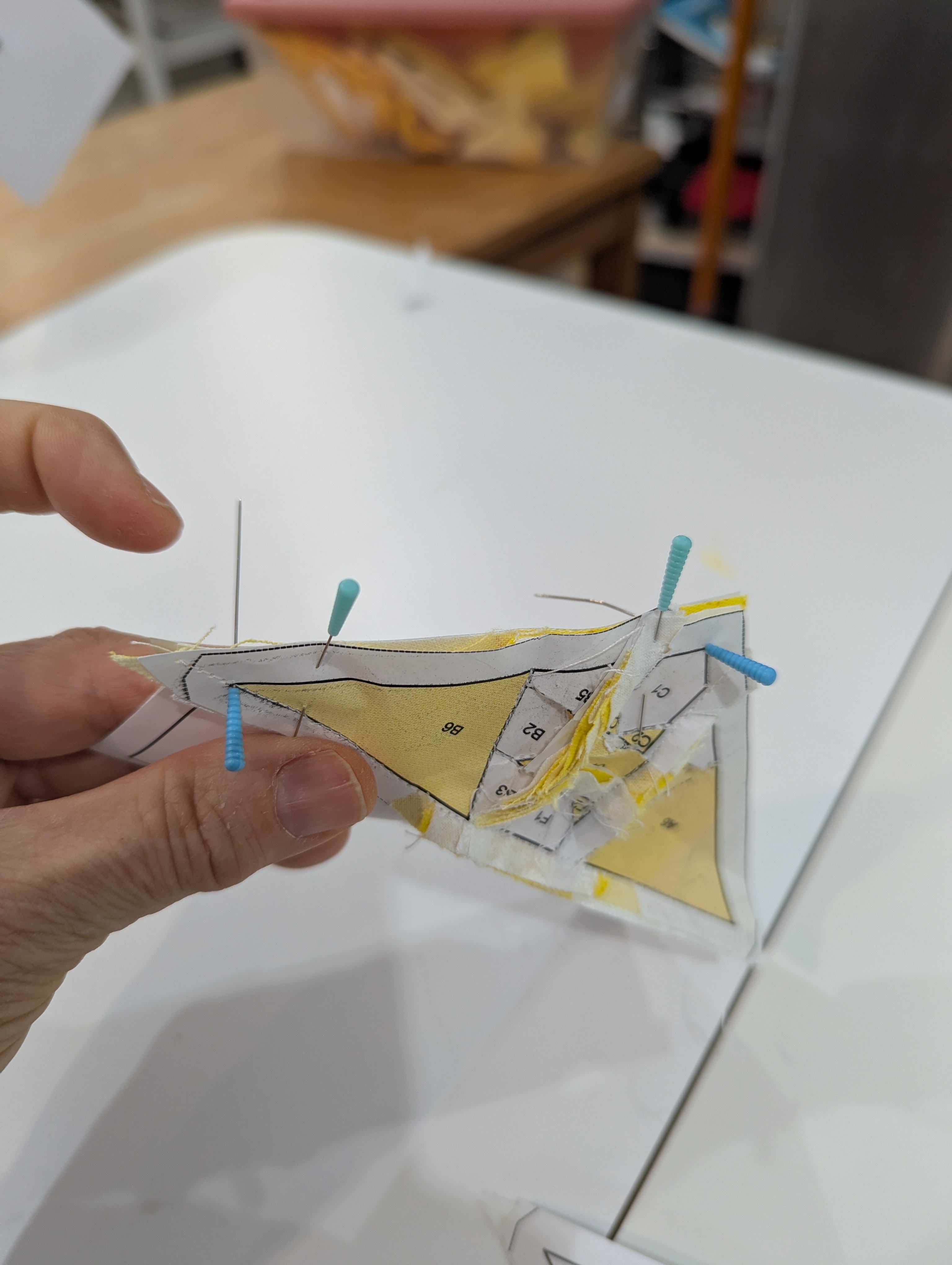
This design lent itself to Foundation Paper Piecing, so I printed the pattern, and started in this morning. I guess I wasn’t awake yet, because the first five or six seams each had to be ripped out and redone. I didn’t tear any of the paper, thankfully, so I was able to cleanly resew each seam. I’m not yet in the rhythm of placing the first piece good-side-down, and all the rest good-side-up.  Of perhaps it’s the fascinating audiobook I’m listening to that has me distracted!

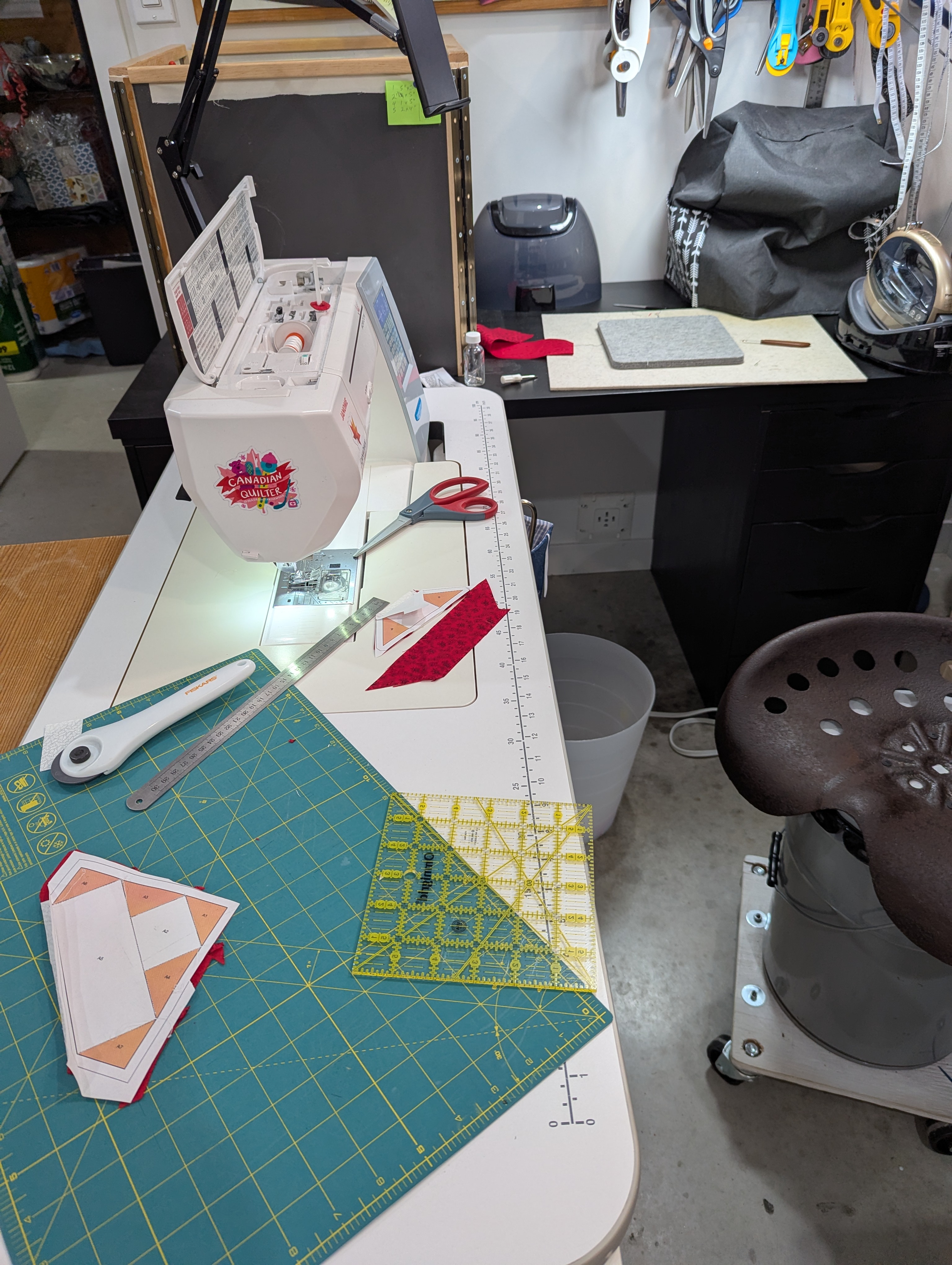
My latest purchase is an “add-a-quarter” ruler, and this one is 12″ long. Unlike the 6″ “add-a-quarter-plus” ruler, which I have misplaced, this one is full thickness and much heavier. It’s great for cutting the quarter-inch seam allowance, but useless to fold back the paper. I’m finding my metal ruler works well for this, though I dislike having to change tools. I have a replacement 6″ ruler on order, and look forward to its arrival.

Successes:

  • I love the precision of the FPP technique
  • I am getting better at fabric placement, so my waste is getting to be less
  • My tiny tweezers (or forceps) that I purchased from Lee Valley are perfect for removing the tiny bits of paper. At $7.50 CAD for a set of three, they are an inexpensive addition to my toolkit.
  • I am going to completely use up a colour, before moving on to the next. So expect at least two more red and white blocks

Challenges:

  • I need a mnemonic or a song to remind me that the first piece of fabric faces down, and the next and following pieces ALL need to be “pretty side up”
  • The tiny stitches that make paper removal so much easier, make seam-ripping much more difficult.

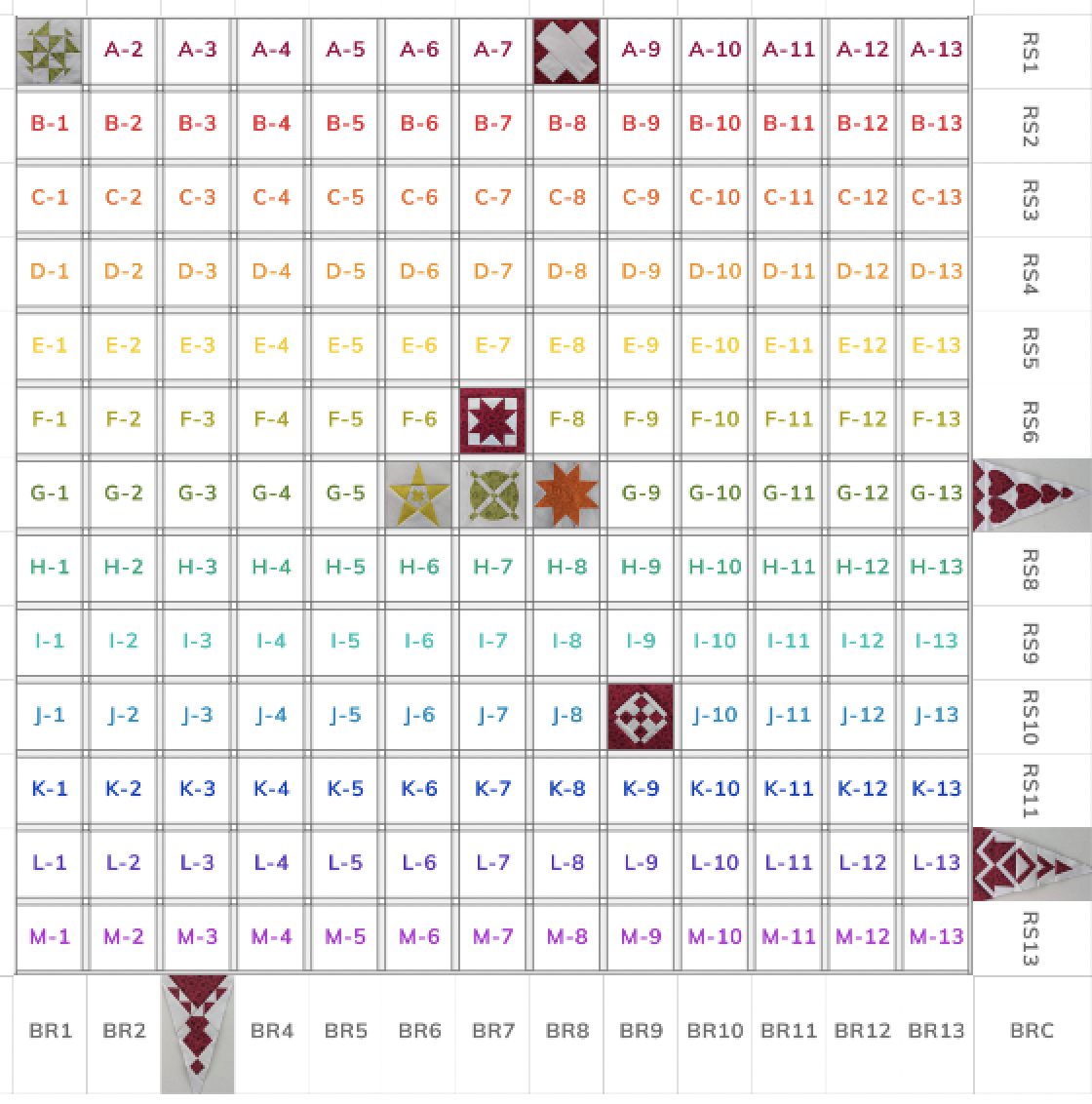
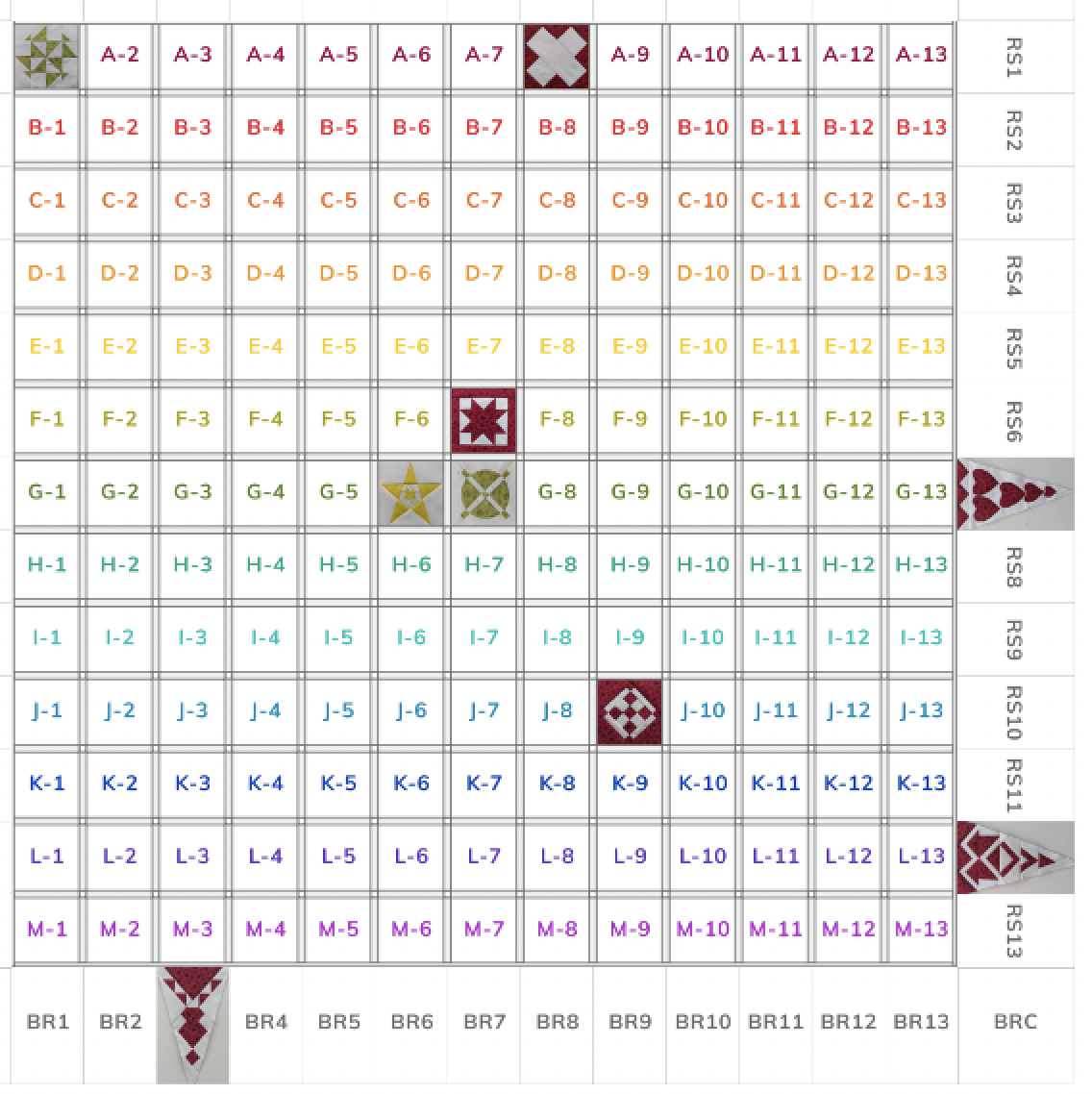
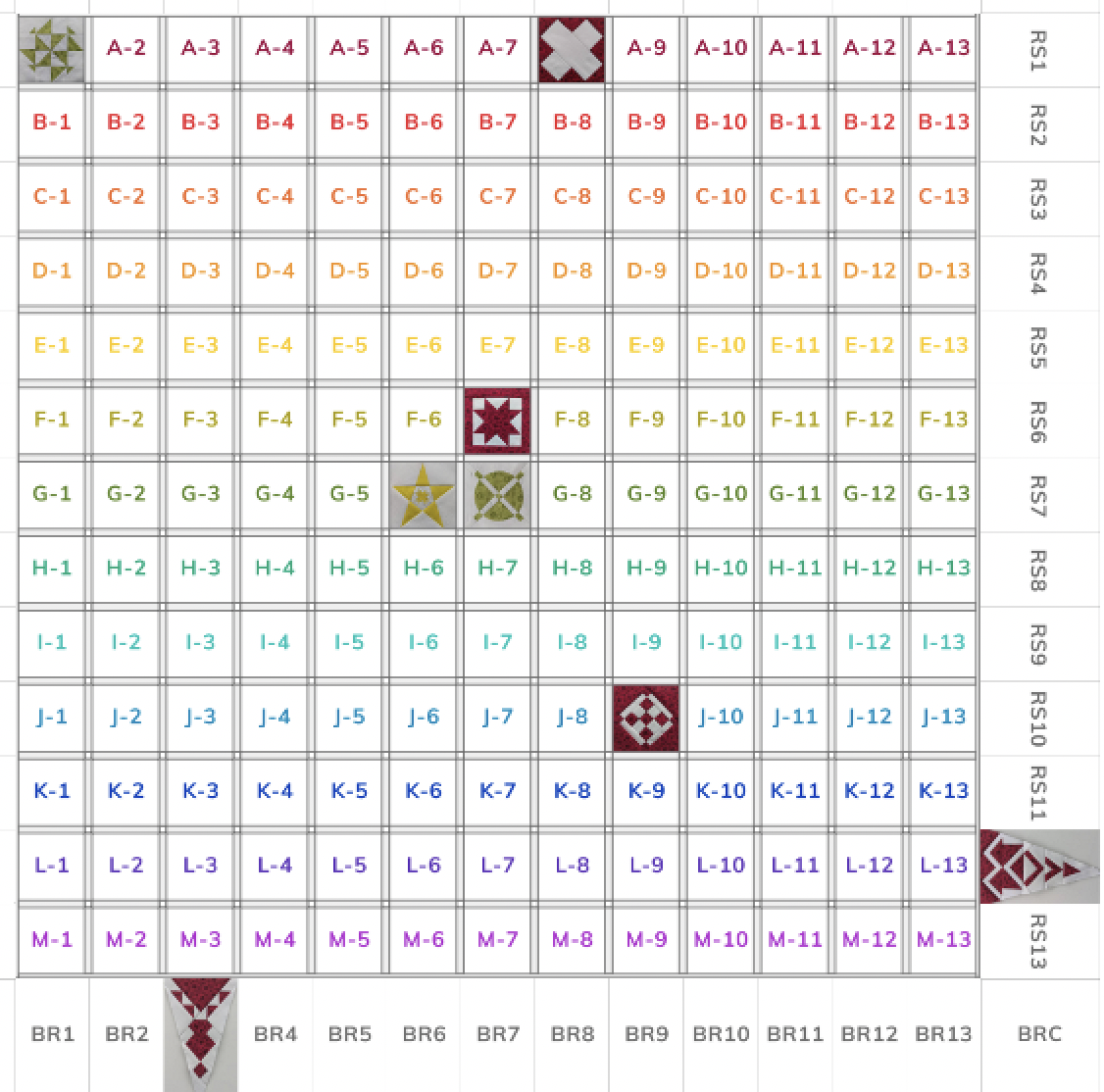
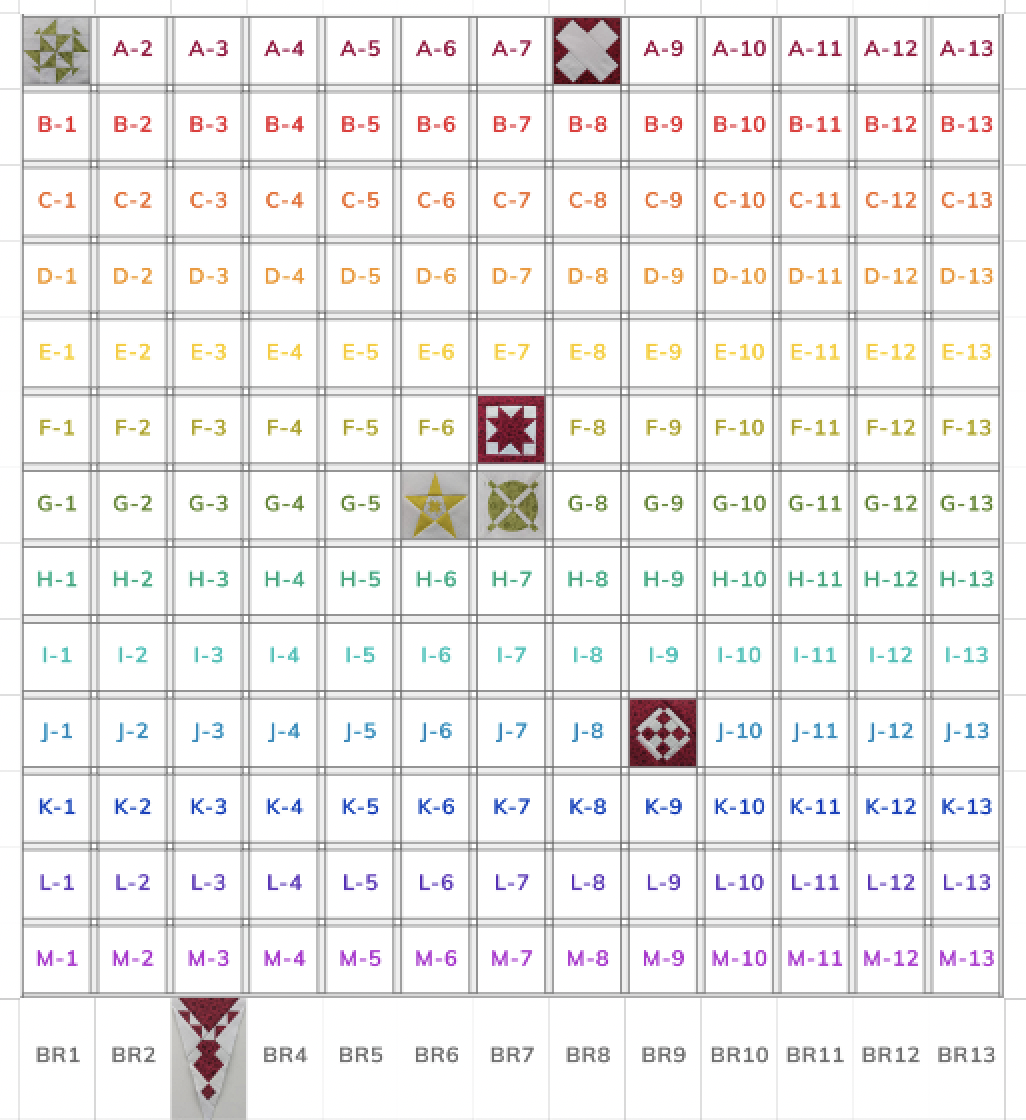
Here’s the new look of the quilt, with one border triangle added:

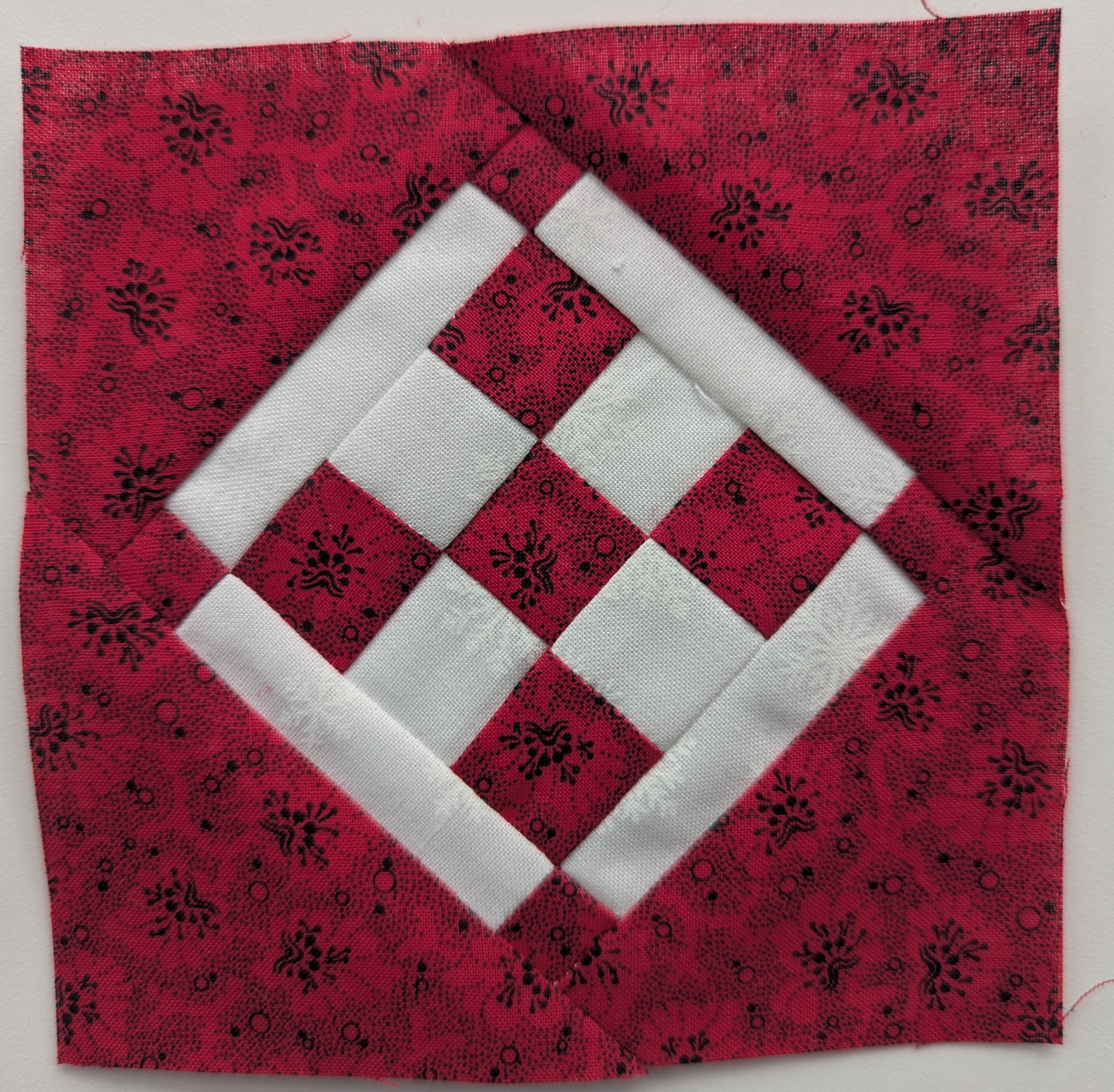
Dear Jane: K-9 – Scout’s Honor

This looked like a block that would lend itself to traditional piecing, and it did!

Successes:

  • Straightforward sewing, with seams that nested beautifully
  • Finished just a few threads smaller than 5″, so will sit nicely with the sashing in the final quilt

Challenges:

  • All the measurements in EQ8 are in inches with decimals. I think I need to print myself a table of measurement equivalents down to 1/16″, so that I can more accurately cut.
  • I think I need to look for my next red block to be placed in the lower left quadrant, to balance this strong colour.
  • A friend who visited today said “You really aren’t going to make much of an impact on your stash with such tiny blocks!”

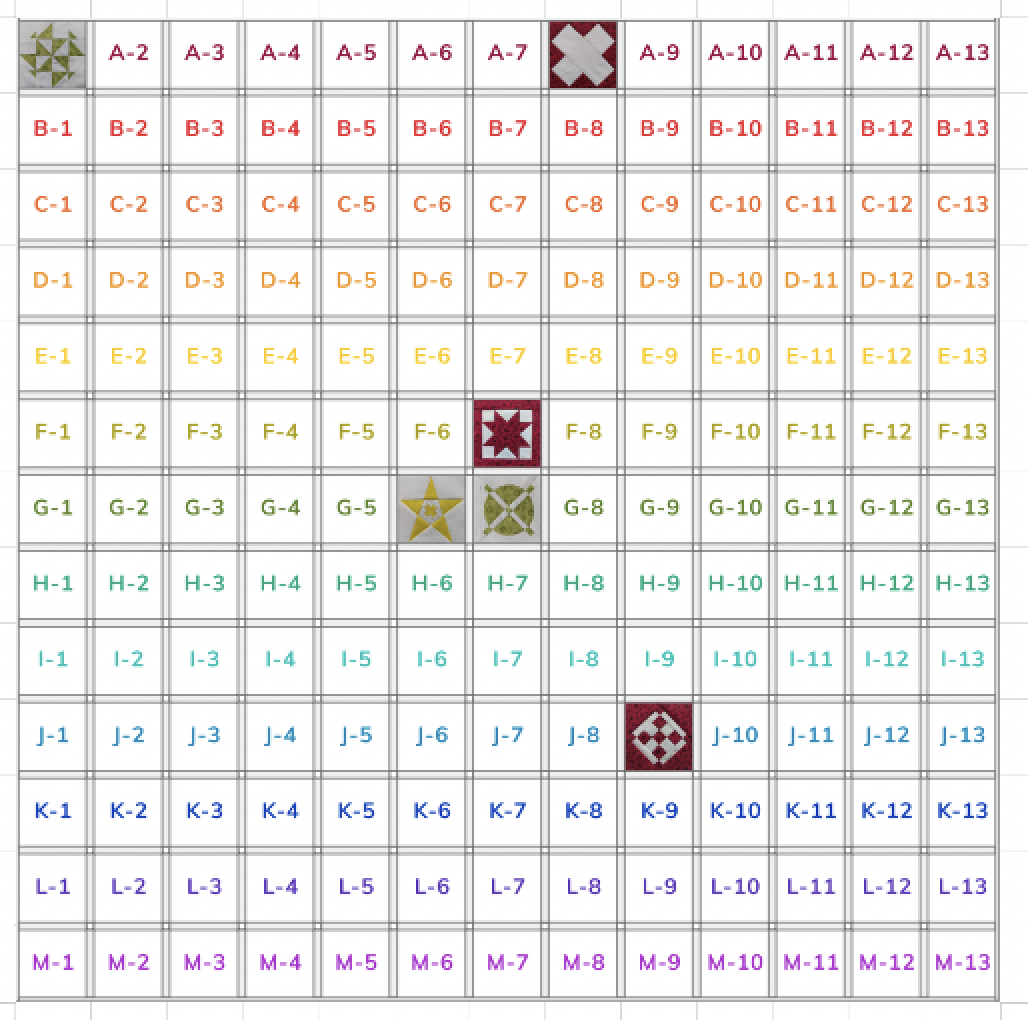
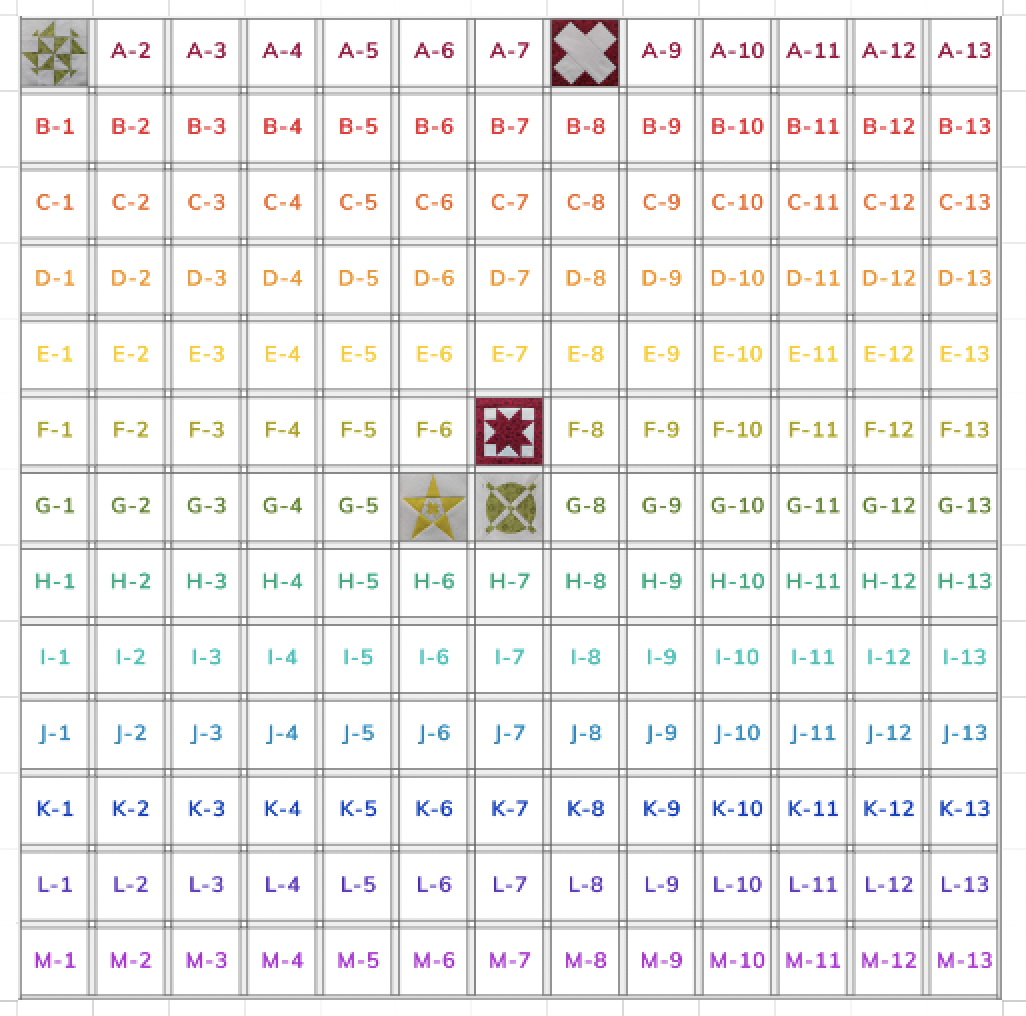
Here’s the quilt with six blocks placed:

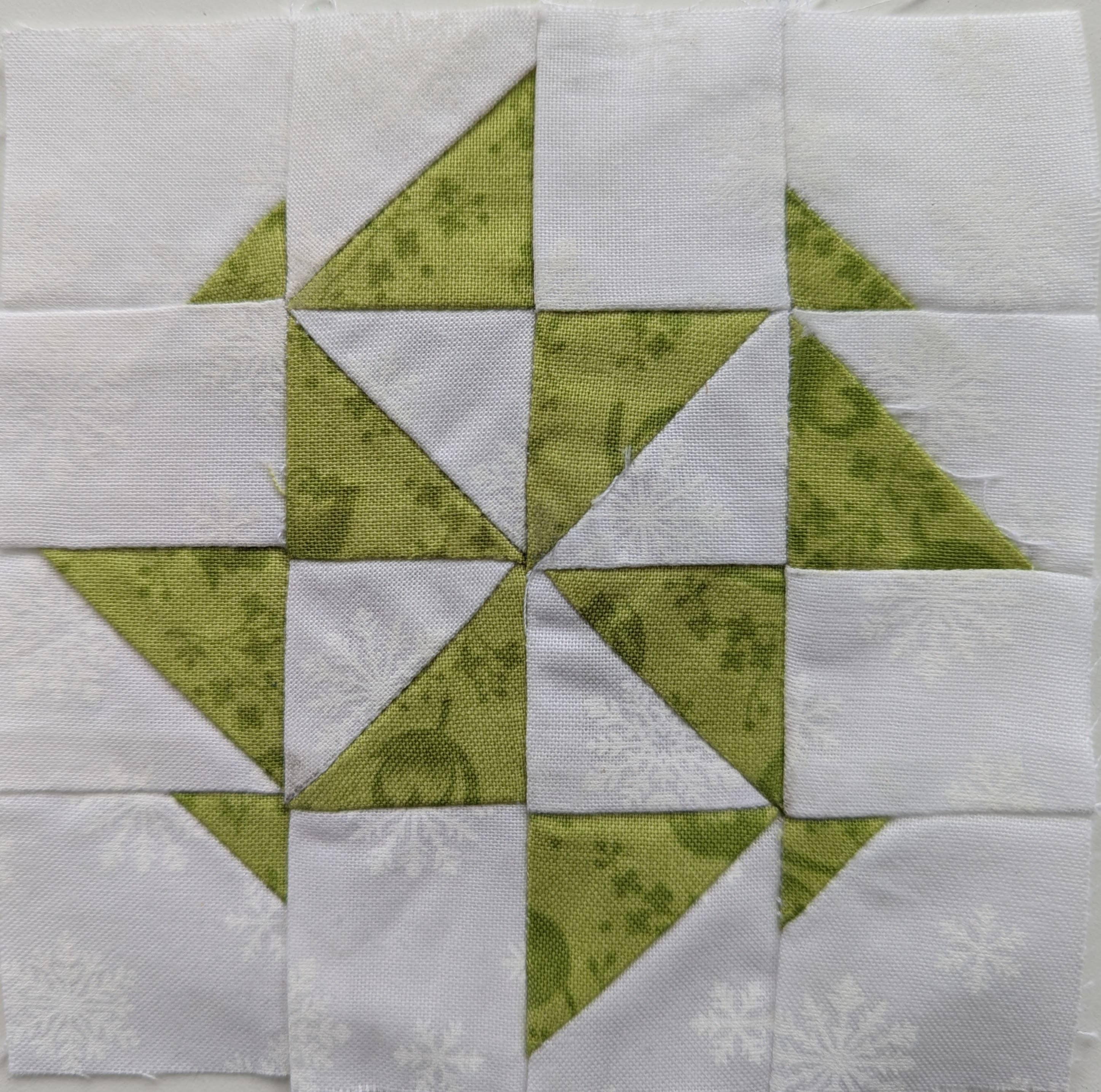
Dear Jane: A-1 – Pinwheel Gone Awry

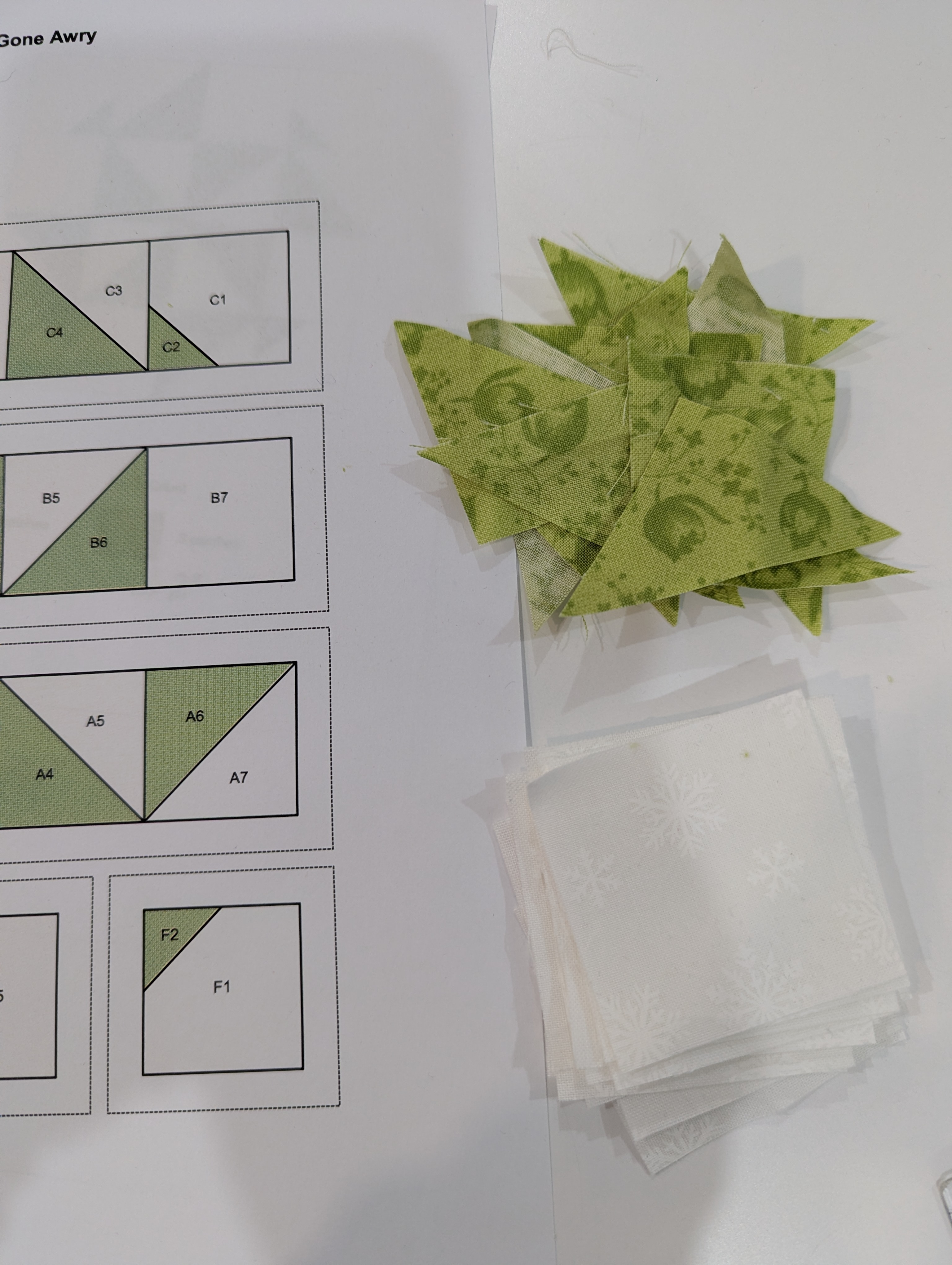
Pinwheel Gone Awry is the first block I looked at in EQ8, and it is the one that wavered between choosing the rotary cutting option and the Foundation Paper Piecing option. I chose FPP, but now I wonder if I perhaps should have done the other.


I thought that I could pre-cut over-sized blocks to save fabric. I could then position them to stitch as usual in the Foundation Paper Piecing process. It didn’t really work well, and I don’t have the match I had hoped for on the corners. I think that this was mostly due to the thickness of seams and paper when sewing.

Successes:

  • I am getting faster at the FPP process, with cutting station, sewing machine, and pressing station all in a “U” shape, minimizing movement.

Challenges:

  • The thickness of intersecting seams and paper are causing my presser foot to slide, and making my seams inaccurate
  • I struggled to position the triangles. Often I had to tear out to ensure that I had a seam allowance. I really shouldn’t have worried, since all the triangles are eventually within seams, so the quarter-inch isn’t crucial.

Next Steps:

  • I am going to try one of the future blocks by rotary cutting oversized pieces, then sewing and cutting down to size. I think that it would have been much better for this block in particular.

Here’s the quilt, with five squares placed:

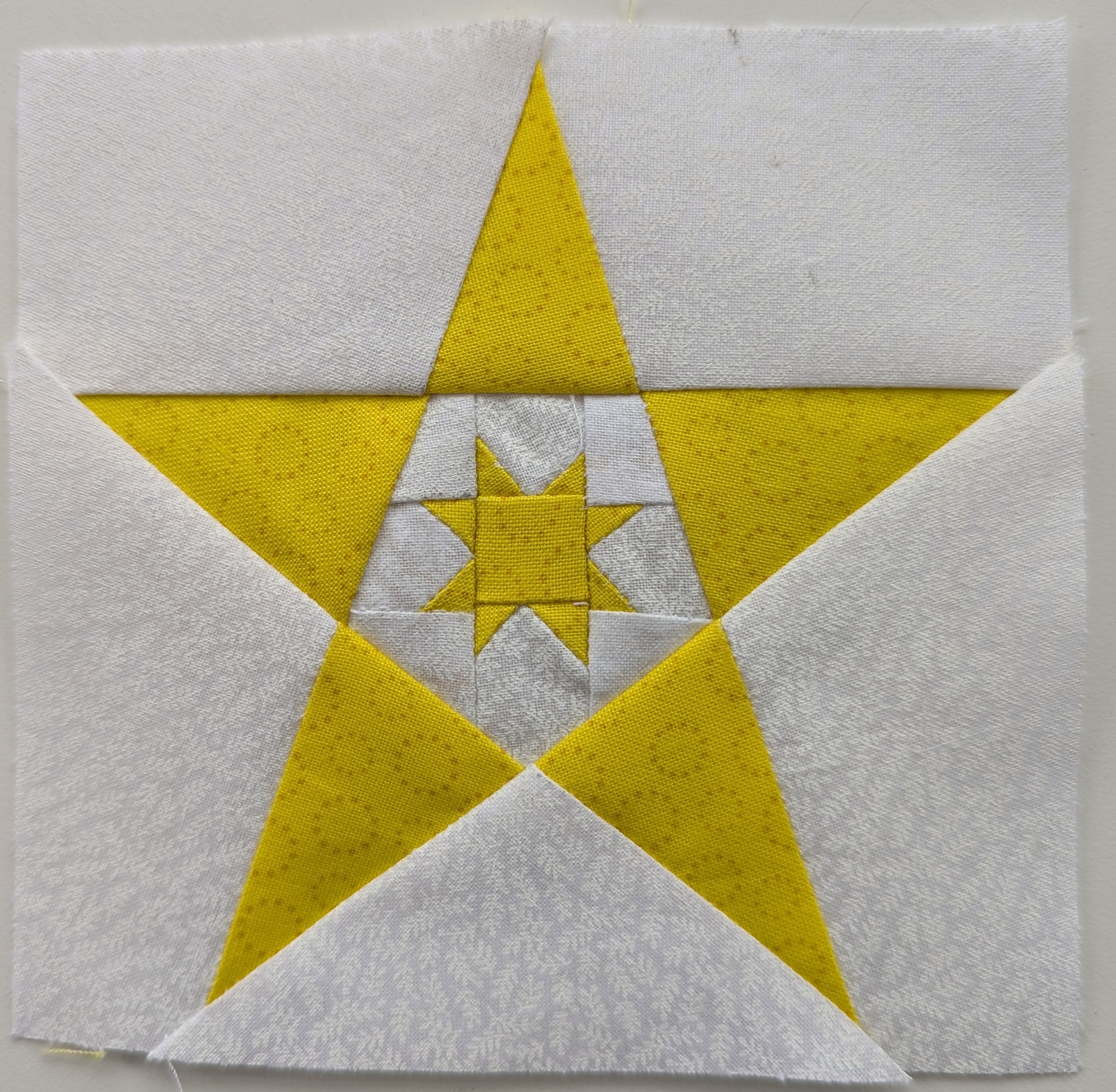
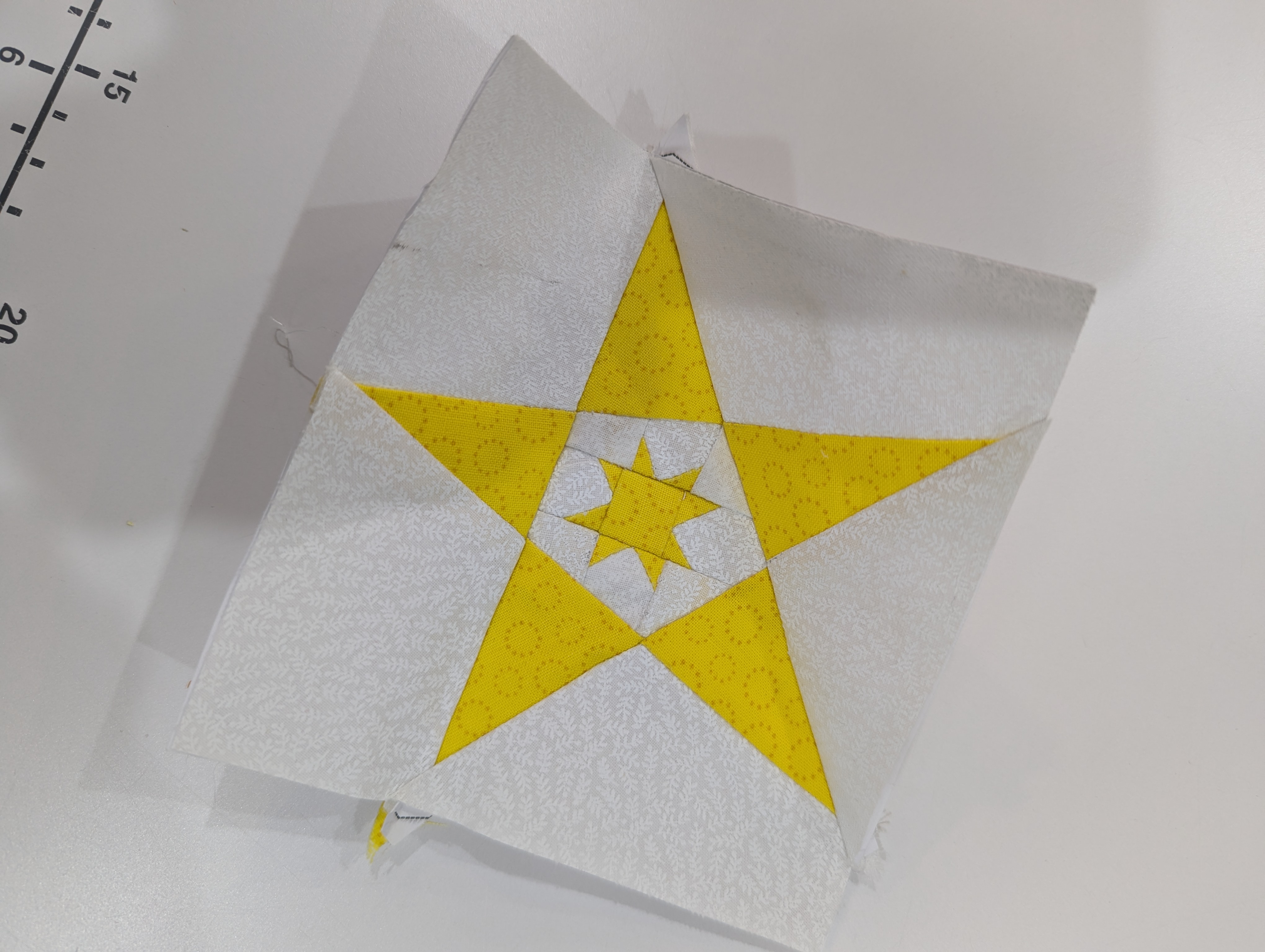
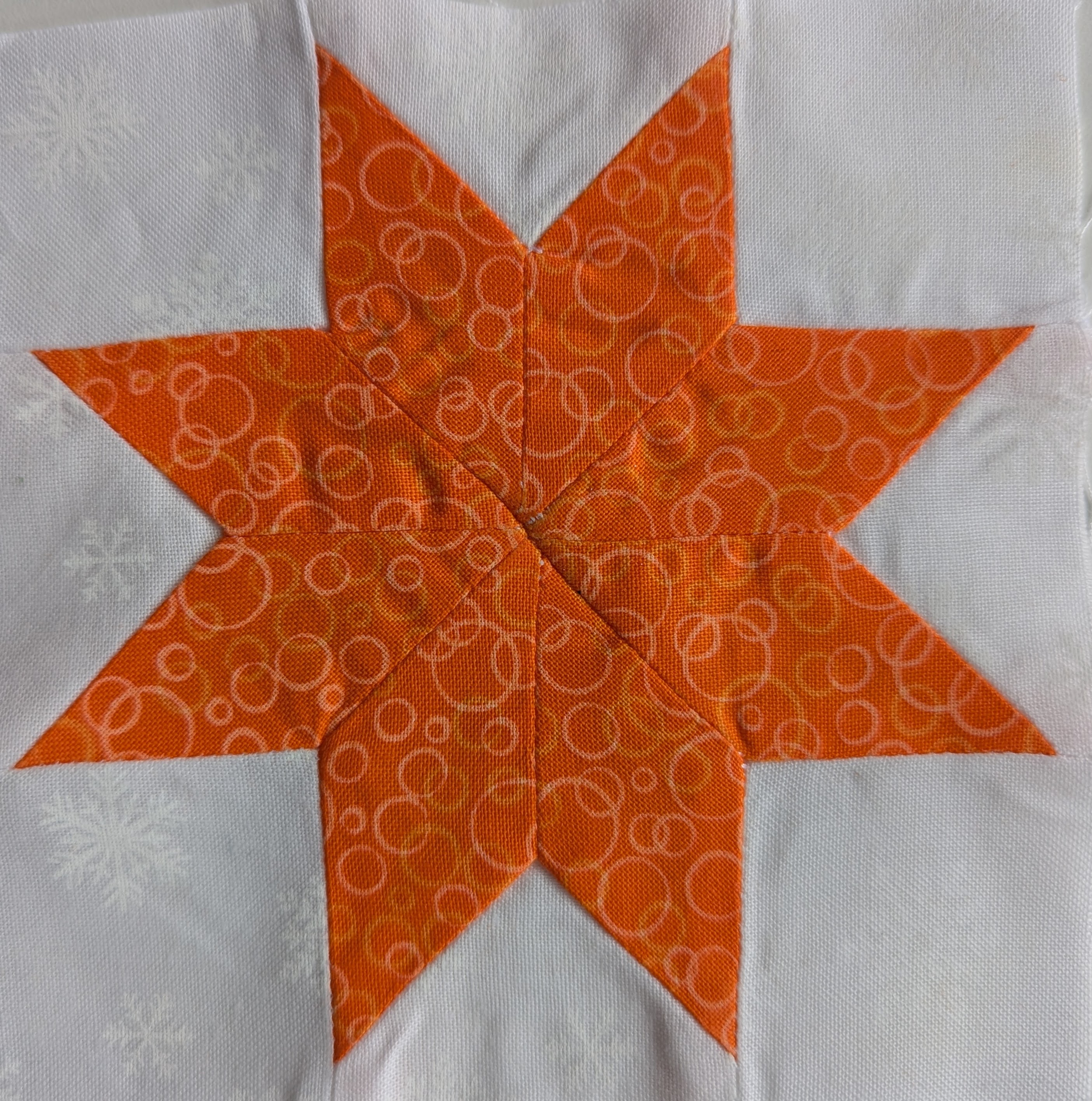
Dear Jane: G-6 – Papa’s Star

So much fun completing this block! It’s the third week of the Dear Jane Stitch Along group on Facebook, and there is so much variety in the blocks posted by the members. Very inspiring!

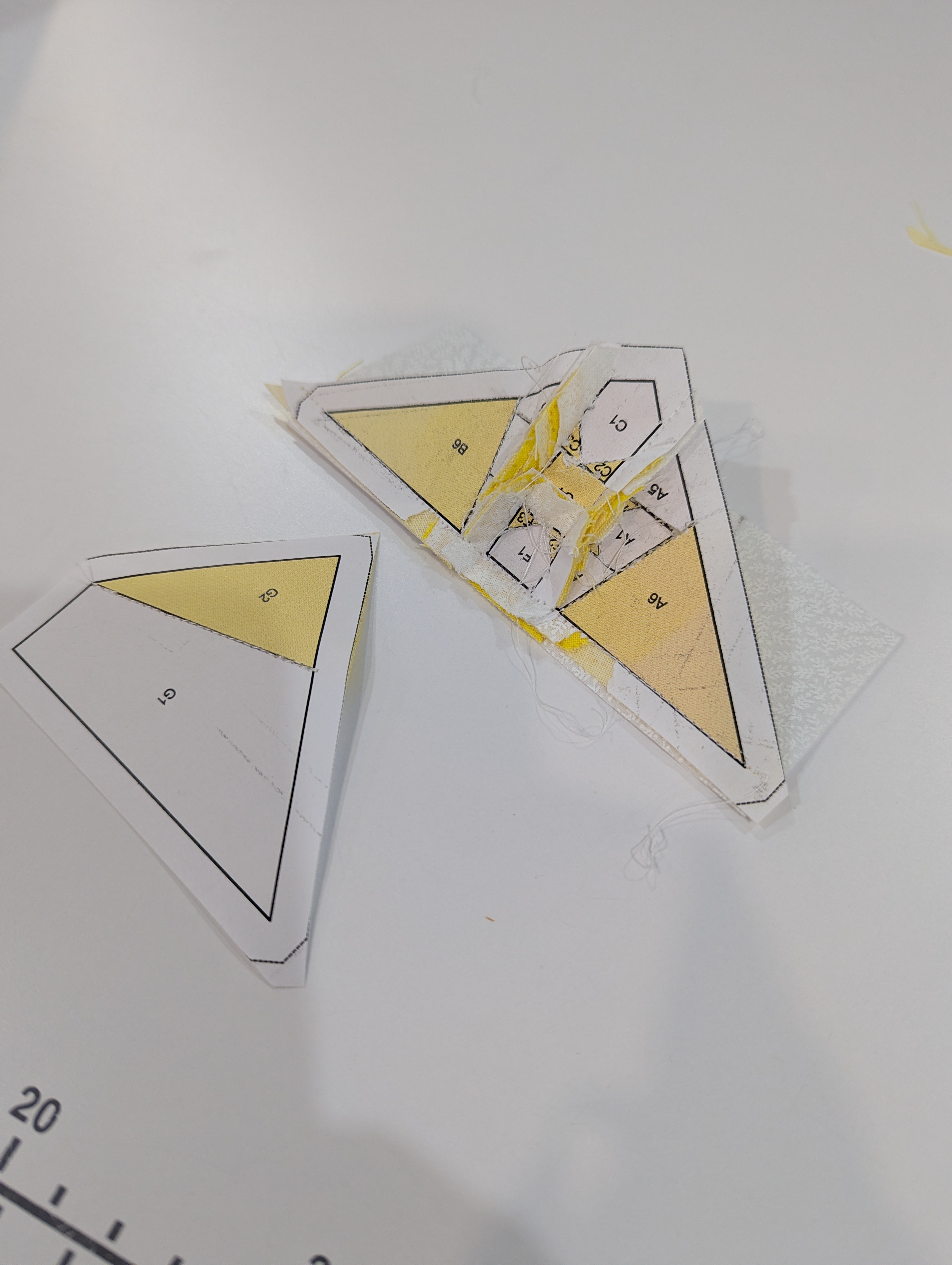
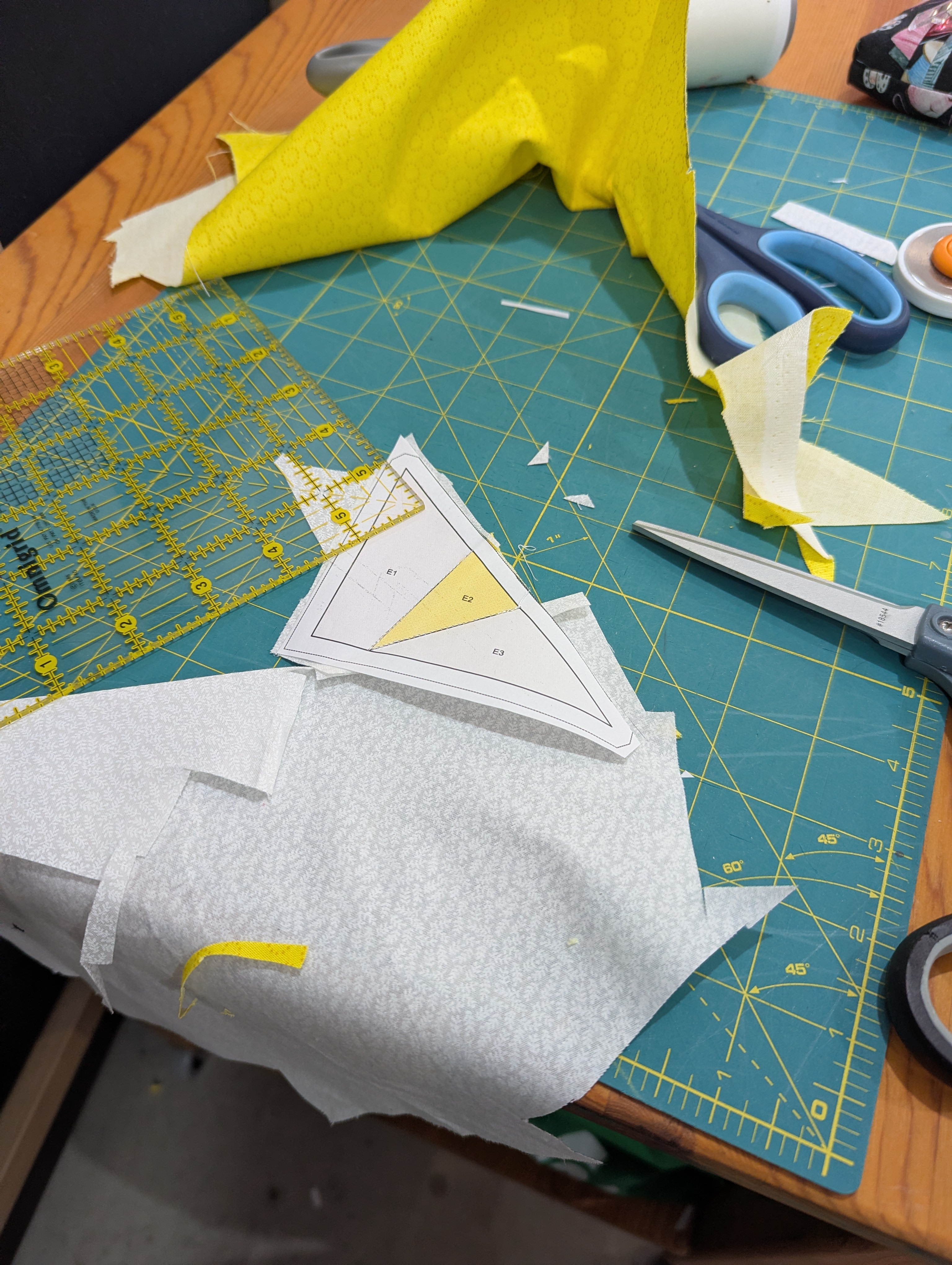
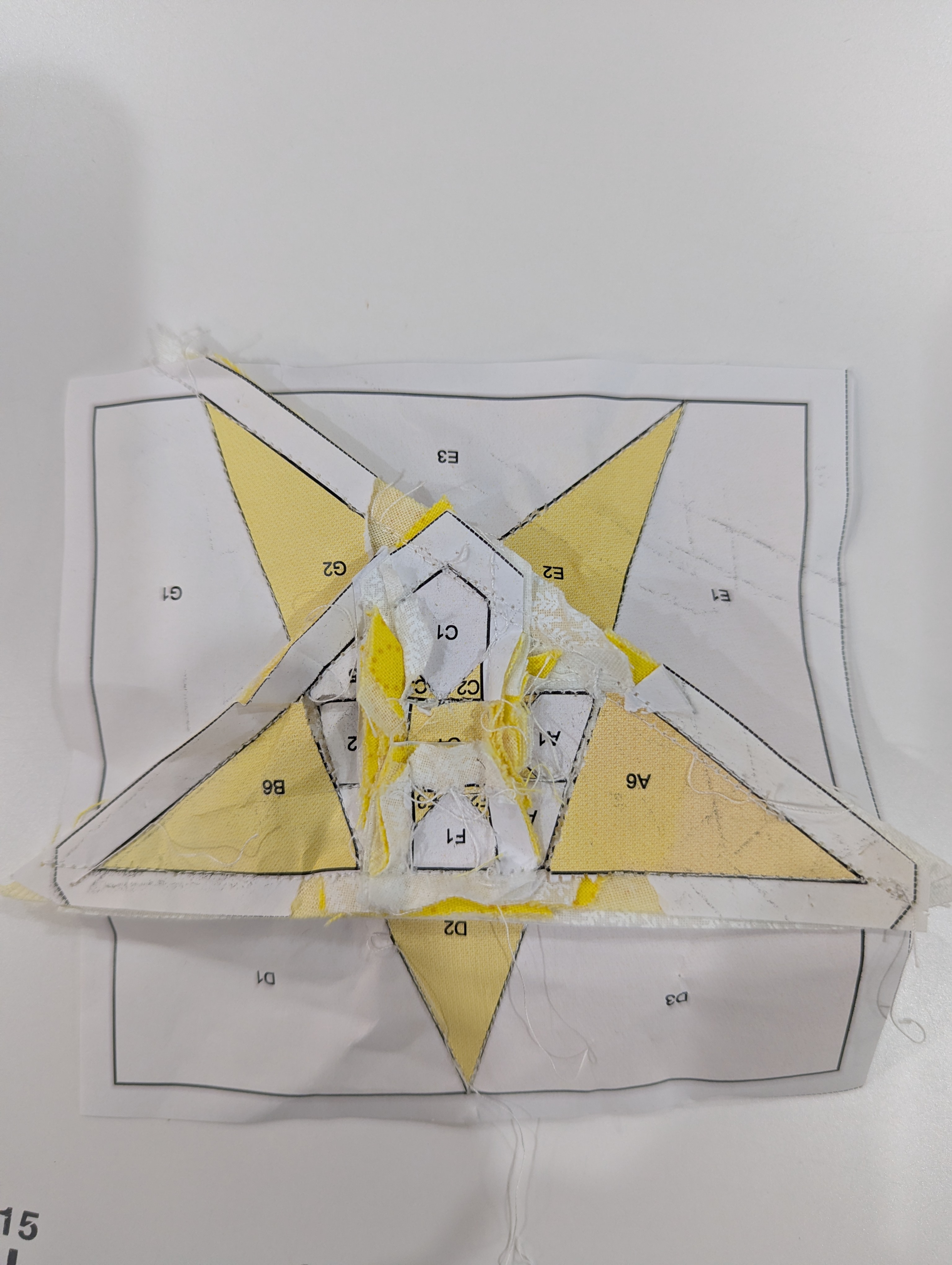
This is a perfect block for FPP. But I recognize that I am possibly breaking copyright by posting images of the pages from EQ8, so you won’t see any from this point forward. Here’s a gallery of some of the process:


FPP generates a lot of paper bits, and small scraps of fabric. My vacuum cleaner is going to get a workout!

You can see where I use two pins in the same location. One pin stabs through the intersections of both pieces. The second pin then secures it. I find if I stab, then secure with the same pin, it shifts. So this process gets a better match. I also find that my Magic Pins (Fine) work well for the stabbing process. But I need the Extra Fine size to slide easily and lay flat for sewing.

Successes:

  • This is as precise as I think I could get with those tiny quarter-inch triangles
  • I was able to use fine tweezers to get most of the paper out. And then I used “The World’s Kindest Nail Brush” from Lee Valley to remove the last bits.
  • My investment in the EQ8 software has already paid off with these four blocks completed. I believe I will be returning to this add-on to make larger versions of this block for other quilts.
Challenges:

  • I am using regular printer paper, so sometimes I stretch the seams as I remove this thicker paper. (I need to find my stack of Carol Doak’s Foundation paper to print the next blocks….. or order more!)
  • With the tiny pieces, there are a huge number of seam allowances on the back, necessitating some careful grading and trimming
  • Also due to the thickness, it is challenging to keep the presser foot in line. I had to re-sew a couple of seams where the line was off.
  • I chose my strongest “yellow” for this block, but wish I had selected one with even more contrast, to show off that tiny Ohio Star.

Here’s what the quilt looks like now, with G-6 added:

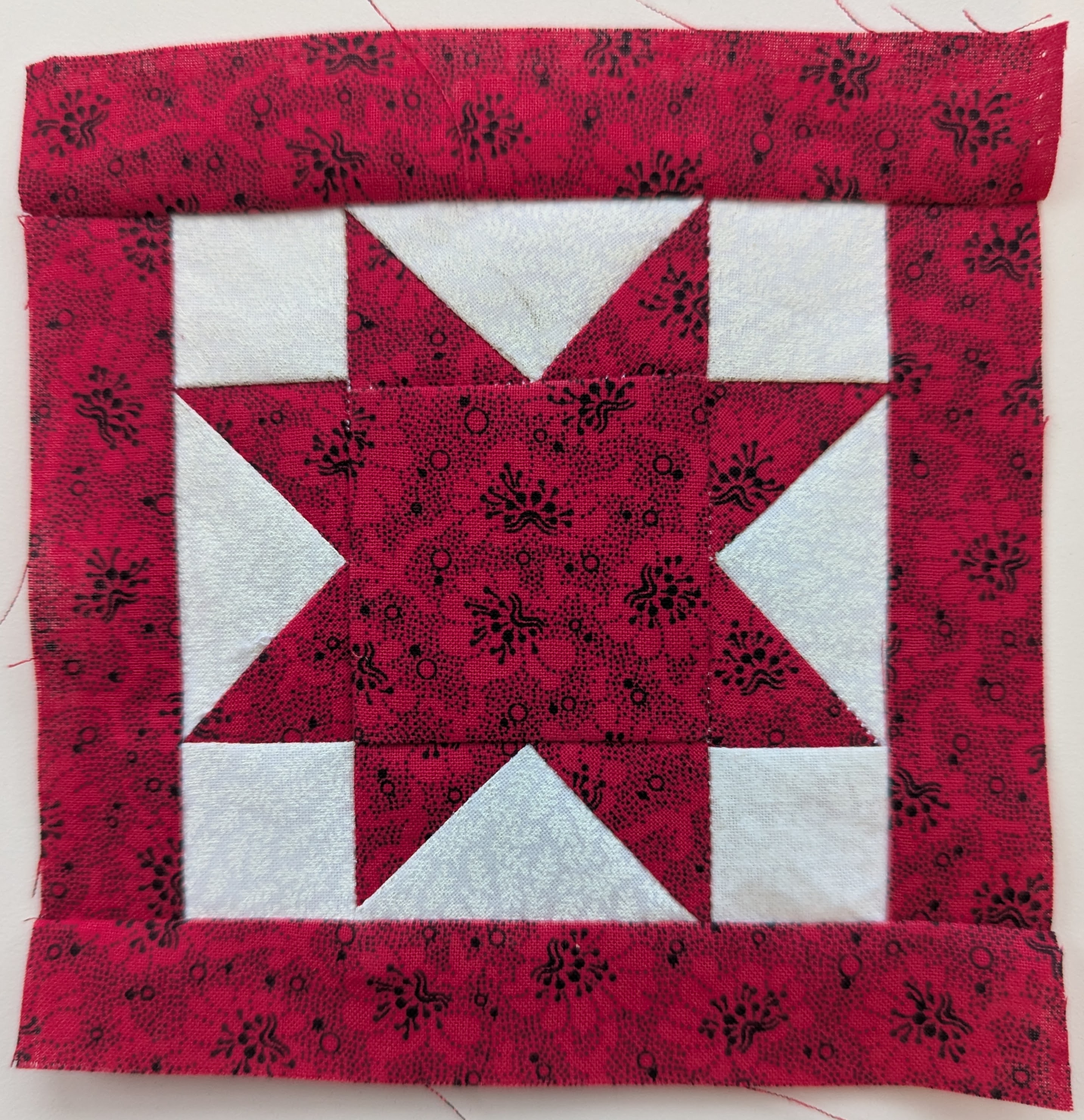
Dear Jane: F-7 – Star Struck

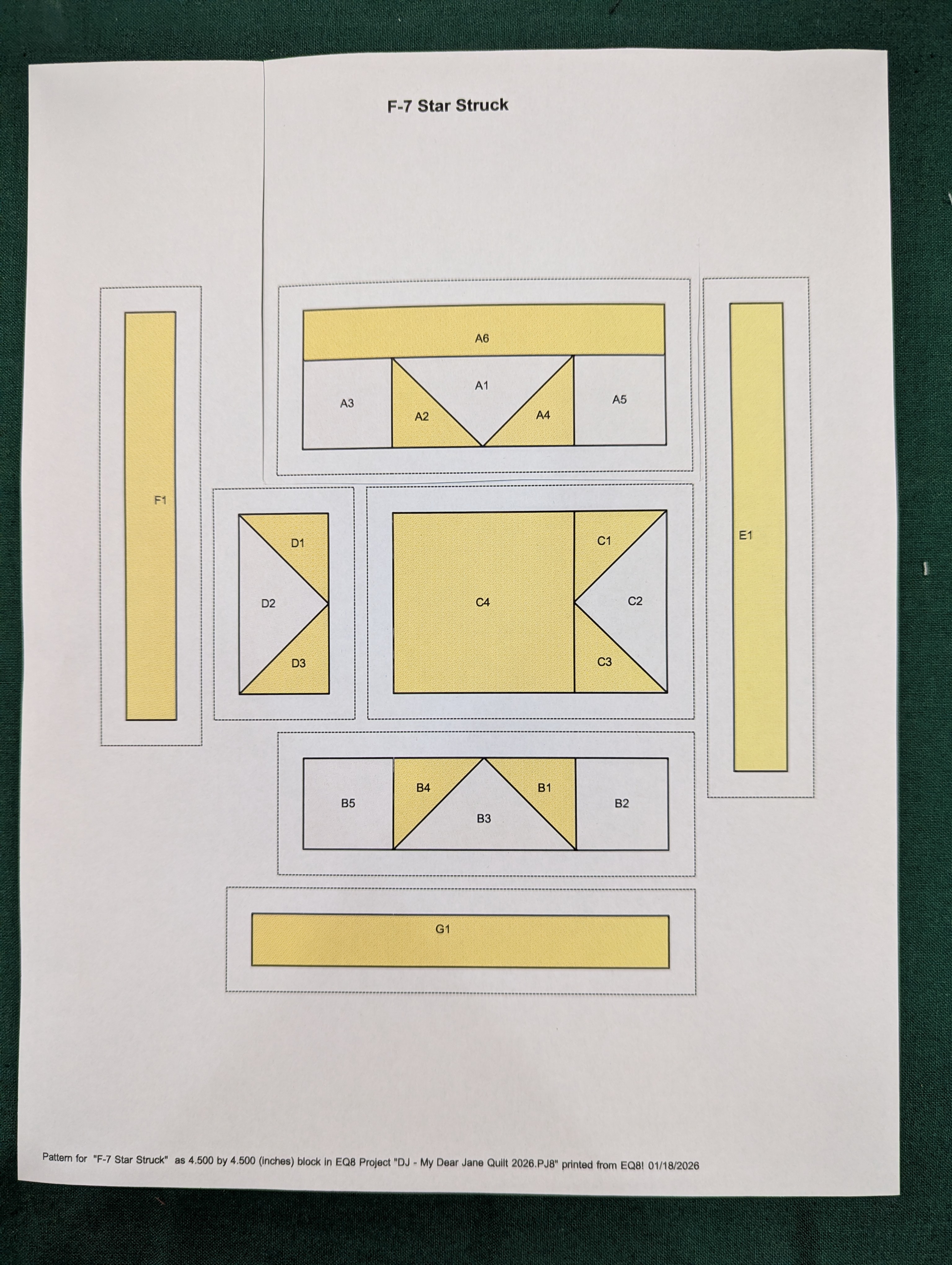
This block confirmed my decision to favour Foundation Paper Piecing. Except for the last three borders, it was all constructed using a printout from EQ8. 

I chose to repeat the use of red, since one of my goals is to use up my stash of fabric. And I like a quilt where the eye can jump from one focus colour to the next.

In the Dear Jane Stitch Along, the YouTube video by @JayneStitches, she handpieces this block. I think it would be a perfect block for this technique as well. If I were travelling, I would certainly consider hand-piecing while on a plane or bus.

Successes:

  • Nice crisp points due to the FPP technique
  • Lovely contrast of the red against the white background

Challenges:

  • Again, not many challenges on this one

And here’s what it looks like in my quilt so far:

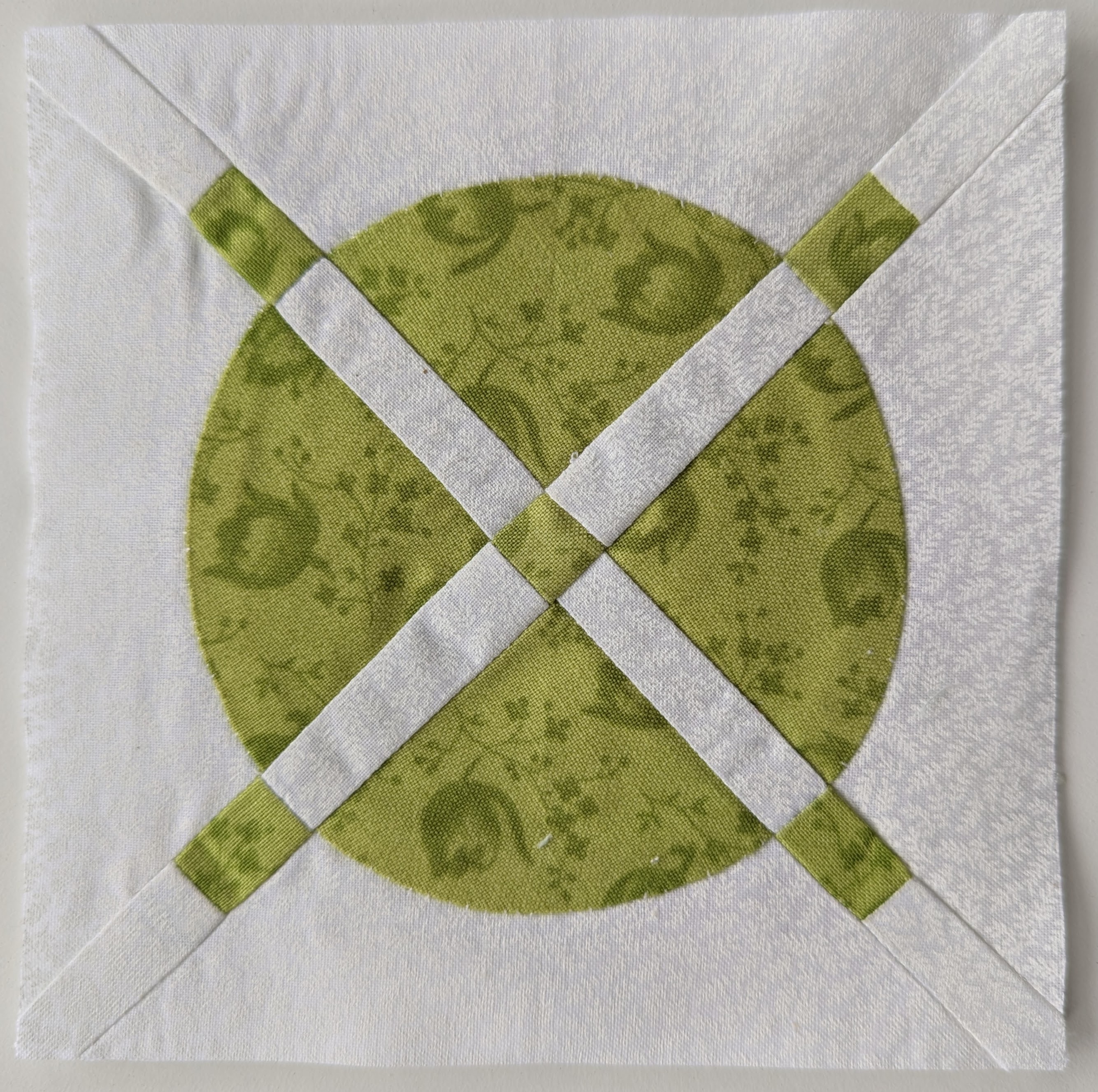
Dear Jane: Block G-7 – Indianapolis

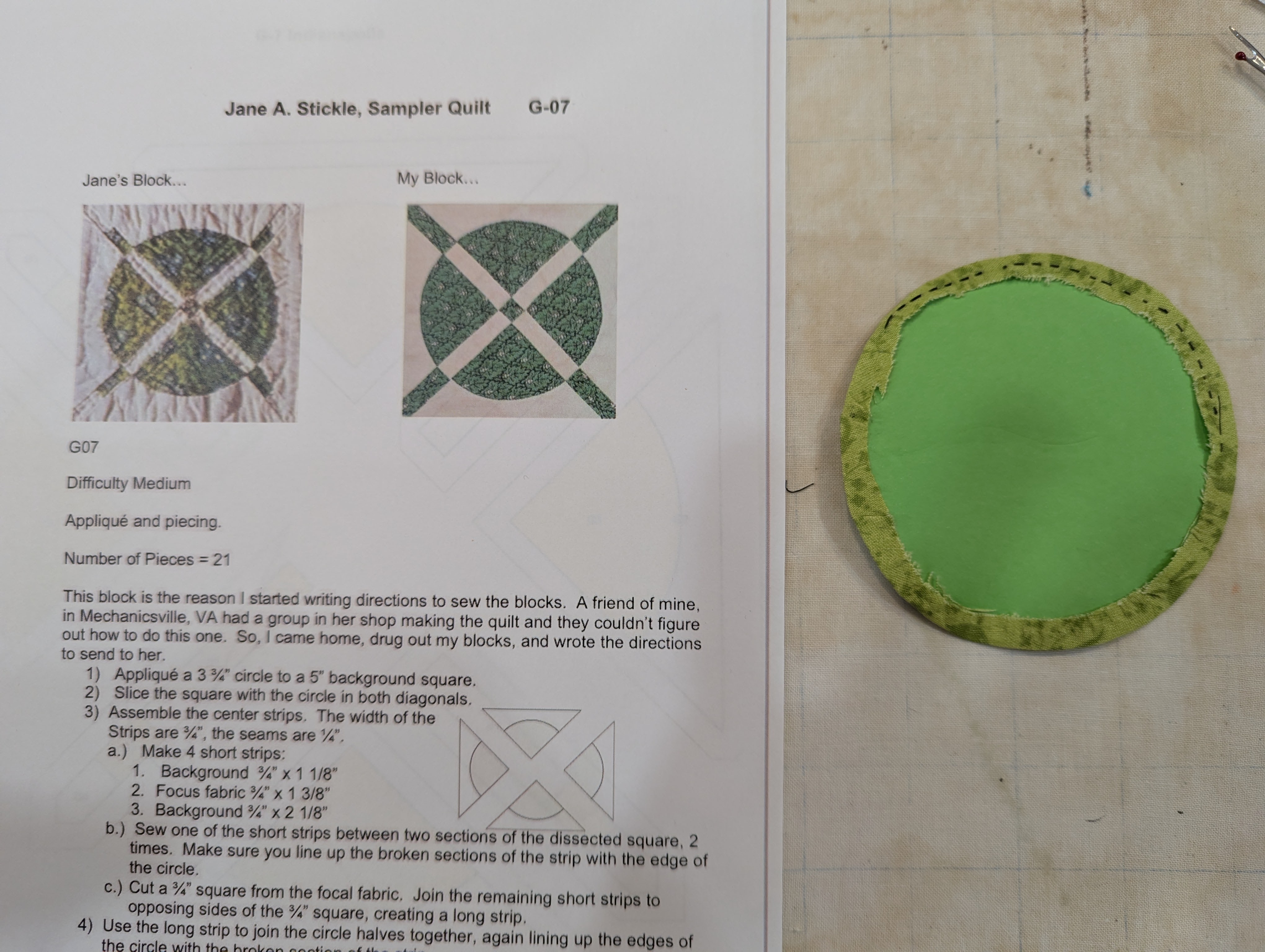
Block #2 for me is the first block in the Dear Jane Stitch Along, in Facebook. The plan in this group is to do one block per week, for three years. I plan to catch up with the group, and follow along, while completing other blocks to fill out my weeks. This is the centre block of the quilt, and anchors a nineteenth-century version of “Trip Around the World”. I don’t know if I will stick to this colour plan, but I found this lovely green, to remind me of spring!

The videos created by @JayneStitches are detailed and easy-to-follow, and allowed me to confidently tackle this complex block. And the printed instructions were a perfect complement to the files from EQ8. Here are the instructions with my centre circle in process:

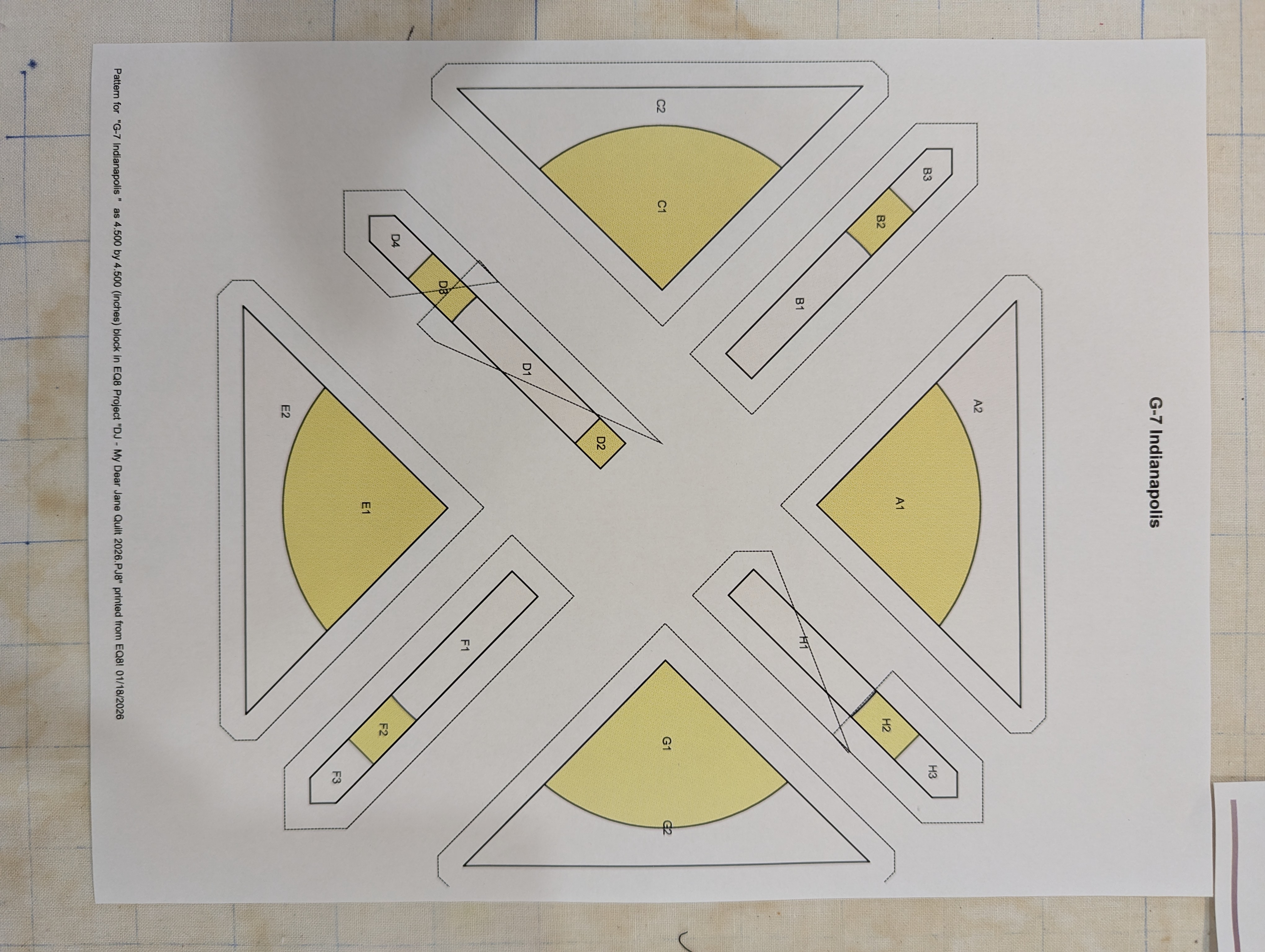
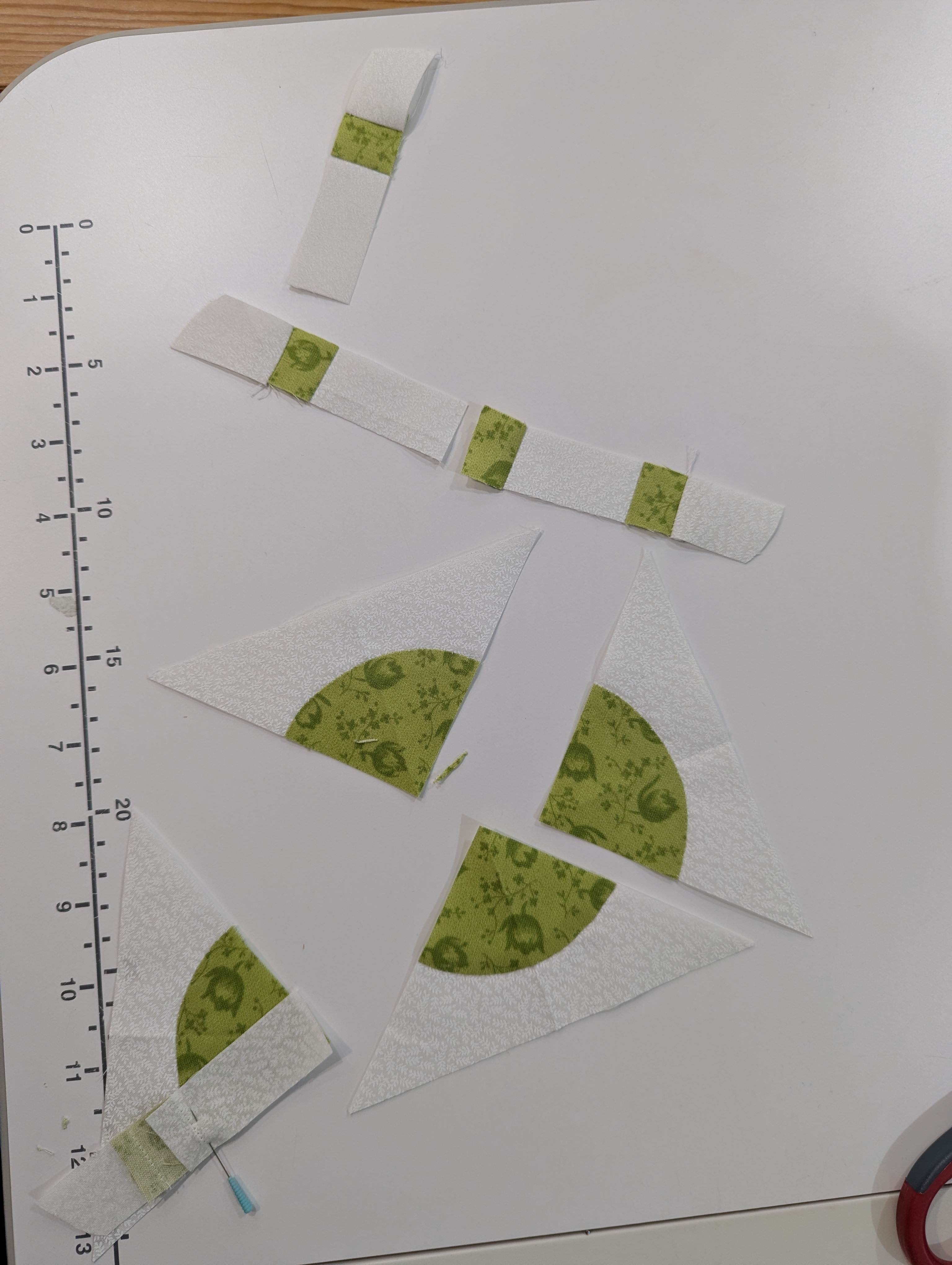
I followed the Facebook group instructions for the first two steps, but then used the Foundation Paper Piecing page from EQ8 to do the cross strips:

I had a lot of fun with this one!

Successes:

  • Combining applique with FPP worked very well
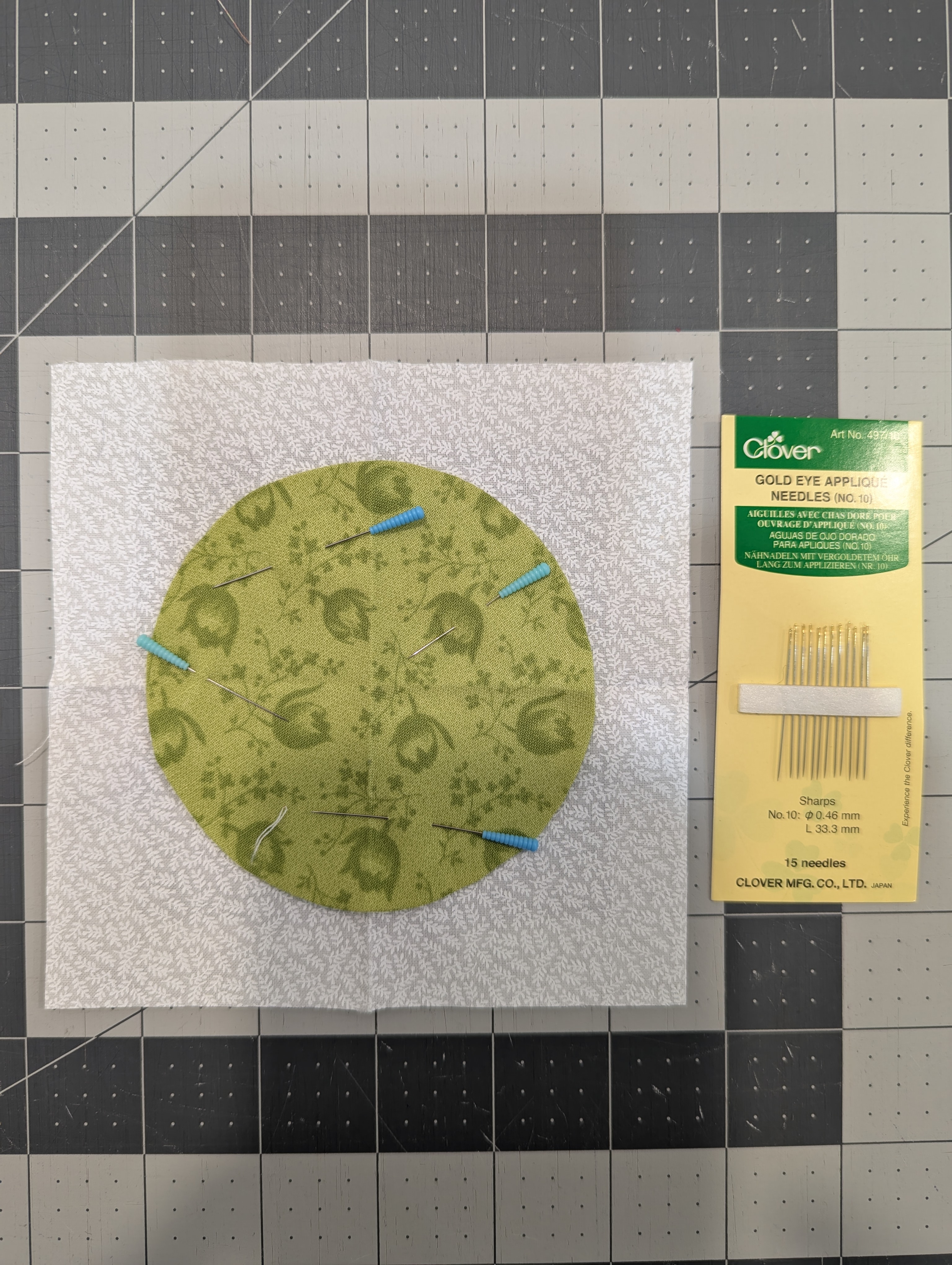
  • Use of Best Press to fix edges made the needle-turn applique easy and precise
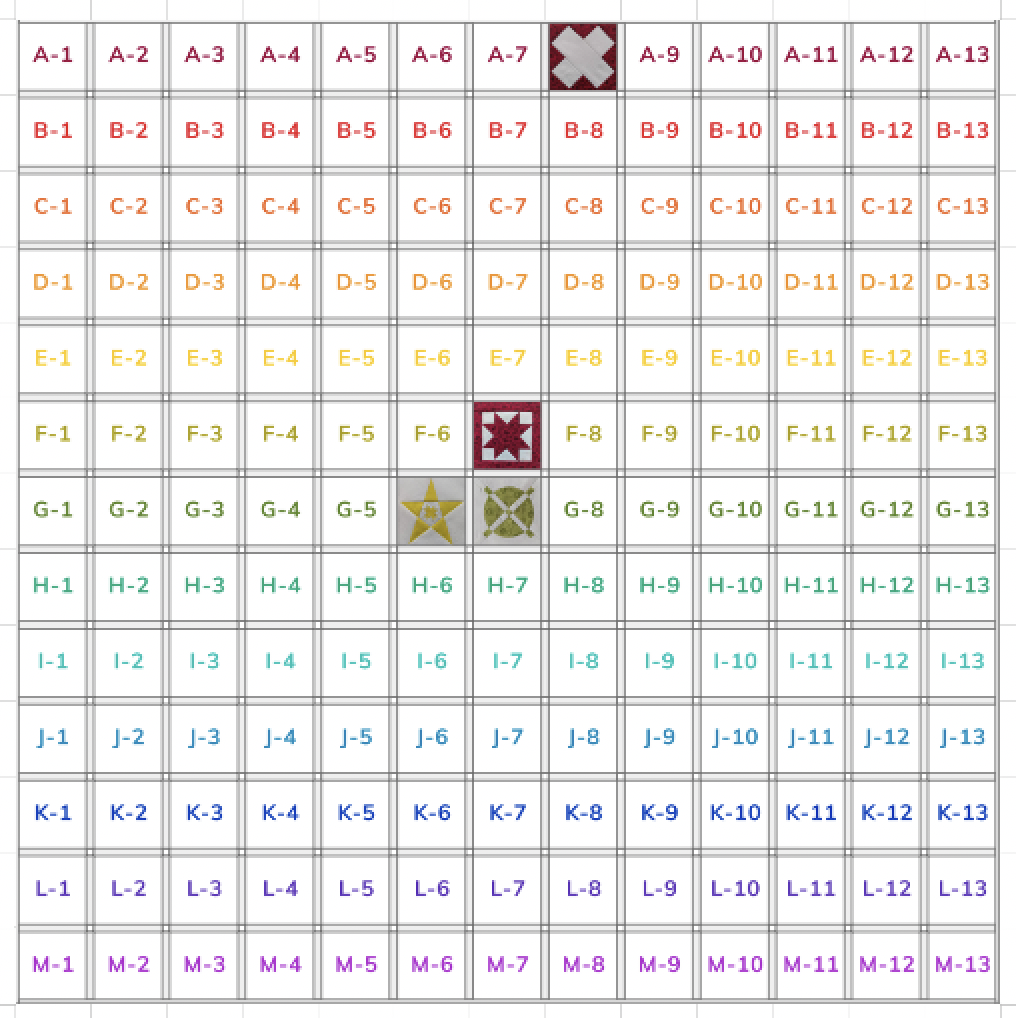
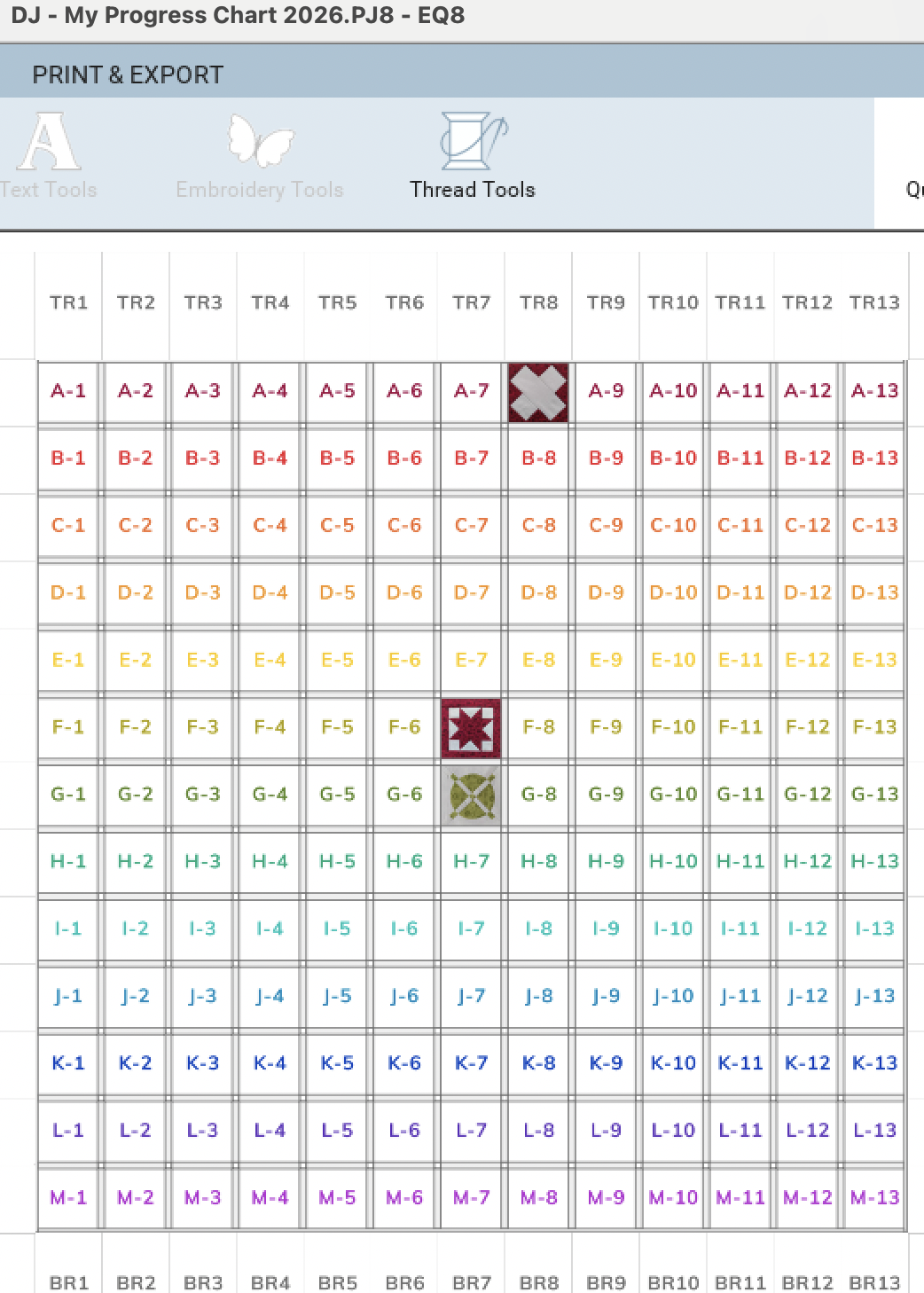
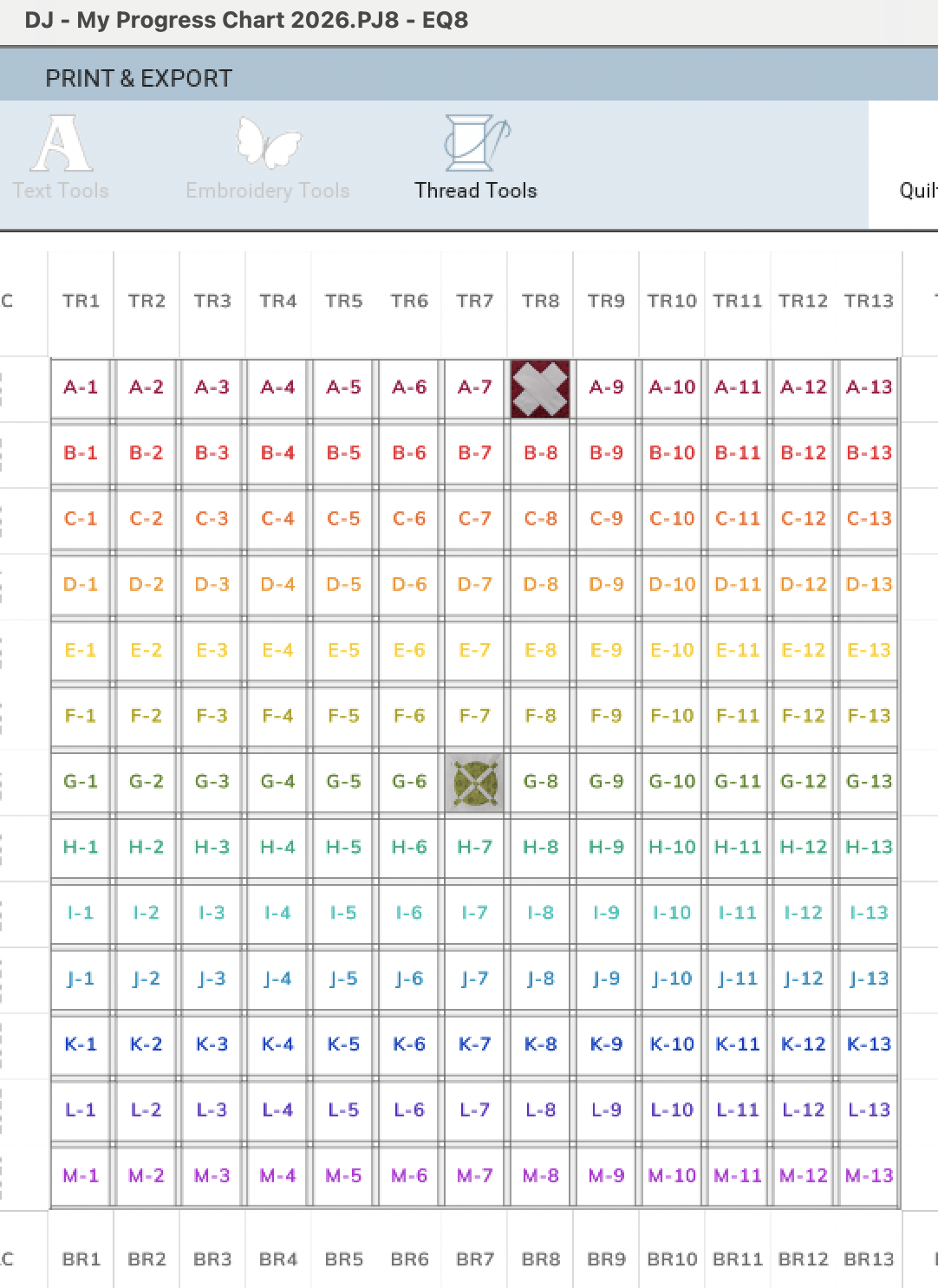
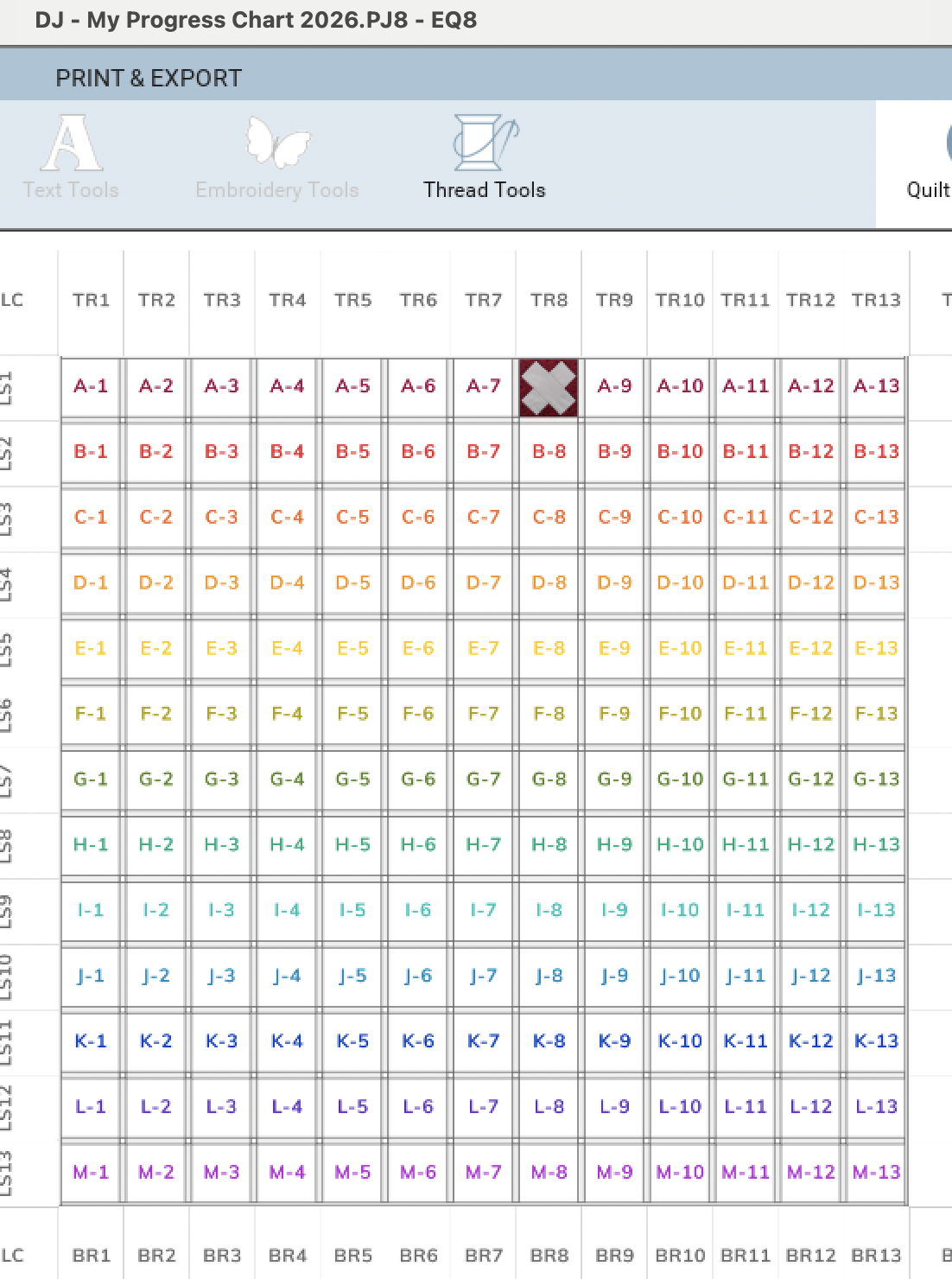
  • I can put my blocks away, and still see how the quilt is going, through the use of the Progress Chart in EQ8

Challenges:

  • There were remarkably few challenges with this block, despite my trepidation!

And here’s what the quilt looks like so far: 

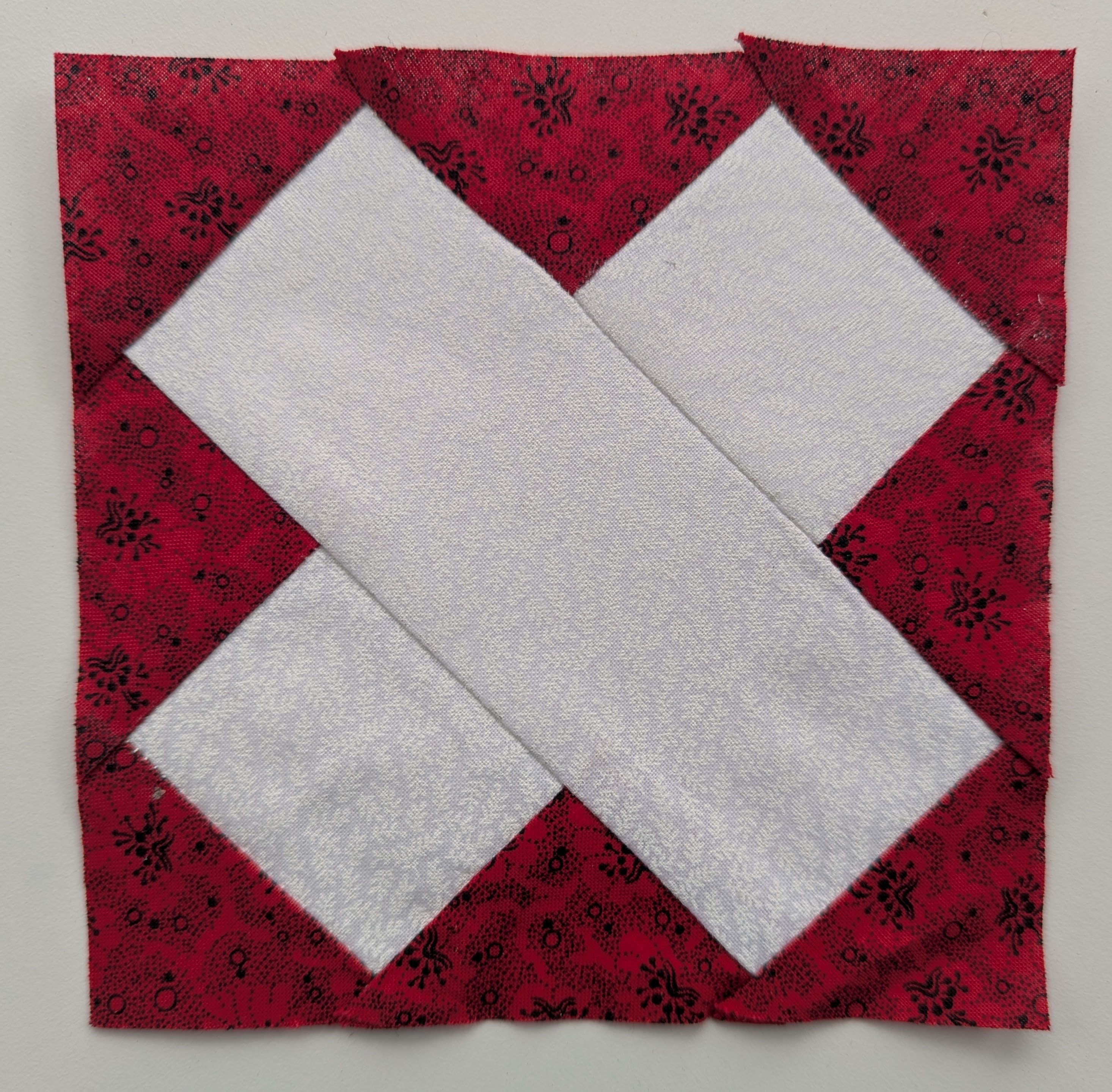
Dear Jane: Block A-8 – Florence Nightingale

If you have read my previous post, you will know that I am starting a quilting journey. This journey is expected to be measured in years rather than days. Today I took the first step by choosing a simple block, or at least one that appeared to be simple.

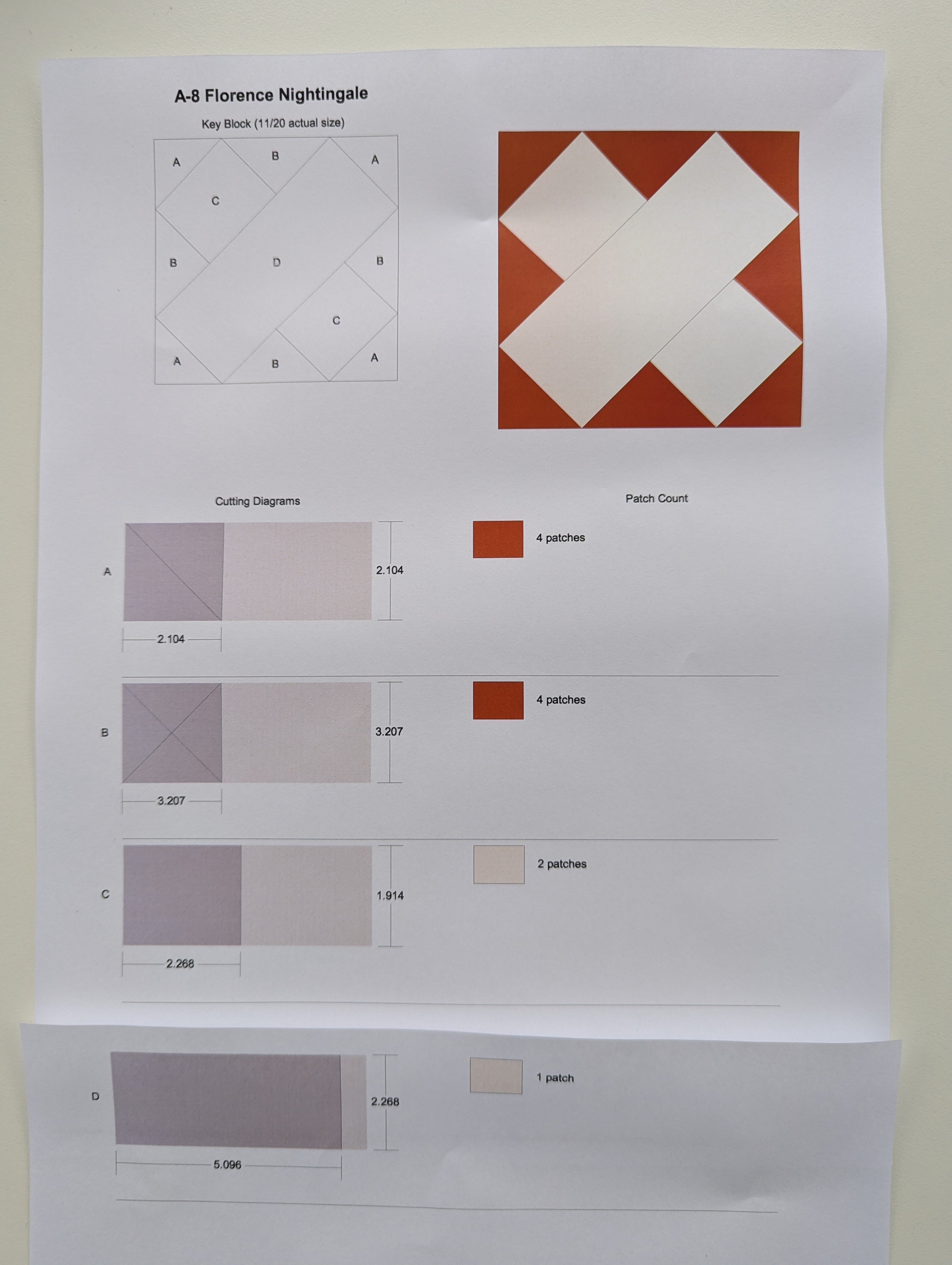
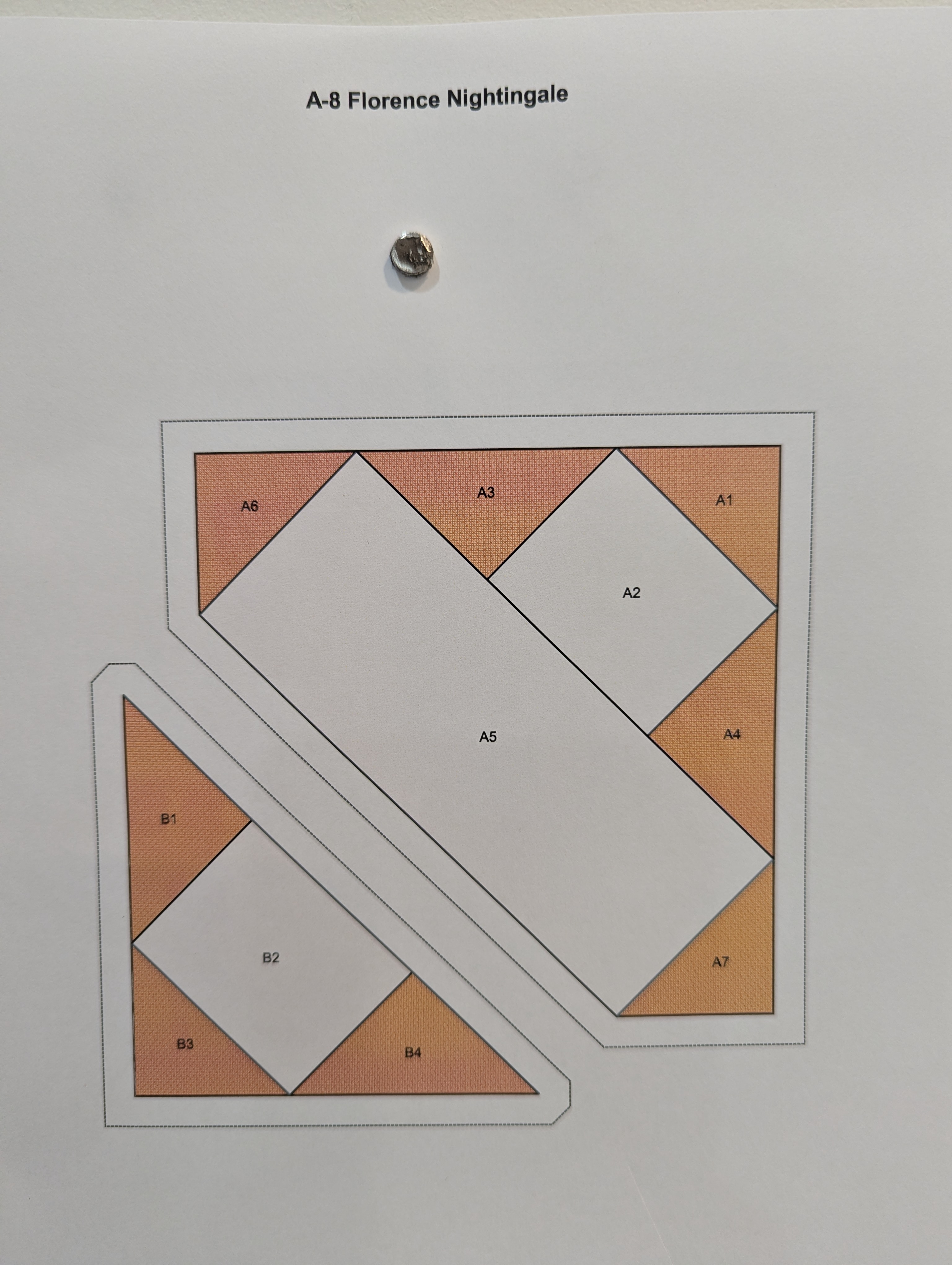
I am used to working with my rotary cutter and ruler to construct blocks. So I chose that option first from EQ8.

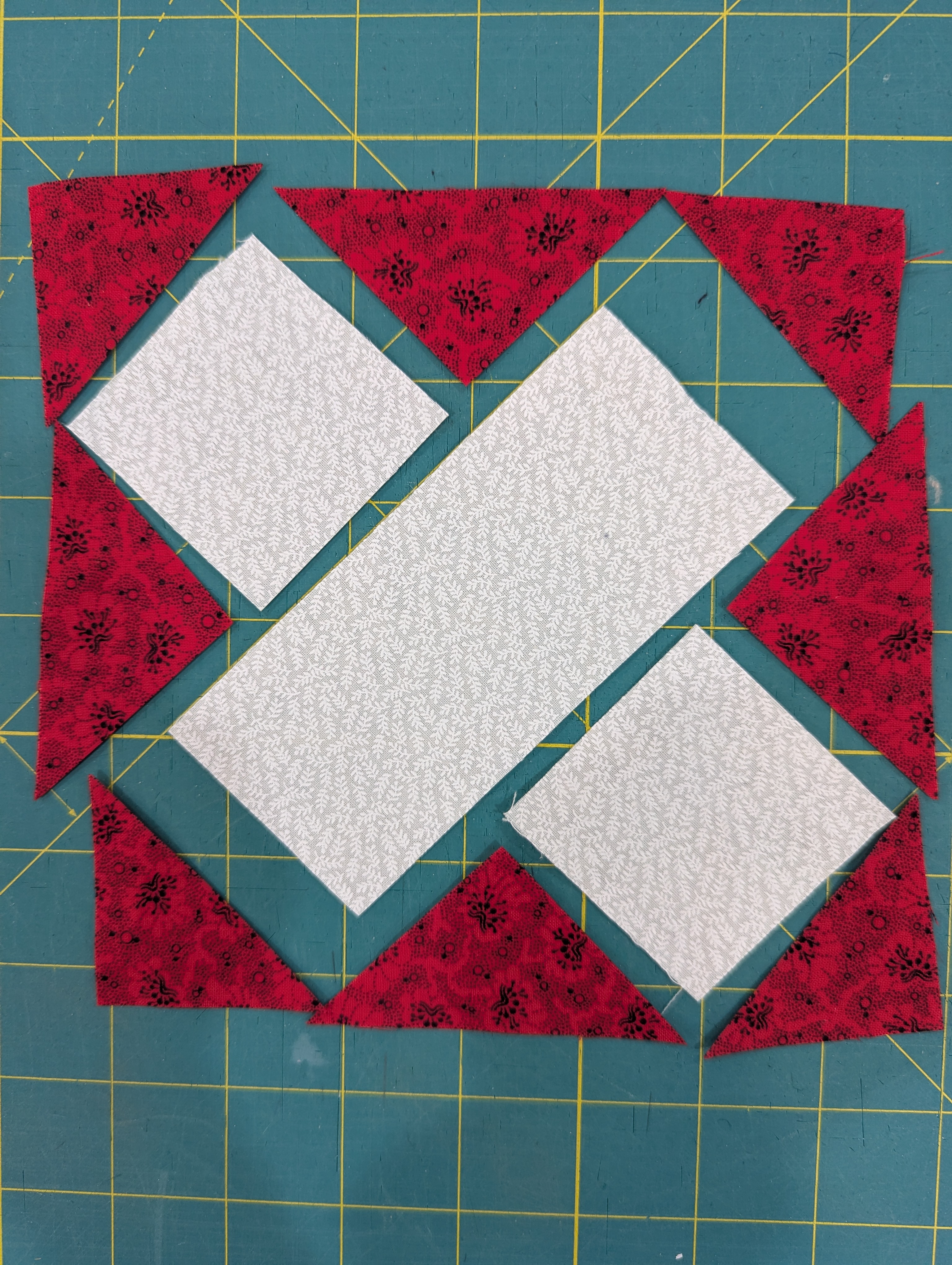
It looked straightforward, so I converted the decimals to fractions, cut my pieces and prepared to sew.

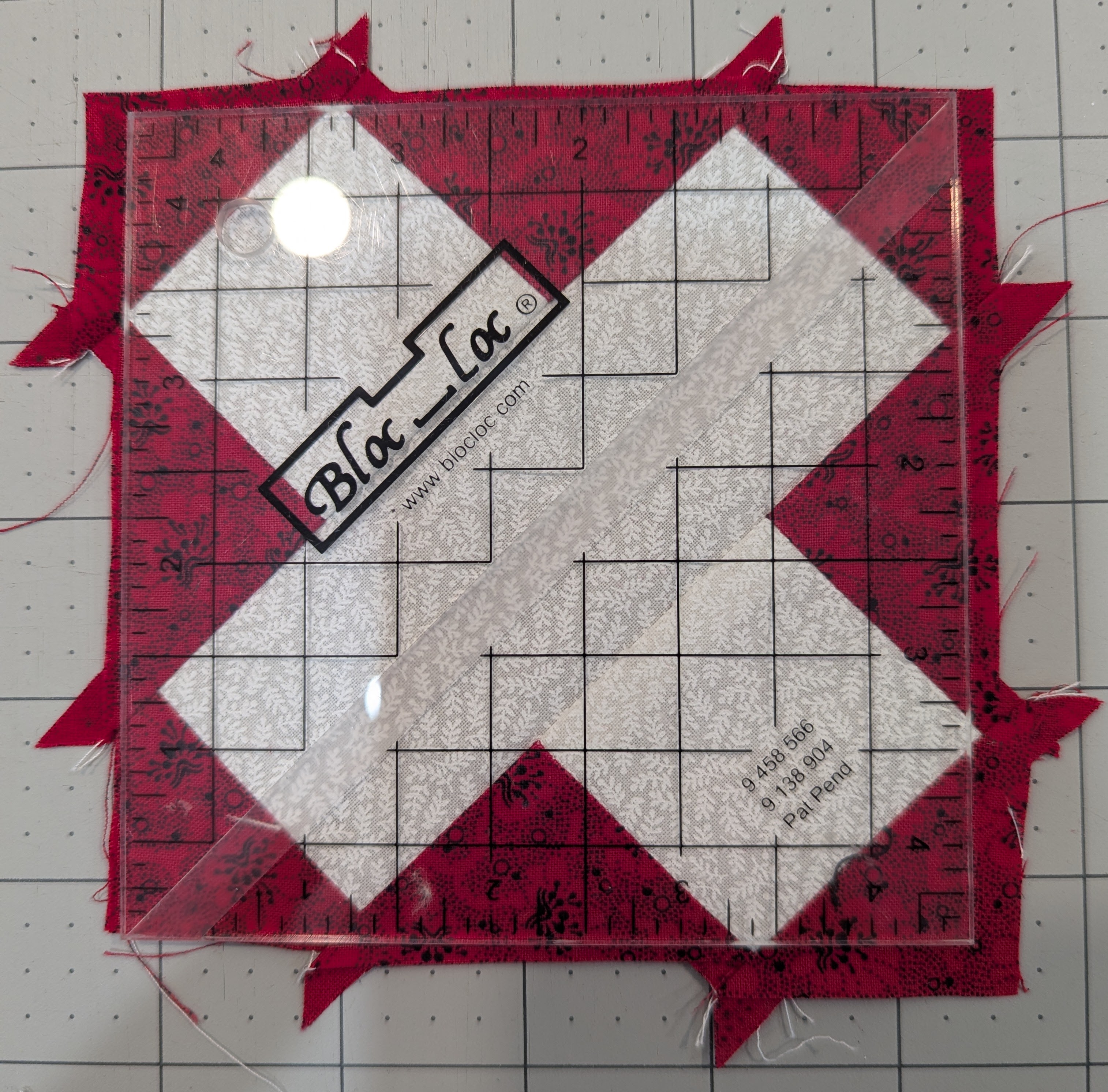
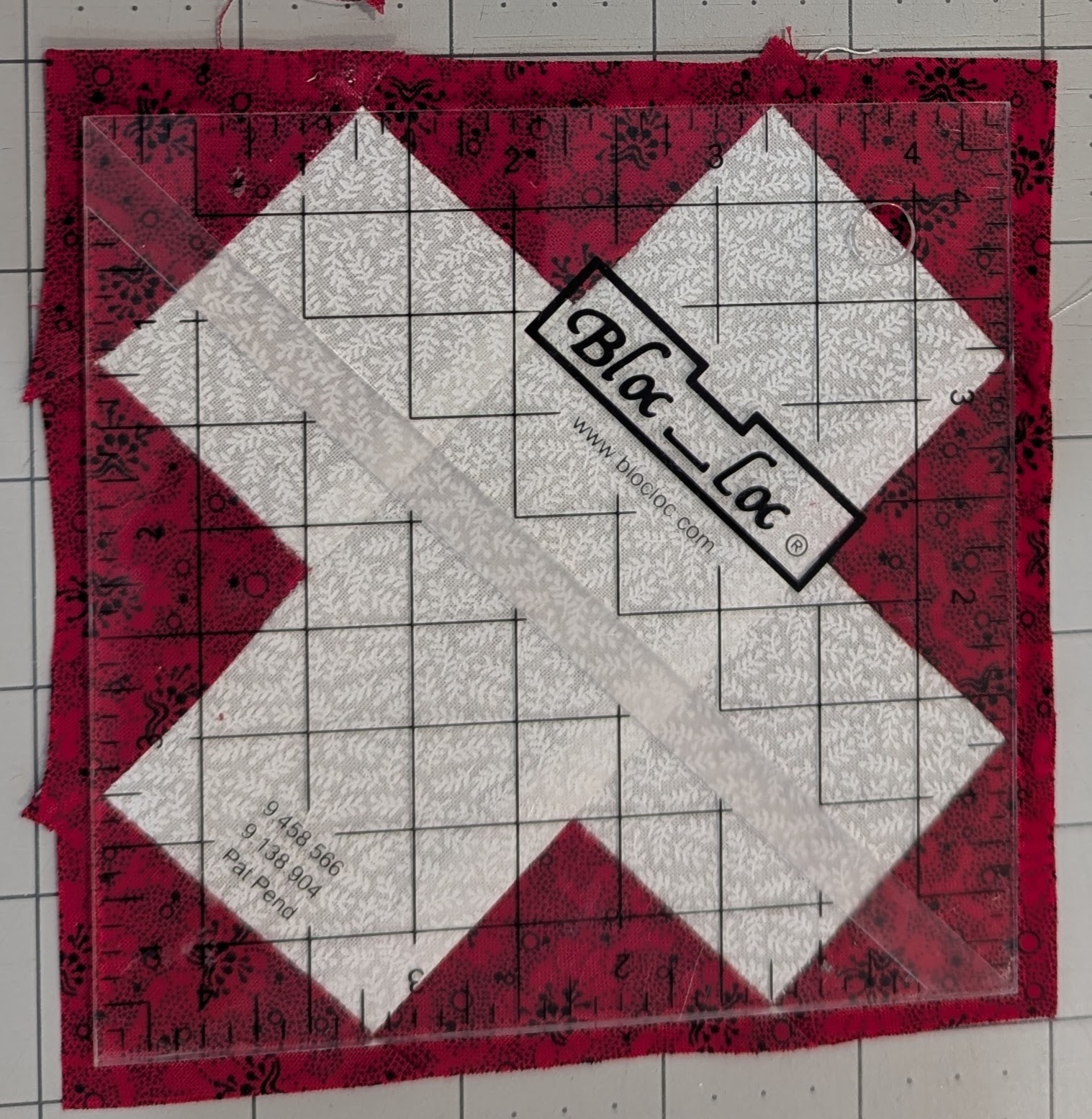
The blocks are to be 4.5″, so I found my only 4.5″ ruler, and checked it out. As you can see, it’s a little wonky. I definitely don’t have a quarter-inch seam allowance to use when I connect blocks with sashing at the end.
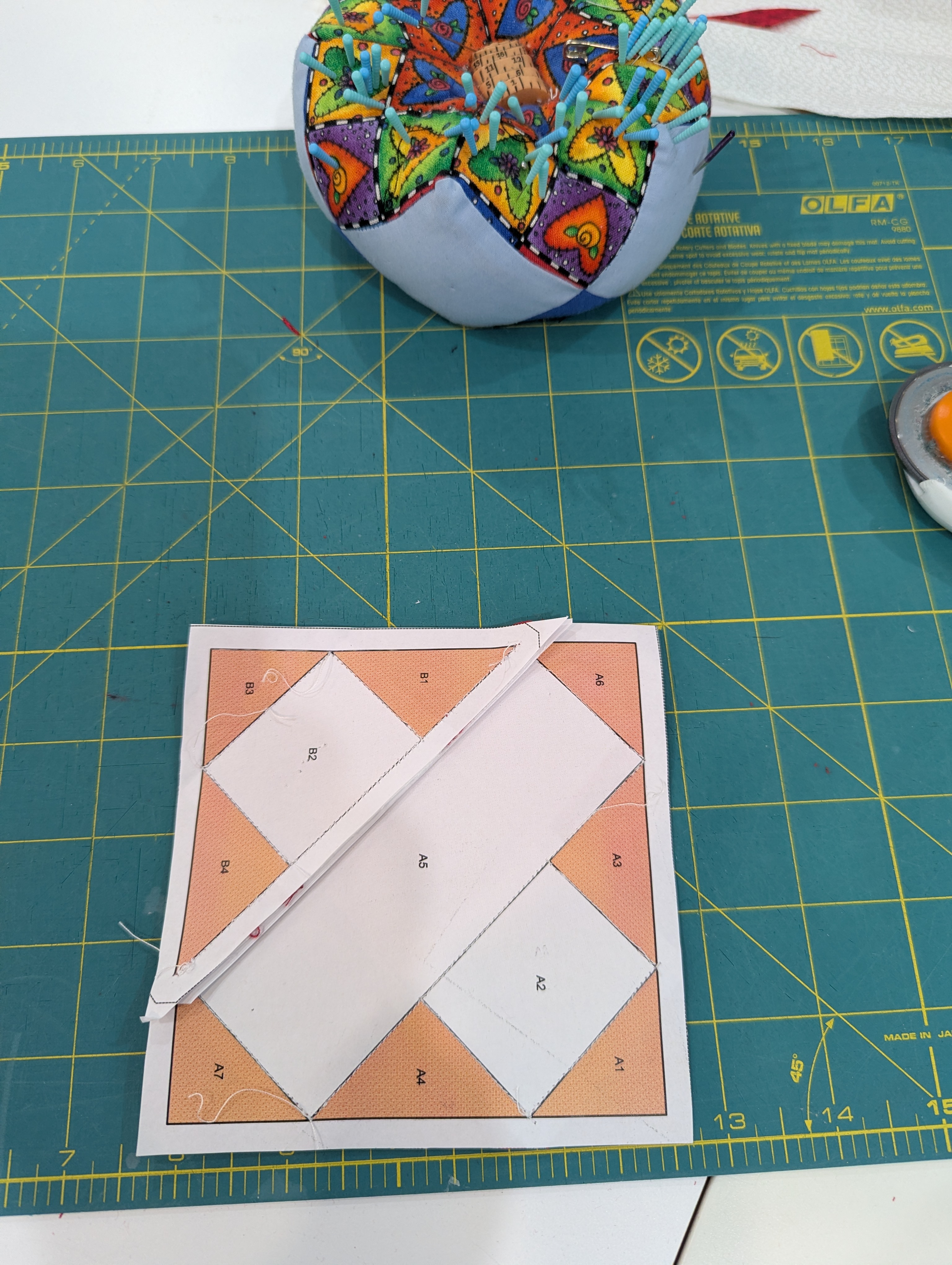
So, I then thought I should try out the foundation paper piecing (FPP) option:

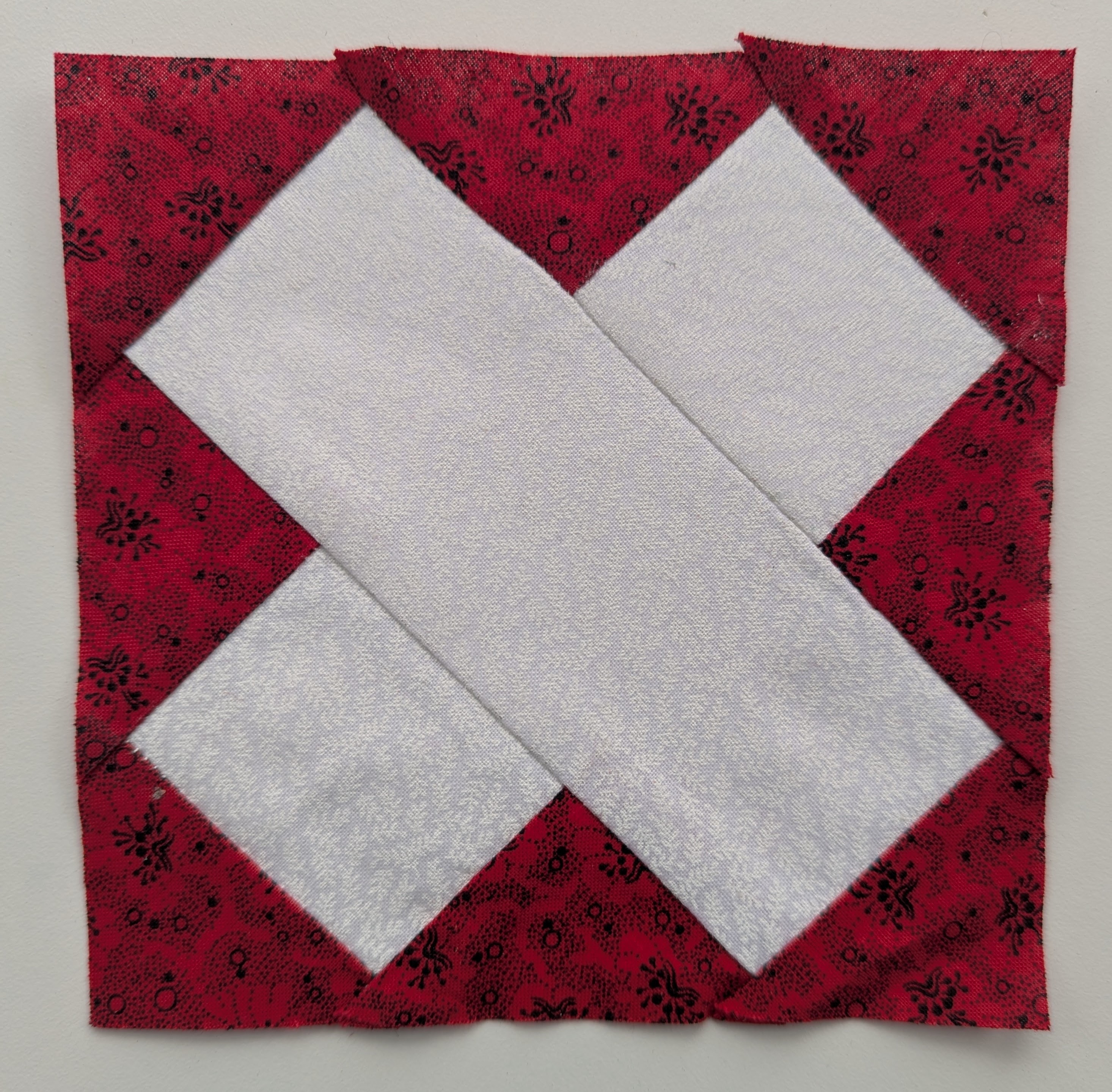
I printed it on regular printer paper, and used the same fabrics:

This one is MUCH more accurate. Foundation Paper Piecing (FPP) should give me the ability to retain my points when I piece the quilt top.
Successes:

  • lovely contrast of white and red
  • final block that is large enough to be trimmed to finished size

Challenges:

  • I will have more waste fabric using FPP rather than rotary cutting
  • I destroy the pattern when doing FPP, so I have no paper to file and document the block

And here’s what my quilt looks like so far:

I’m awaiting delivery of a new “Add-a-quarter plus” ruler, to help with the Foundation Paper Piecing. And I have also ordered liquid starch to use when tackling my needle-turn applique blocks. I have joined three Facebook groups and subscribed to several YouTube channels, in order to research techniques for each block as I encounter them. Hopefully this will speed up the process on some blocks, and ensure that I don’t need to make more than one version each time!

Documenting My Dear Jane Quilt Project: A Quilter’s Diary

Every New Year I vow to use what I have, and not purchase new, for my studio. This year I am hoping that this purchase will support me in this endeavour.

I have loved doing the HundredDayProject over the past few years, and have successfully reduced my stash of yarn by crocheting 100 granny squares, have learned how to use my Cricut by making 100 boxes, and last year I worked my way through Tula Pink’s 100 Modern Quilt Blocks. However, I found myself having to “work ahead” in order to consistently post one item per day, when I was going to have to be away from my studio for several days.

So, for this year, 2026, I propose to follow a similar model, but to not use “day” as my unit. Instead, I propose to complete the 225 blocks of the Dear Jane quilt, posting each as I complete it. To that end, I have purchased the EQ8 add-on, and will be developing greater understanding of this software through this project.

Having been inspired by the Quilt Alliance, I am also going to document this quilt (having never done so over 35 years of quilting), and will reference this blog when I put a label on the completed quilt (which I have only recently begun to do with my quilts!).

Here are the rules I have set for myself:

  • I will use only fabric from my stash.
  • I will “tackle” the blocks in the order that inspires me.
  • I will photograph each block, and add it to the layout, providing me with a virtual “design wall” that I will be able to utilize as the quilt progresses, and to determine the final block layout.
  • I will document each block in a separate blog post, and for each I will note technical details, as well as the challenges and successes that I experience completing the block.
  • I will accept that this could be a multi-year project!

Here are some useful links, relating to this project:

Let’s hope that my WordPress skills, my EQ8 skills, and my quilting skills all benefit from this Dear Jane project.

Wish me luck!

Peel DSB – Teaching and Learning in a Digital World – 2016 – #tldw2016 #peel21st

What an amazing 24 hours it has been!  Yesterday at this time we were networking, and preparing to listen to Dr. Reshan Richards (@reshanrichards, The Constructivist Toolkit) share with us his six moves:CqvnHmlWIAA76Rq

  1. Look out for your classroom by looking out of your classroom.
  2. Care for all learning spaces:  physical and digital.
  3. Share Relentlessly!  You never know what doors might open for you and your students.
  4. Save & respect time to develop and share talents.
  5. Align to your mission or throw out & rewrite your mission.
  6. Keep the offramp open & use it frequently.

And then this morning we were inspired by Will Richardson (@willrich45), who asked us “are you a teaching culture or a learning culture”.  And in examining that culture, he asked us to consider our:

  1. Beliefs
  2. Context
  3. Practice

Alignment and coCqyp9a6UIAA51k4nsistency is necessary to move education from a Traditional to Transitional to Transformational.  He quoted Seymour Sarason:  “Productive learning is where the process engenders and reinforces wanting to learn more.  Absent wanting to learn more, the learning context is unproductive.”


After three breakout sessions, where I learned about Peel’s new assessment app, GAFE, and collaborative tools for student assessment, we were treated to Jennifer Gonzalez’ 10 Ways to Nurture Student Growth with Technology (@cultofpedagogy, Cult of Pedagogy):

  1. Start SmallCqzrLILUkAAuXHS
  2. Step Aside
  3. Present Problems
  4. Share Stories
  5. Provide Access
  6. Make Time
  7. Iterate
  8. Expect Problems
  9. Publish
  10. Participate

Can you tell that Reshan’s #3 and Jennifer’s #4,9 and 10 have inspired me?  My blog has become like my lifelong struggle with my diet:  I begin with great intentions, but Jennifer’s advice #1 and #6 fall by the wayside when let my busy schedule and grand ambitions stand in my way.

As we head into the coming school year, I again will be making my “new year’s resolution”, and will consider Jennifer’s invocation to Iterate and to Expect Problems, and the will continue to Publish and Participate.

I’ll use Will as my model, and adopt his eclectic approach, so you should expect more frequently, but possibly shorter, blog posts over the next months.

See you back here next week!